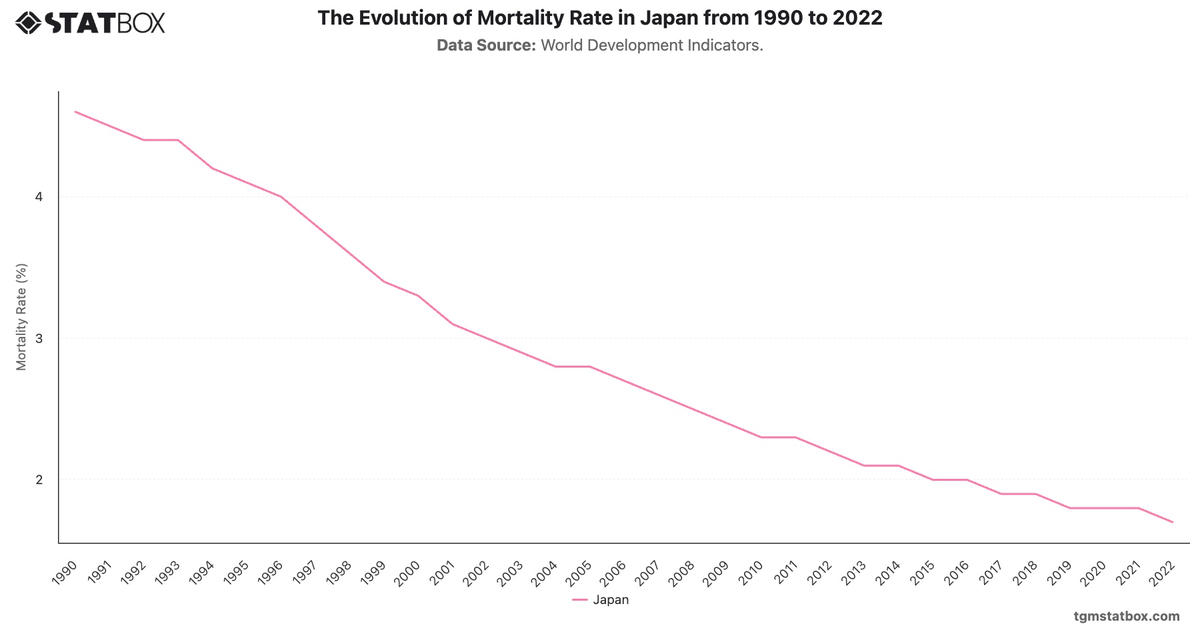
Japan’s fertility rate demonstrated a consistent decline, moving from 1.5 in 1990 to 1.3 by 2022. The drop reflects long-term socio-economic factors, such as delayed marriages, urbanization, and a work-centric culture limiting family expansion.
Despite minor recoveries around 2010 and 2015, Japan’s fertility rate remains one of the lowest globally. Government interventions, such as childcare subsidies and work-life balance initiatives, have yet to significantly reverse this trend.
Despite minor recoveries around 2010 and 2015, Japan’s fertility rate remains one of the lowest globally. Government interventions, such as childcare subsidies and work-life balance initiatives, have yet to significantly reverse this trend.
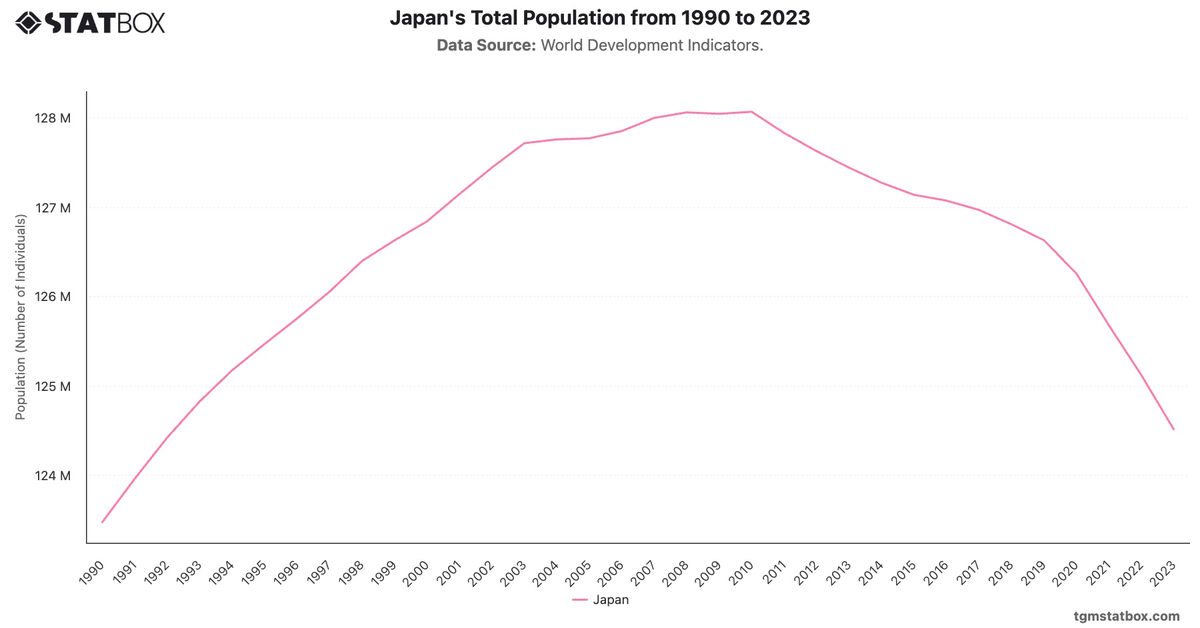
For a deeper dive into the topic, explore Japan’s urbanization trend, Japan’s population data, Japan’s birth life span.