Japan's urbanization levels from 1990 to 2023 reveal rapid urban concentration and infrastructural expansion. Starting at 77.3% in 1990, Japan’s urban population increased steadily, surpassing 80% by 2001, as cities expanded to support economic and technological growth. By 2005, urbanization rose to 86%, partly due to Japan's focus on high-density urban planning. During the late 2000s, urbanization accelerated, reaching 90% in 2009, spurred by infrastructural advancements and a high standard of urban living. By 2023, urbanization stood at 92.0%, demonstrating Japan's adaptation to a predominantly urban society. Factors like technological progress, high population density, and well-developed urban infrastructure have continuously drawn people to urban areas, showcasing Japan’s commitment to urban-centered living and economic growth.
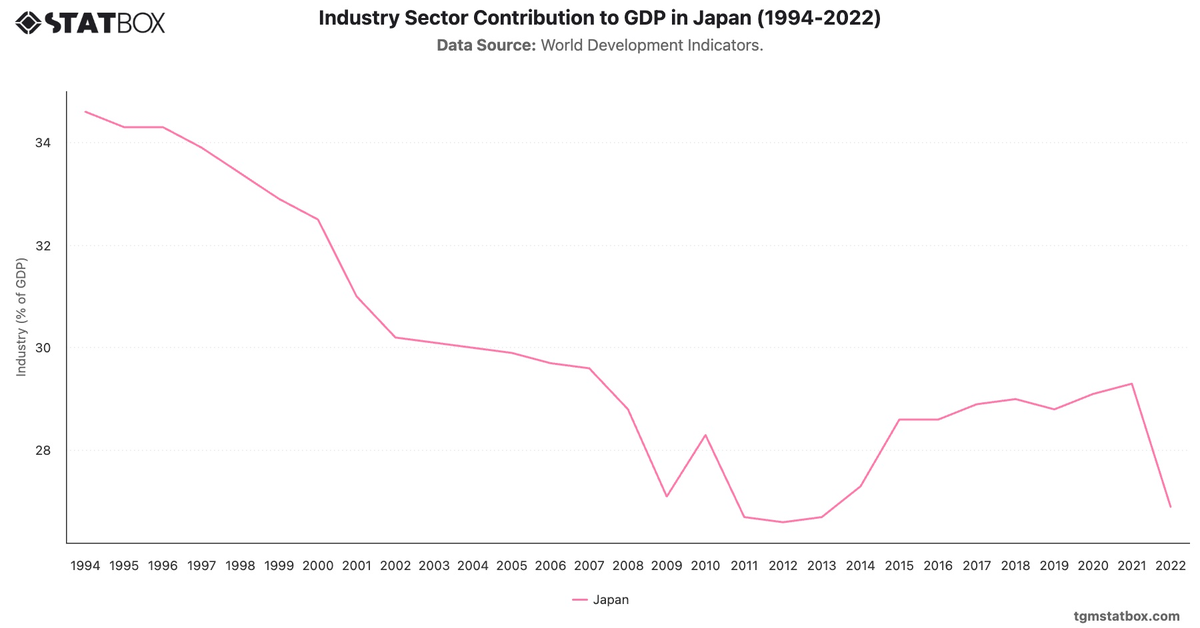
For additional information, visit statistics on Japan’s demographic trends, Japan’s industry sector GDP share, shifting median age in Japan.