Trends in Working Age Population Percentage in Japan from 1990 to 2022

Trends in Working Age Population Percentage in Japan from 1990 to 2022

Share the statistic on social media channels or embed the statistic in your website using "Embed Code", where available.

Share chart

Embed chart
Select Citation

Cite this statistic and select one of the following formats: APA, Chicago, Harvard, MLA & Bluebook


  • APA
  • Chicago
  • Harvard
  • MLA
  • Bluebook
  • IEEE
TGM StatBox. (2024). Trends in Working Age Population Percentage in Japan from 1990 to 2022. TGM StatBox.
Insights

Key Takeaways

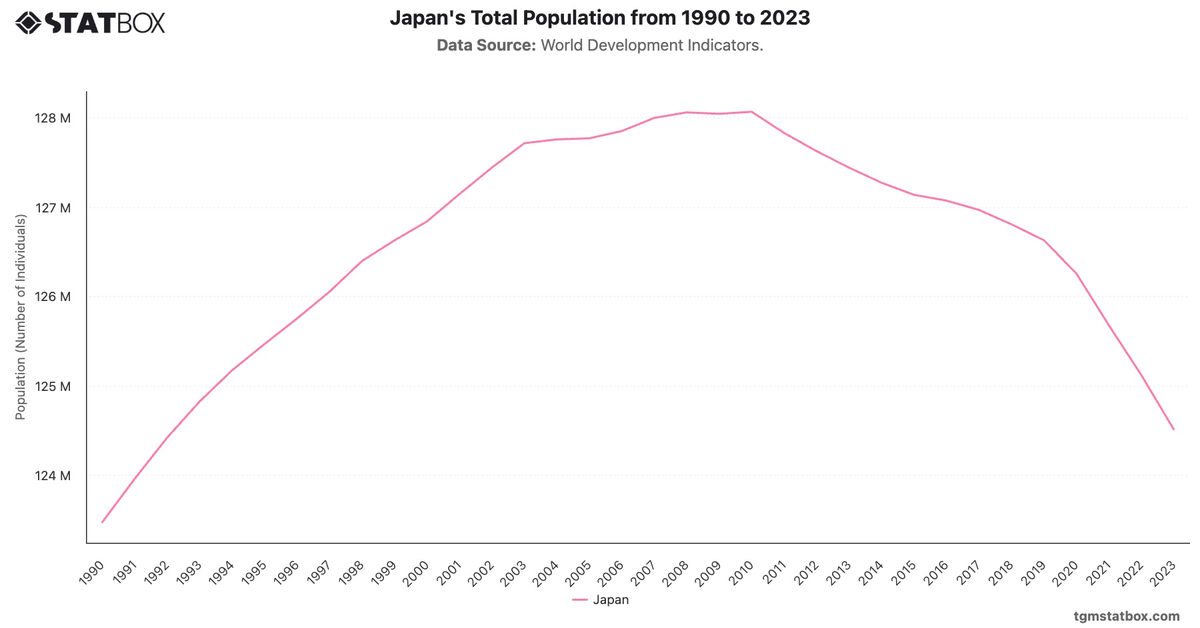
Japan's working-age population percentage declined significantly from 69.7% in 1990 to 58.5% in 2022, driven by one of the world’s fastest-aging populations and low birth rates. The trend steepened in the 2000s, reflecting Japan’s demographic challenges, as the population over 65 grew substantially. This shift highlights Japan’s economic pressures, with a shrinking workforce and increased need for healthcare services. Japan’s efforts to mitigate these impacts include policies promoting automation and immigration to support labor demand.

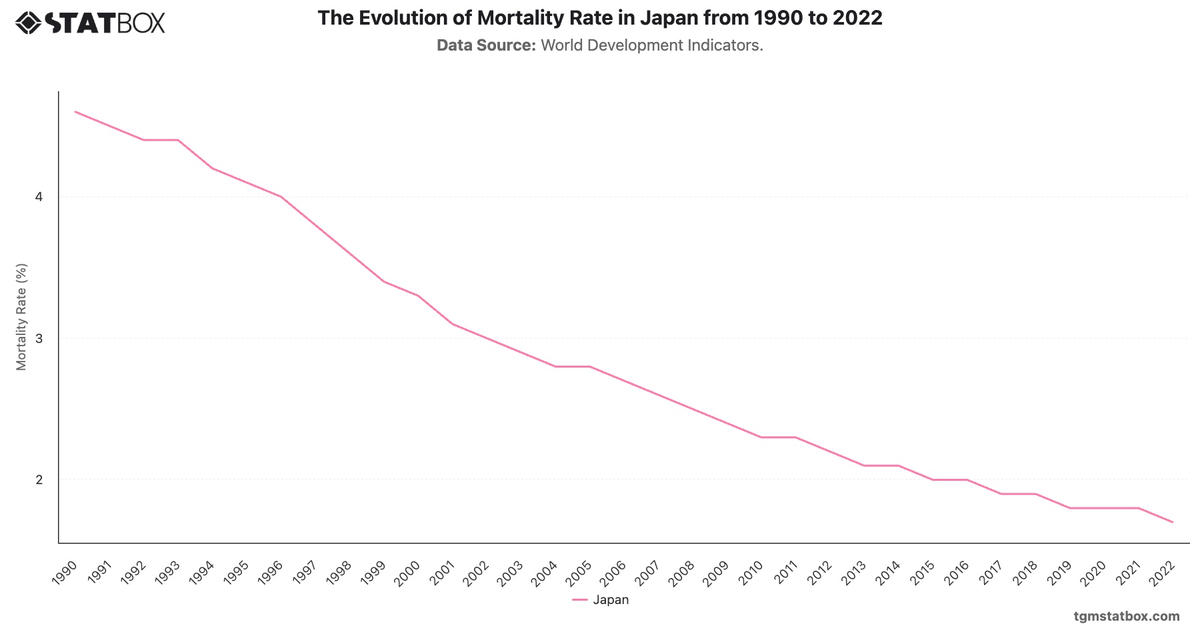
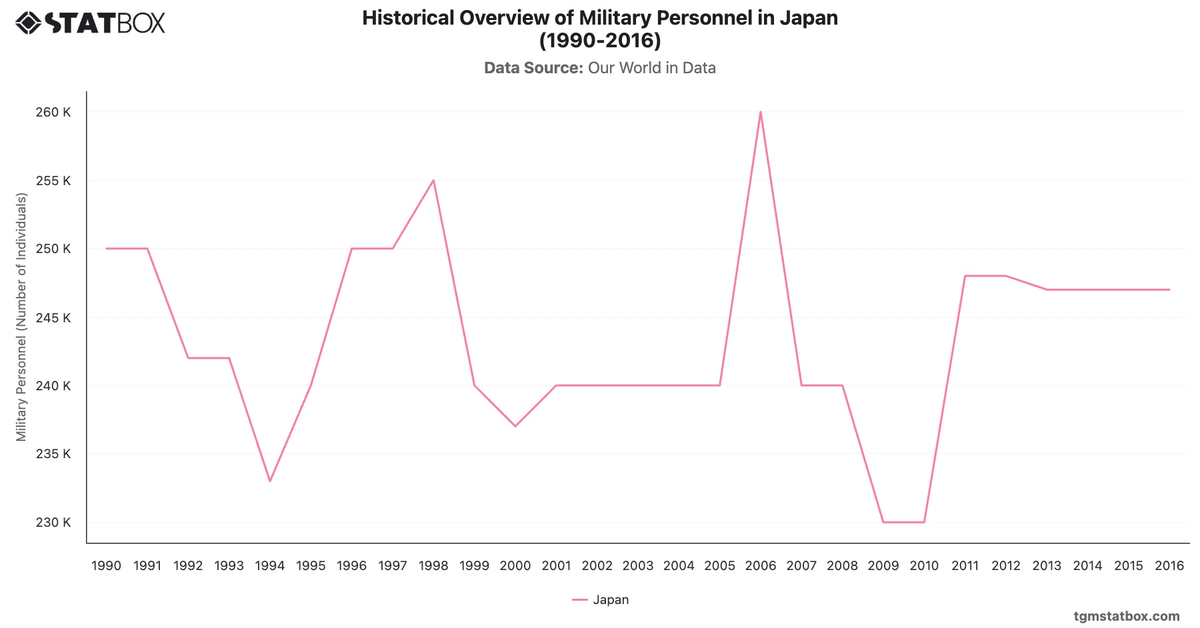
For a broader context, visit other statistics on Japan’s birth life span, Japan’s military personnel proportion, shifting median age in Japan.

Further Recommended Statistics

Statbox vector
Statbox |form contact icon

Have Other Queries?

Statbox vector

Connect with our expert team for immediate assistance or comprehensive market analysis. We are always ready to support your business needs.