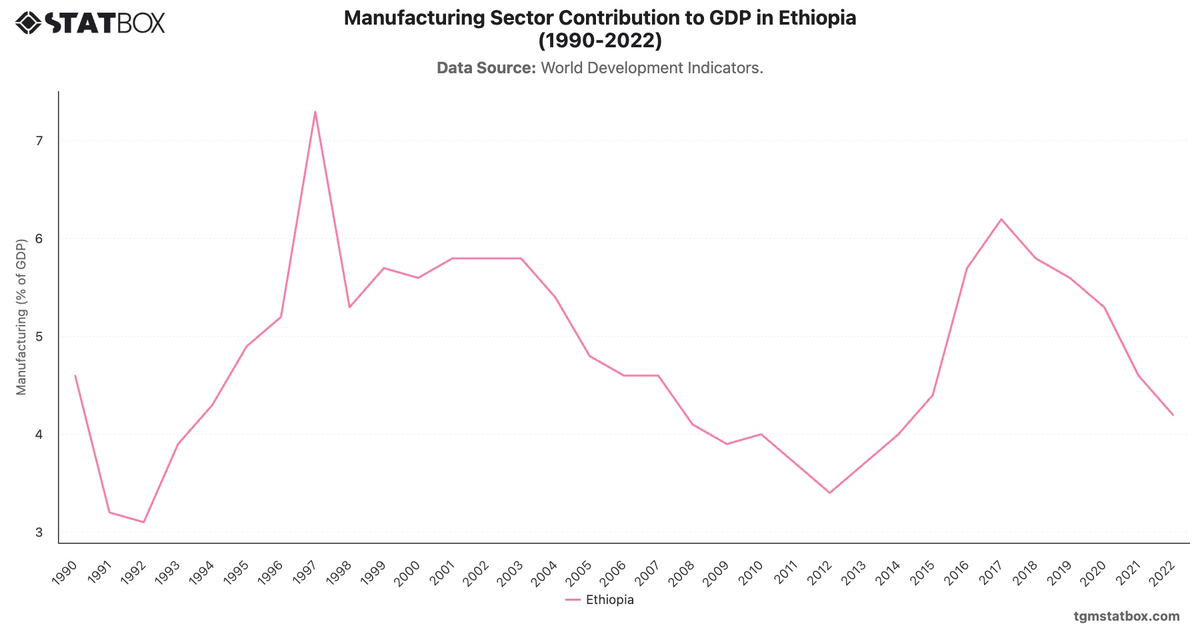
Ethiopia's agriculture sector played a dominant role in the economy during the 1990s, peaking at 63.8% of GDP in 1992. This surge was linked to economic recovery efforts following the fall of the Derg regime in 1991, as well as the reliance on subsistence farming. However, the share gradually declined in subsequent years, reaching 42.3% by 2001 due to structural reforms aimed at diversifying the economy and increasing investments in other sectors like services and manufacturing.
From 2002 onward, agriculture's contribution consistently declined, reaching 31.2% in 2018, reflecting Ethiopia's shift towards industrialization under the Growth and Transformation Plans (GTP). However, the trend reversed slightly during the COVID-19 pandemic in 2020, when agriculture's share increased to 35.6%, underscoring its resilience as a backbone of the economy during global disruptions. By 2022, agriculture accounted for 37.6% of GDP, indicating its enduring importance despite Ethiopia's broader economic diversification.
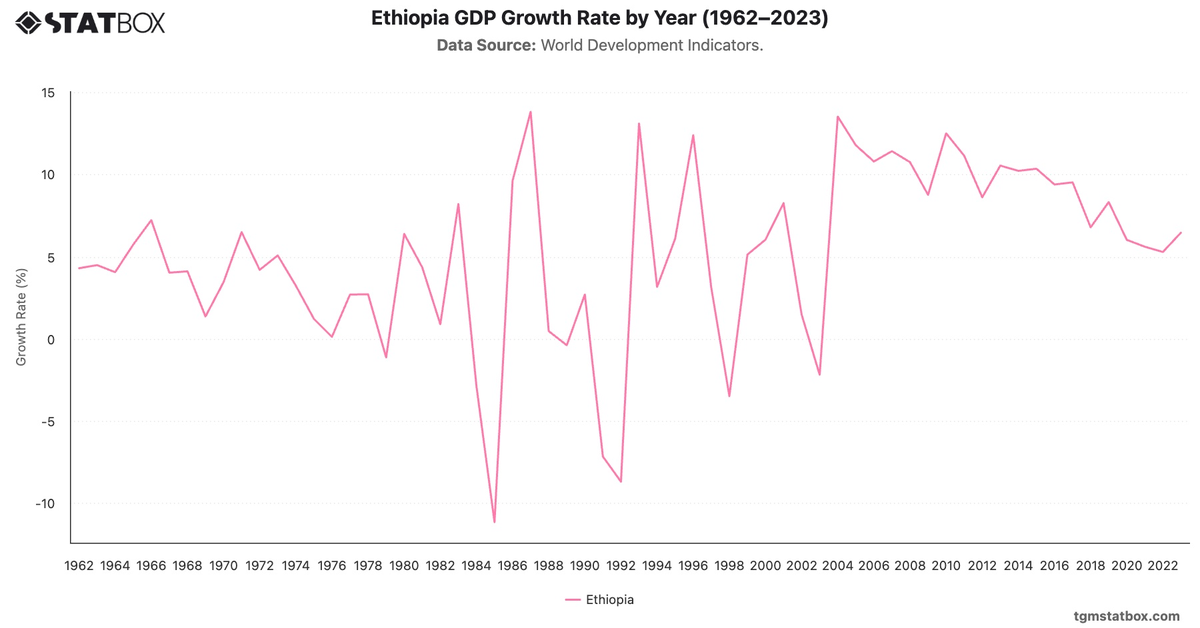
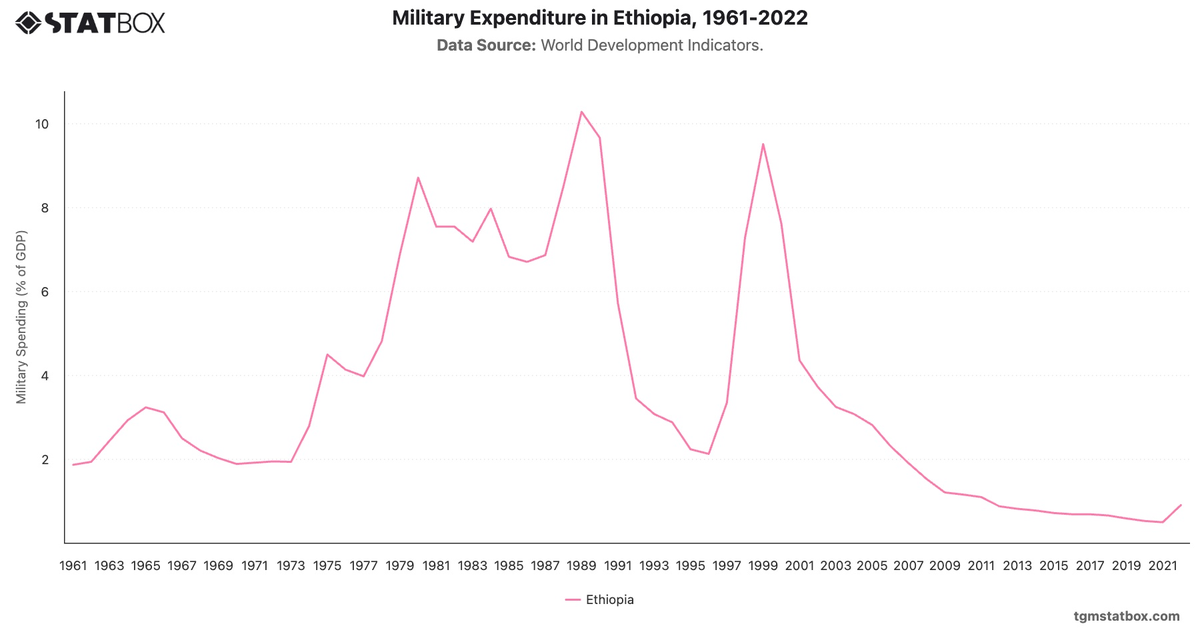
Find out more through related statistics on Ethiopia’s military spending, Ethiopia’s annual GDP figures, Ethiopia’s annual GDP growth rate.