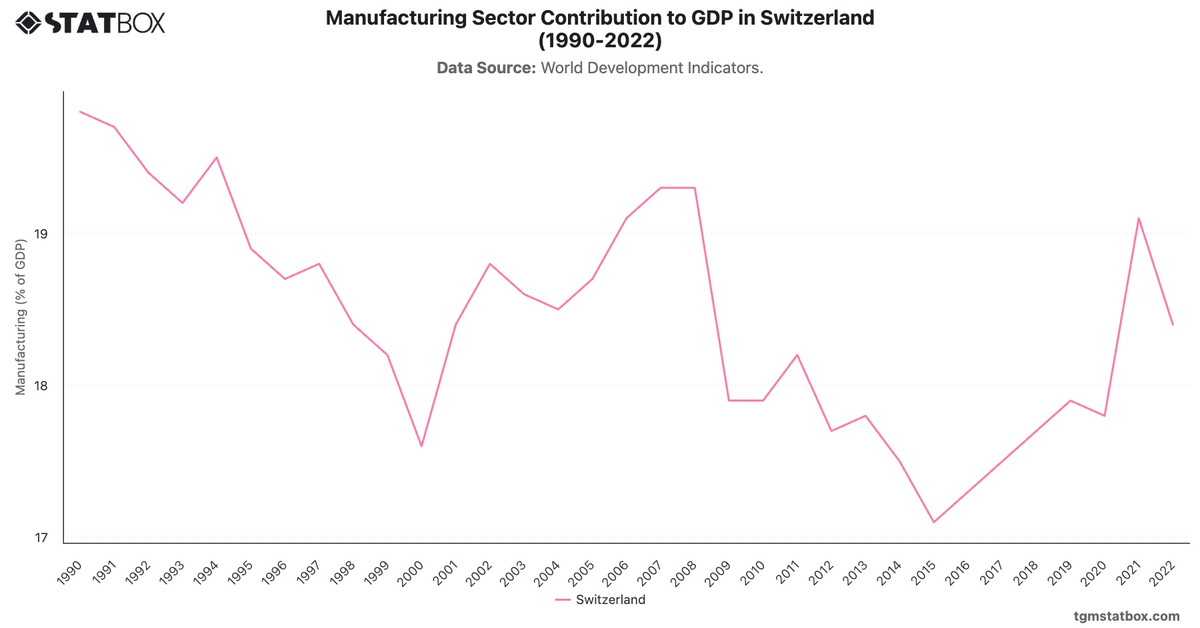
Switzerland’s agriculture sector experienced a gradual decline in GDP contribution from 2.1% in 1990 to a minimal 0.6-0.7% by 2022. This reduction aligns with Switzerland’s focus on high-value industries such as banking, pharmaceuticals, and precision manufacturing, which gradually replaced agriculture's role in GDP. In the early 1990s, the contribution steadily fell, dipping below 1% by 2001, influenced by Switzerland’s participation in trade agreements that increased imports and reduced agricultural reliance.
Despite the small share, agriculture remains crucial for rural landscapes and environmental sustainability. Fluctuations around 0.6-0.8% since the 2010s reflect ongoing, albeit limited, support for the sector to maintain food security and rural employment within a service-driven economy.
Despite the small share, agriculture remains crucial for rural landscapes and environmental sustainability. Fluctuations around 0.6-0.8% since the 2010s reflect ongoing, albeit limited, support for the sector to maintain food security and rural employment within a service-driven economy.
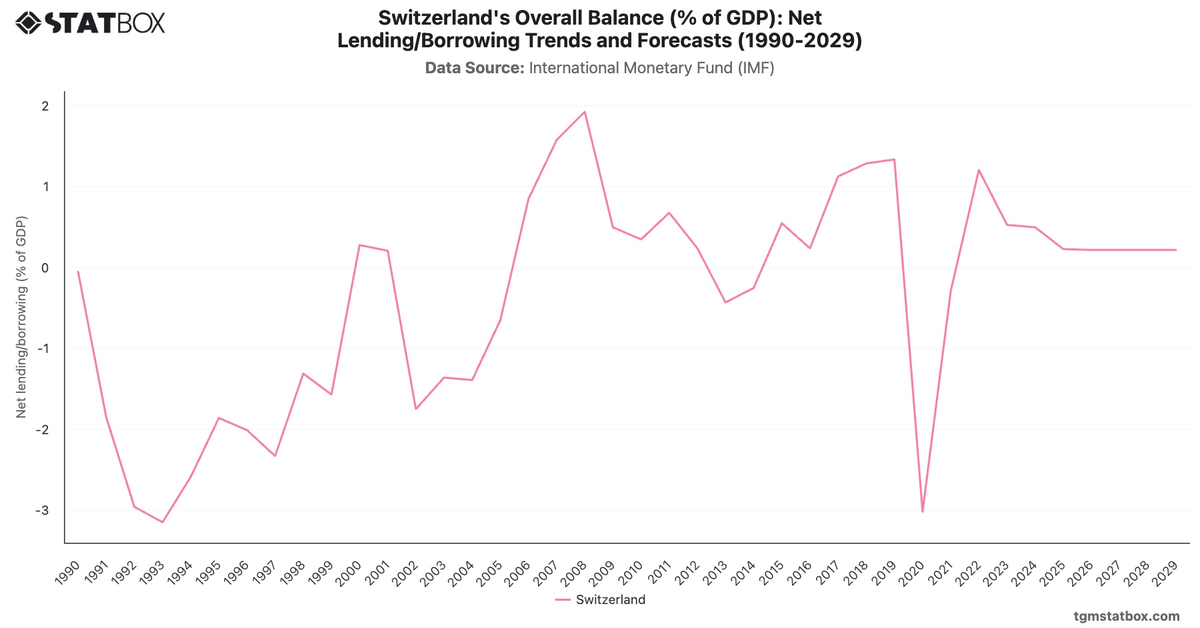
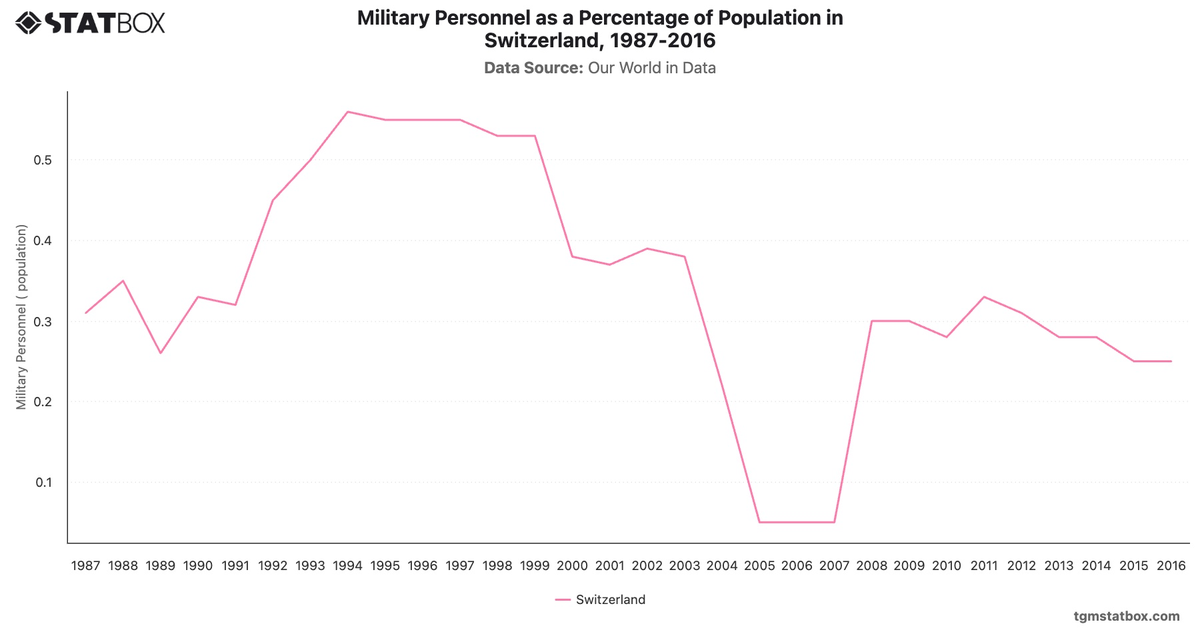
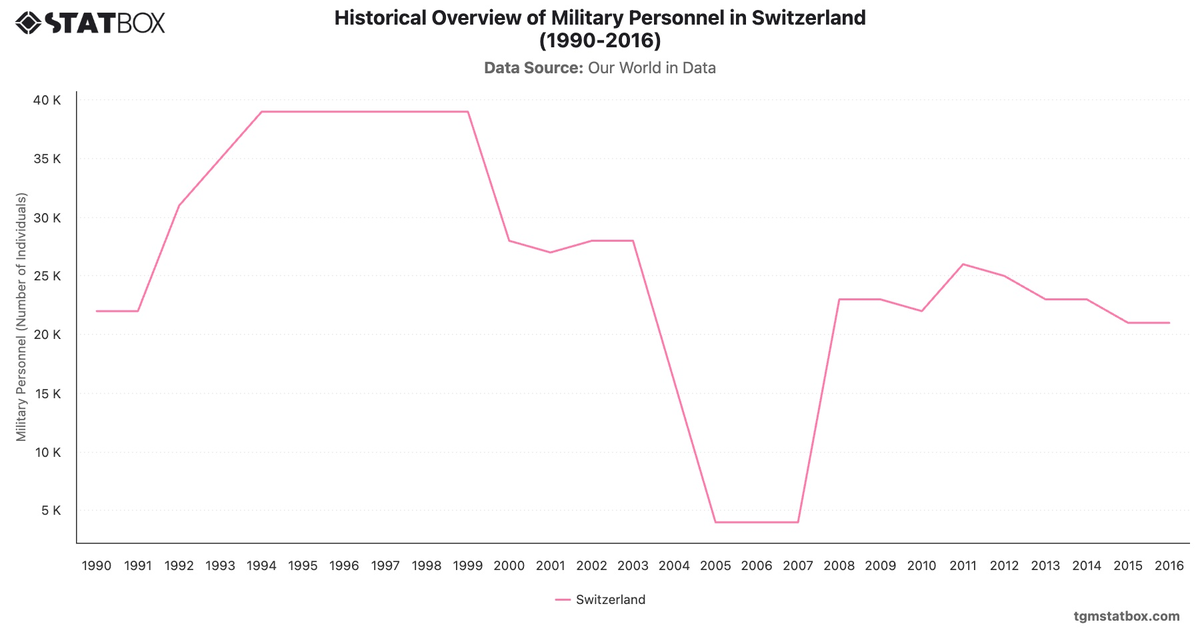
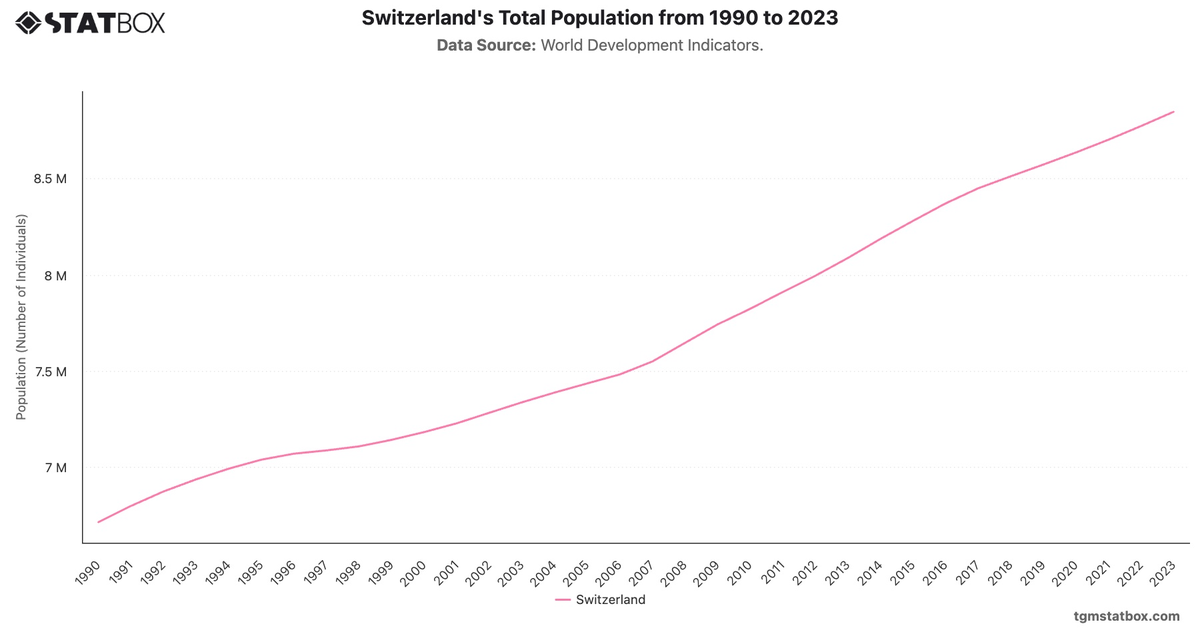
Find out more through related statistics on Switzerland’s net lending/borrowing as a percentage of GDP, Switzerland’s government debt ratio, military personnel share in Switzerland’s population.