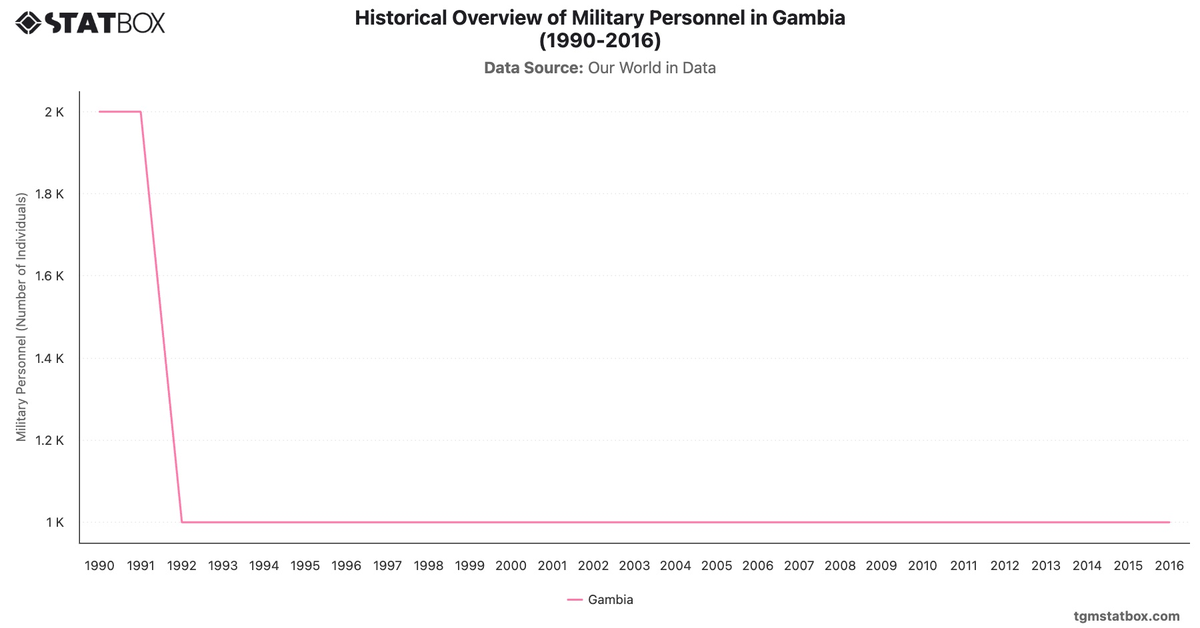
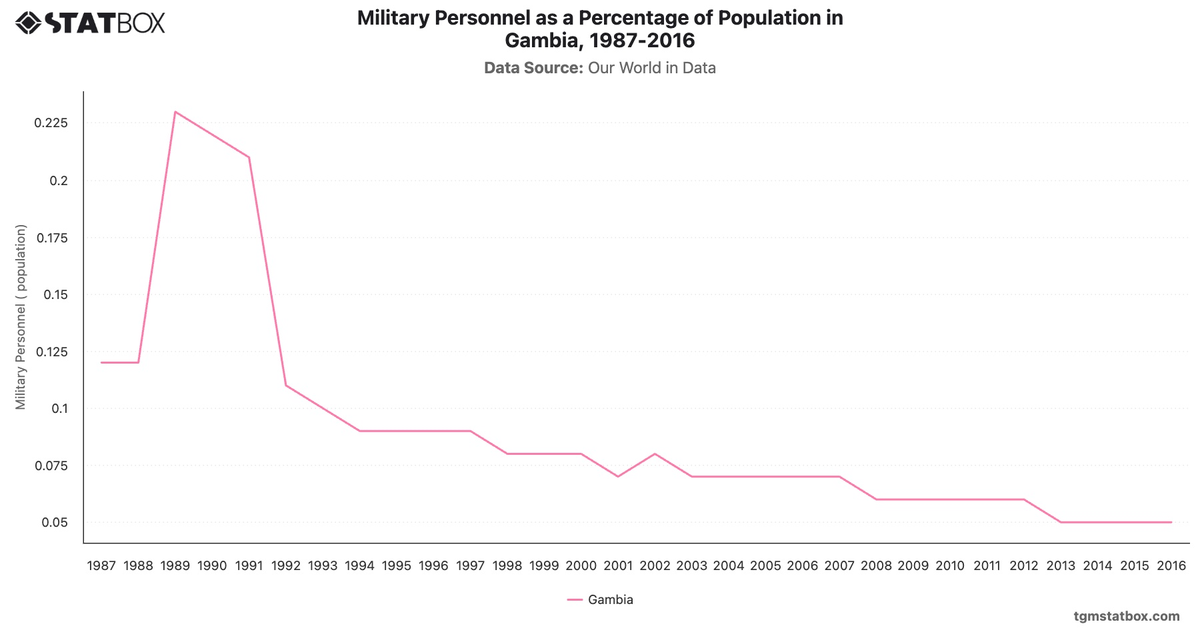
The Gambia's military spending as a percentage of GDP has remained relatively low, with notable spikes during periods of political and security tension. In the late 1980s, military expenditure rose steadily, peaking at 0.96% in 1989, likely driven by efforts to bolster national defense amid regional instability. The 1994 military coup marked a turning point, leading to reduced spending, which fell to 0.26% of GDP by 1994 as the new regime consolidated power.
A sharp increase occurred in 2008, with spending reaching 1.09% of GDP, reflecting heightened security measures and potential regional threats. Another peak was observed in 2014 at 1.21%, possibly tied to political uncertainties and the need to strengthen internal security. Since then, military spending has gradually declined, stabilizing at around 0.7–0.8% of GDP in recent years, reflecting the country's ongoing efforts to balance defense needs with economic constraints.
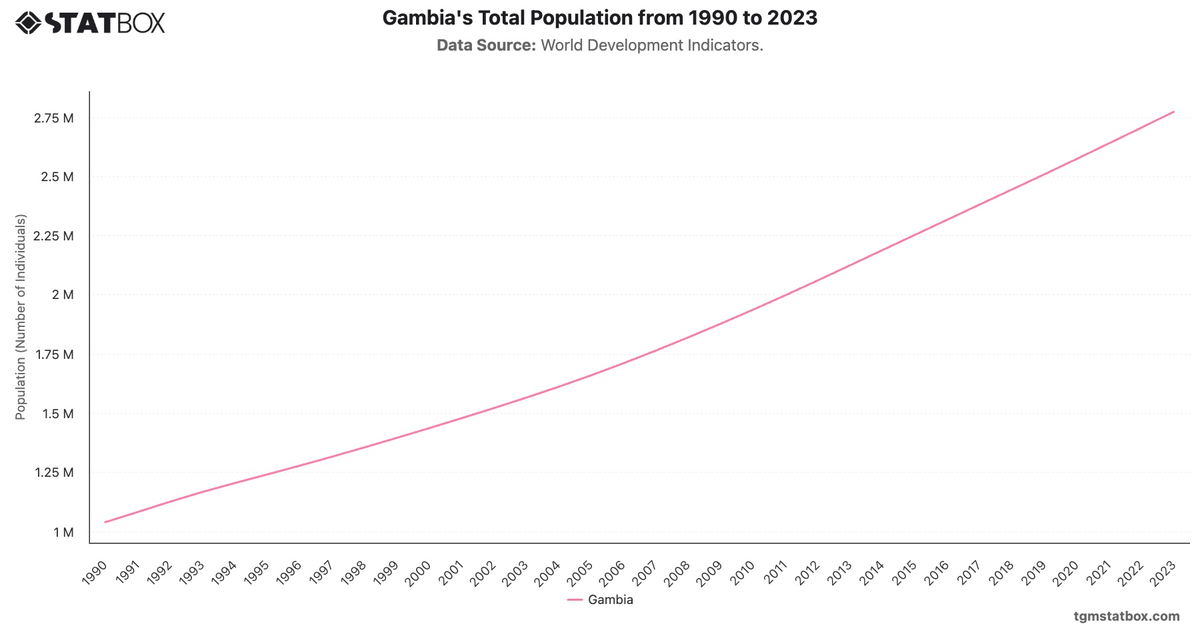
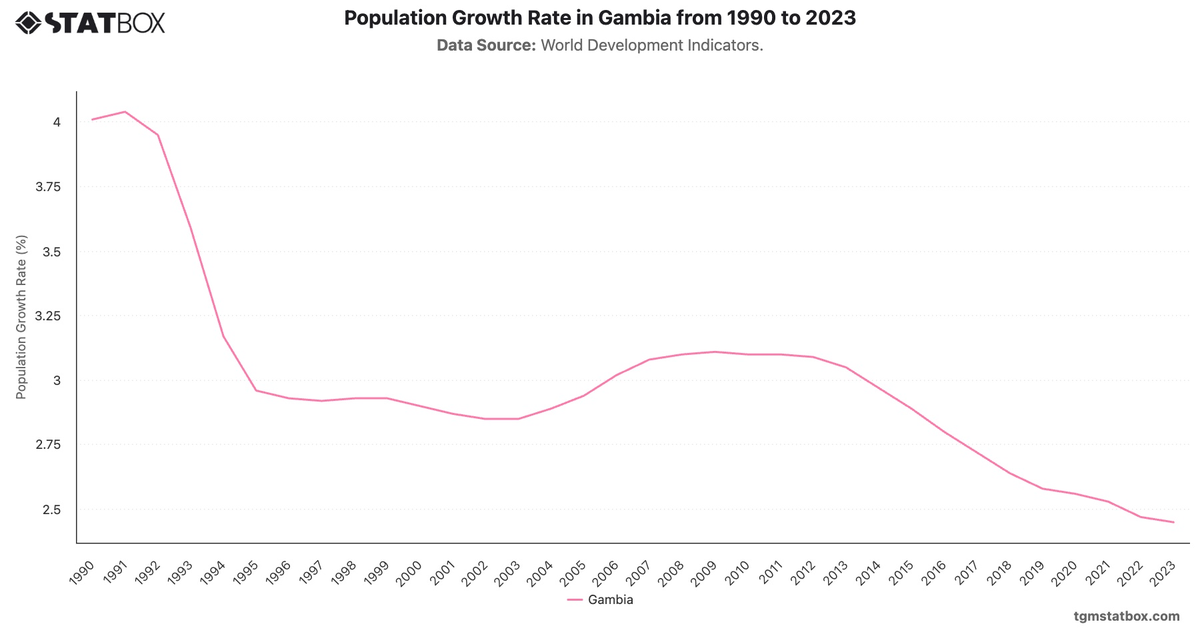
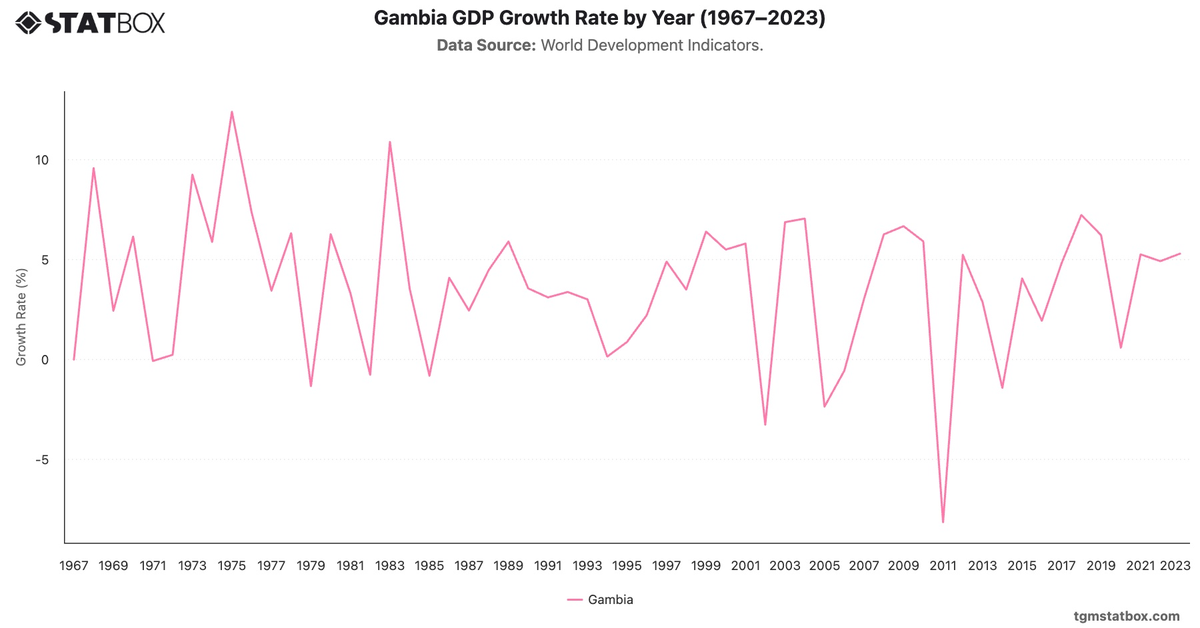
Discover additional trends and data on Gambia’s annual GDP growth rate, Gambia’s net lending/borrowing forecast, Gambia’s population numbers.