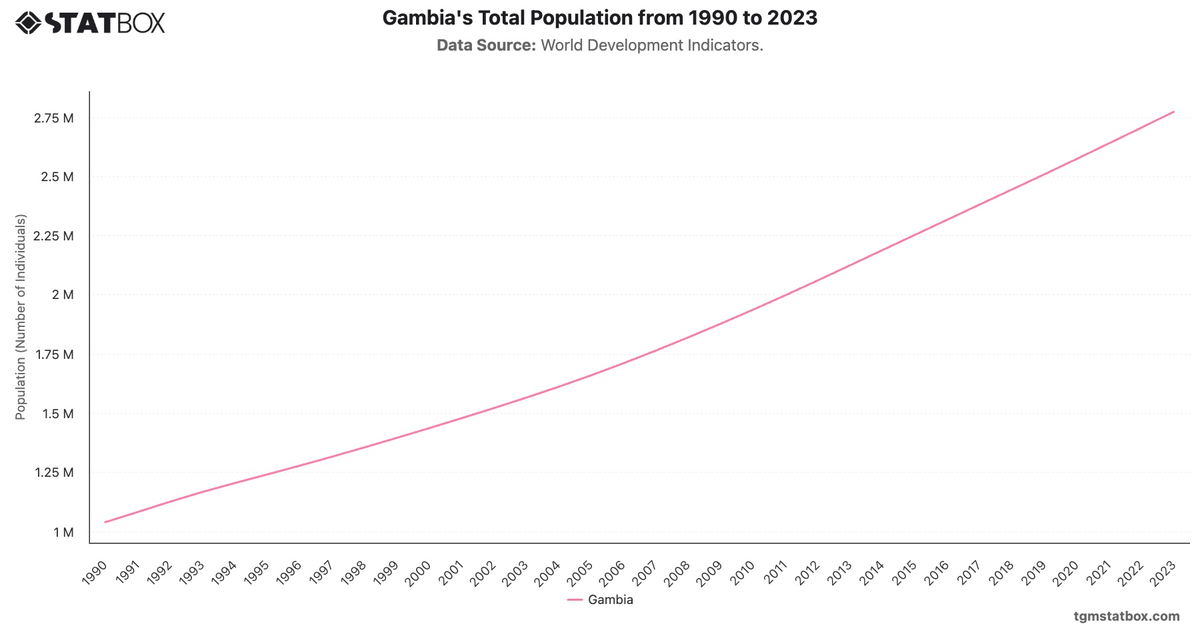
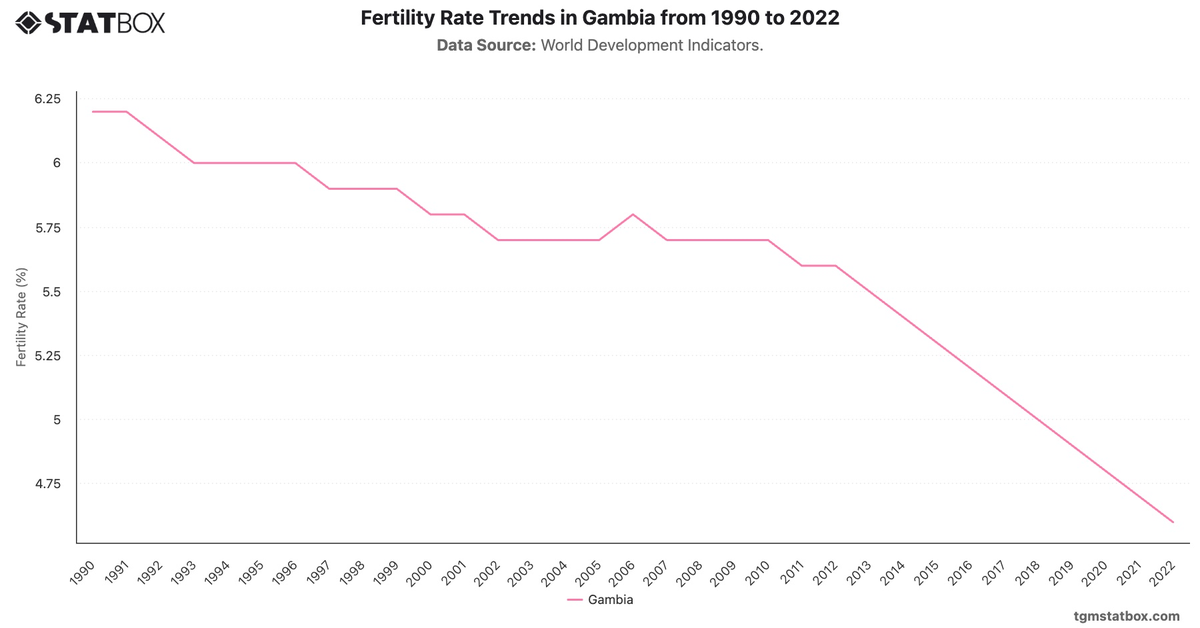
The chart showcases a notable shift from high growth in the early 1990s to a more moderated rate in recent years. In 1990, Gambia's growth rate was a substantial 4.0%, reflective of high fertility rates and a young population structure. However, the rate began a steady decline in the mid-1990s, reaching 2.9% by 1999, as access to education and family planning gradually improved.
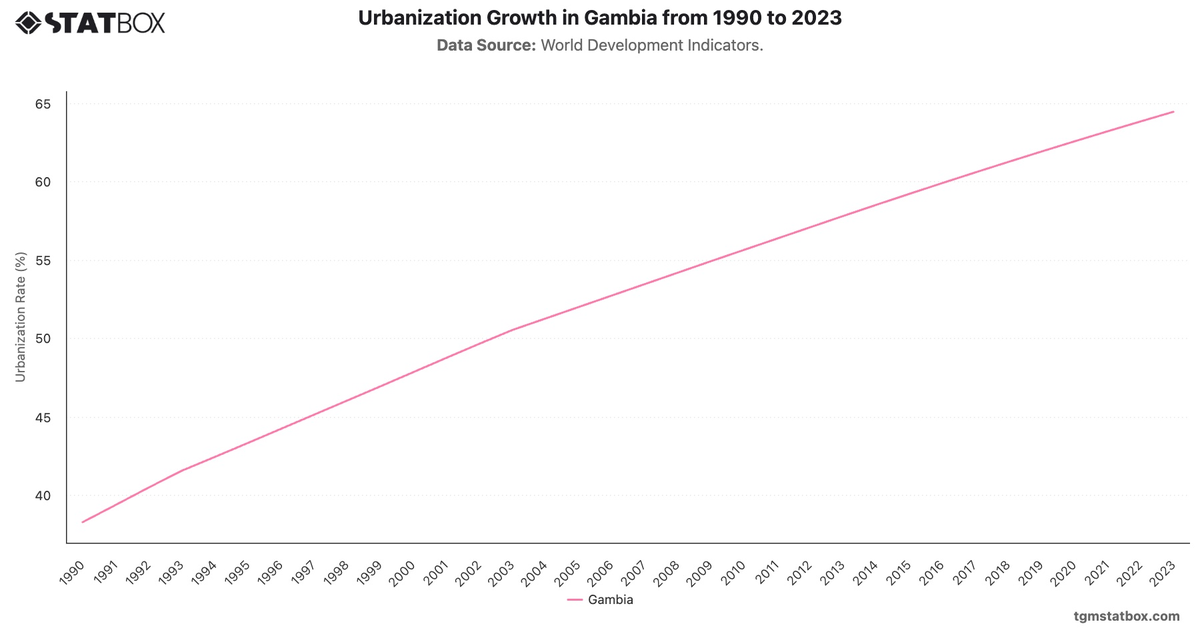
Through the 2000s, growth rates stabilized around 2.9% to 3.1%, supported by relatively high birth rates but tempered by increasing urbanization and shifts in family planning practices. By 2016, the rate began a gradual decline, falling to 2.5% by 2023, influenced by ongoing urban migration, economic pressures, and evolving social norms around family size.
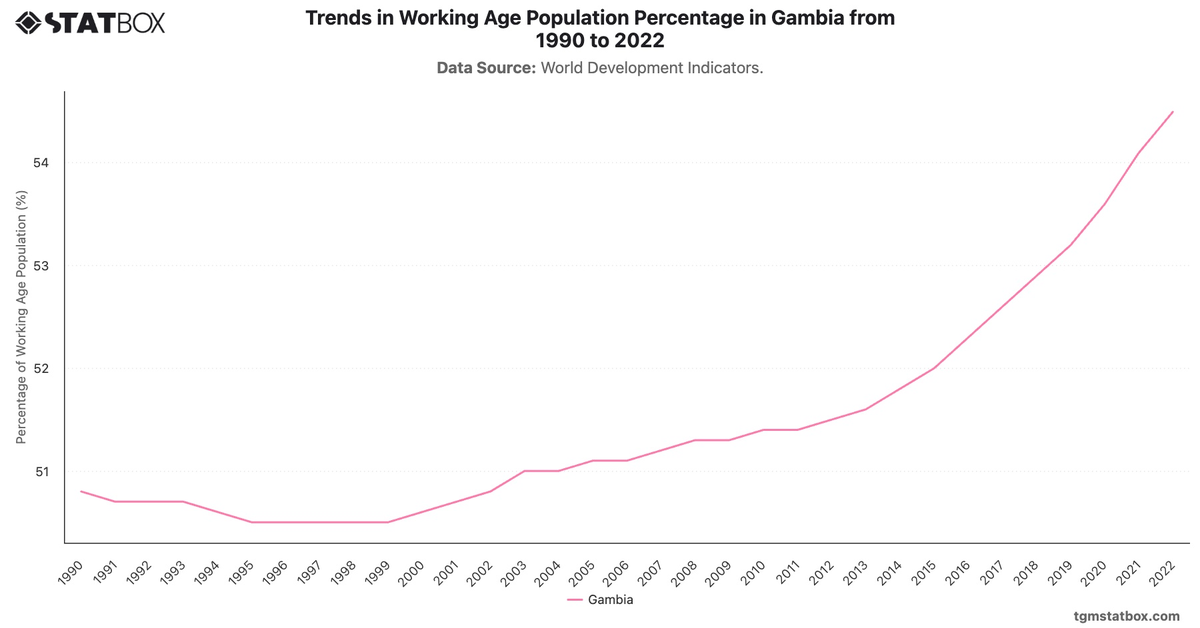
For a deeper dive into the topic, explore Gambia’s median age shift, Gambia’s death rate, Gambia’s working-age population percentage trends.