Gambia's agriculture sector experienced fluctuations between 1990 and 2022, reflecting the country's vulnerability to climate variability and economic reforms. Agriculture's share declined from 24.3% in 1990 to 17.2% by 1993, as the government prioritized trade and services. However, the sector rebounded in the early 2000s, reaching 35.2% in 2010, supported by increased investments in cash crops like groundnuts.
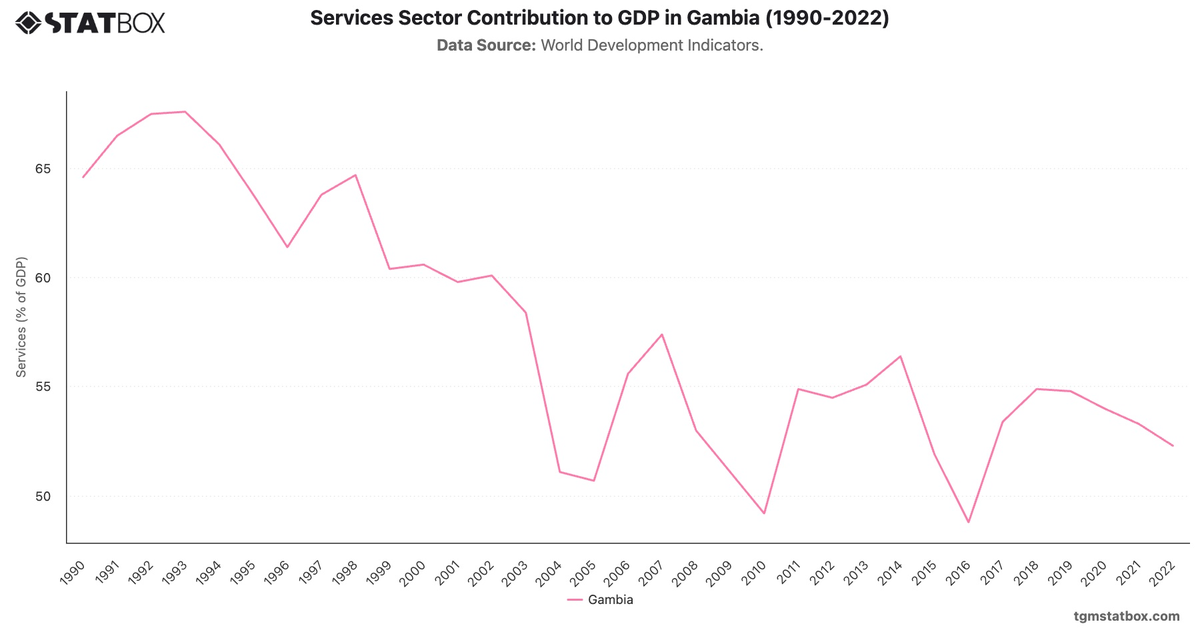
Post-2010, the share began to decline again, hitting 19.9% in 2018, as the economy diversified further into tourism and services. A modest recovery followed during the pandemic years, with agriculture's contribution rising to 22.6% in 2022, underscoring its role in sustaining livelihoods amid global economic challenges.
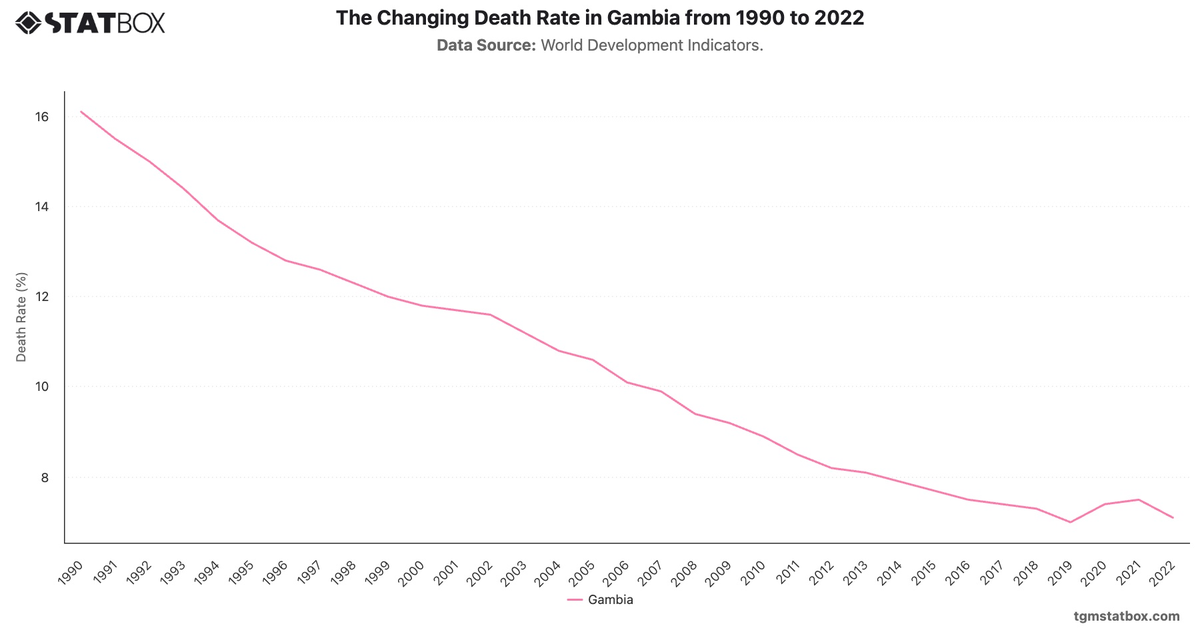
Gain a broader perspective by reviewing Gambia’s annual GDP growth rate, Gambia’s death rate, Gambia’s unemployment rate trend.