Lesotho's Net ODA as a percentage of GNI has exhibited significant fluctuations, reflecting the nation’s reliance on aid for development and external shocks. The early 1990s saw high levels of ODA, peaking at 14.5% in 1990, driven by international support for economic stabilization and poverty reduction. Aid steadily declined in the late 1990s, reaching a low of 2.6% in 1999, as the country adjusted to donor shifts and policy reforms.
The resurgence to 11.8% in 2013 reflects targeted donor interventions in health, education, and governance. Recent increases, such as 7.0% in 2020, were likely spurred by pandemic-related aid, highlighting continued donor engagement in Lesotho’s socioeconomic challenges. However, the general decline over time reflects growing efforts for self-reliance amid persistent developmental hurdles.
The resurgence to 11.8% in 2013 reflects targeted donor interventions in health, education, and governance. Recent increases, such as 7.0% in 2020, were likely spurred by pandemic-related aid, highlighting continued donor engagement in Lesotho’s socioeconomic challenges. However, the general decline over time reflects growing efforts for self-reliance amid persistent developmental hurdles.
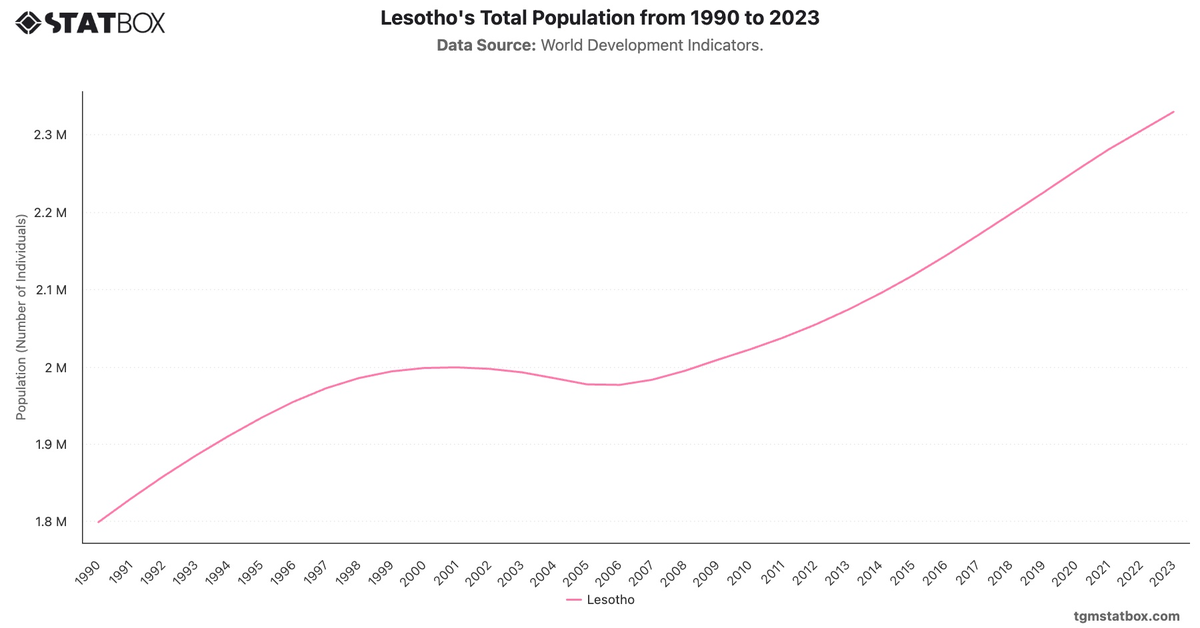
Gain a broader perspective by reviewing Lesotho’s population growth, Lesotho’s net lending/borrowing as a percentage of GDP, Lesotho’s population figures.