Lesotho's central government debt demonstrated pronounced fluctuations over the years. The early 1990s saw extremely high levels, peaking at 114.14% in 1991, due to limited fiscal capacity and reliance on external funding. A period of fiscal consolidation reduced debt to 68.38% in 1995. However, an economic slowdown and increased borrowing led to a resurgence, with debt reaching 120% in 2001.
In more recent years, the debt ratio stabilized, hovering around 40% to 50% through the 2010s, before climbing again to 59.97% in 2020 amid pandemic-related expenses. By 2022, debt was 57.91%, reflecting ongoing challenges in balancing economic growth with sustainable borrowing.
In more recent years, the debt ratio stabilized, hovering around 40% to 50% through the 2010s, before climbing again to 59.97% in 2020 amid pandemic-related expenses. By 2022, debt was 57.91%, reflecting ongoing challenges in balancing economic growth with sustainable borrowing.
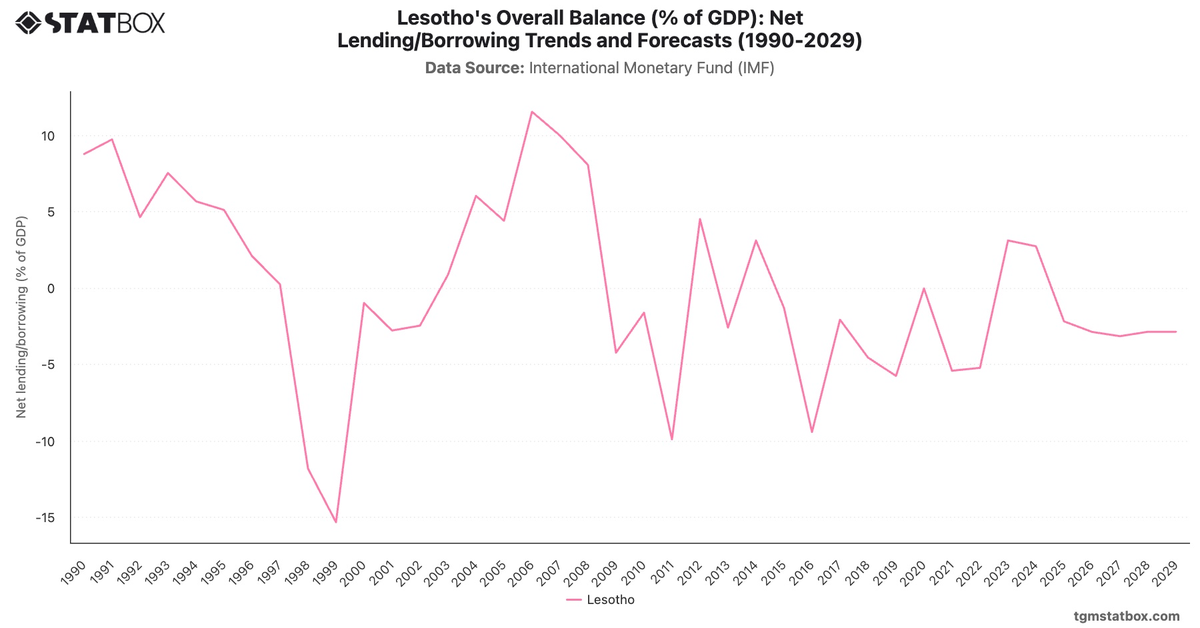
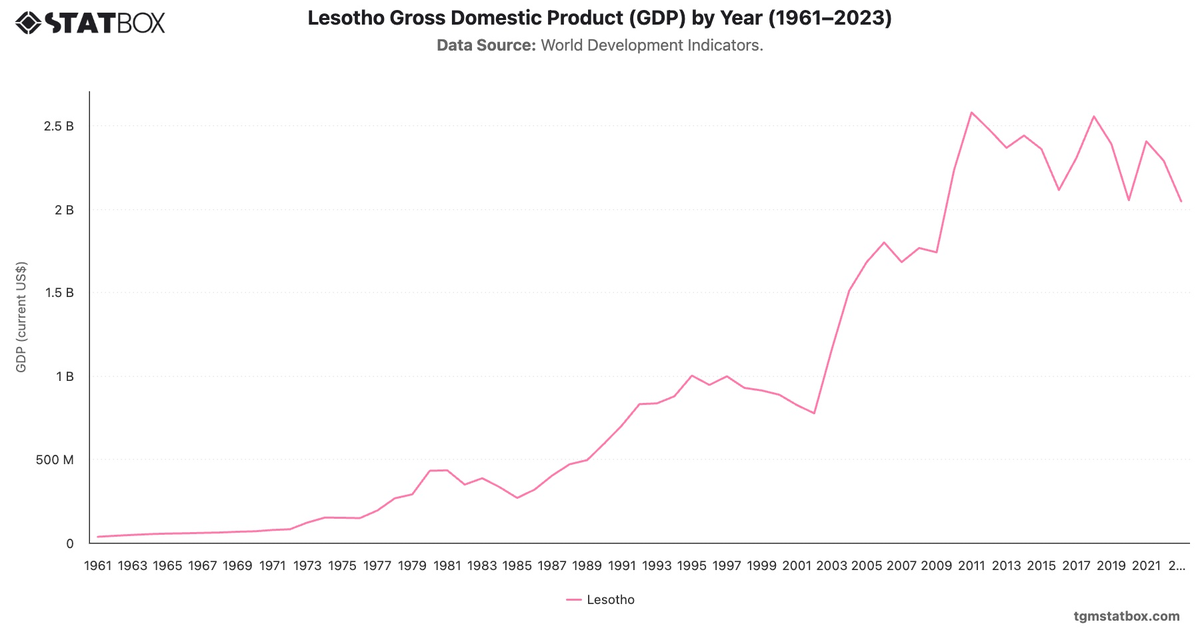
For additional information, visit statistics on Lesotho’s net lending/borrowing as a percentage of GDP, Lesotho’s annual GDP figures, Lesotho’s birth life span.