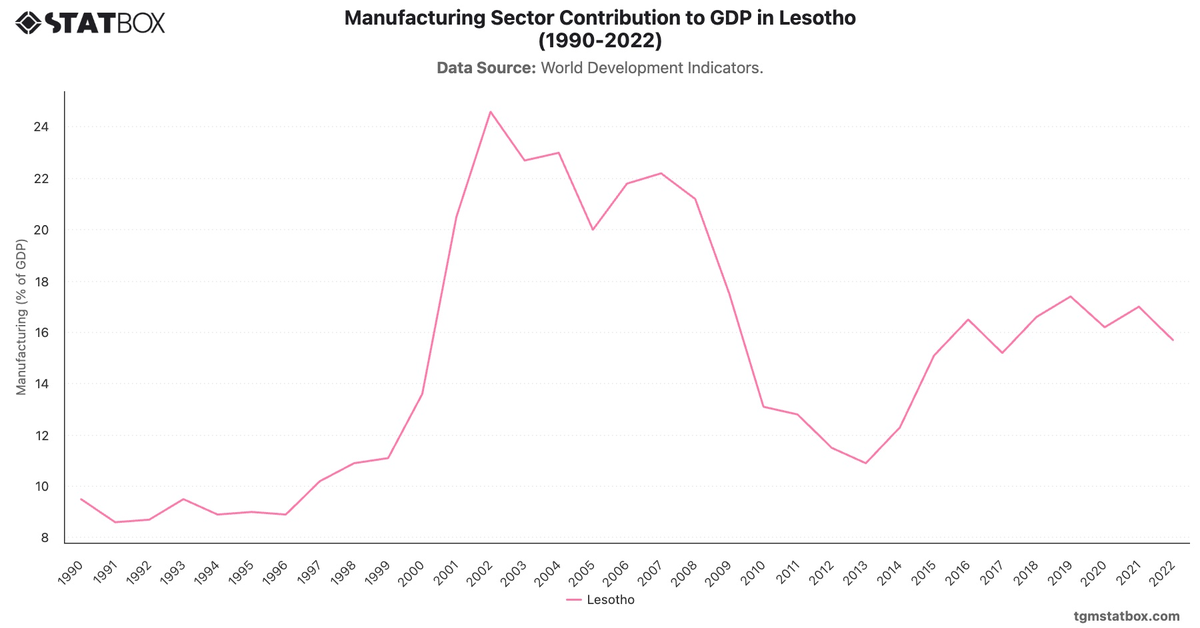
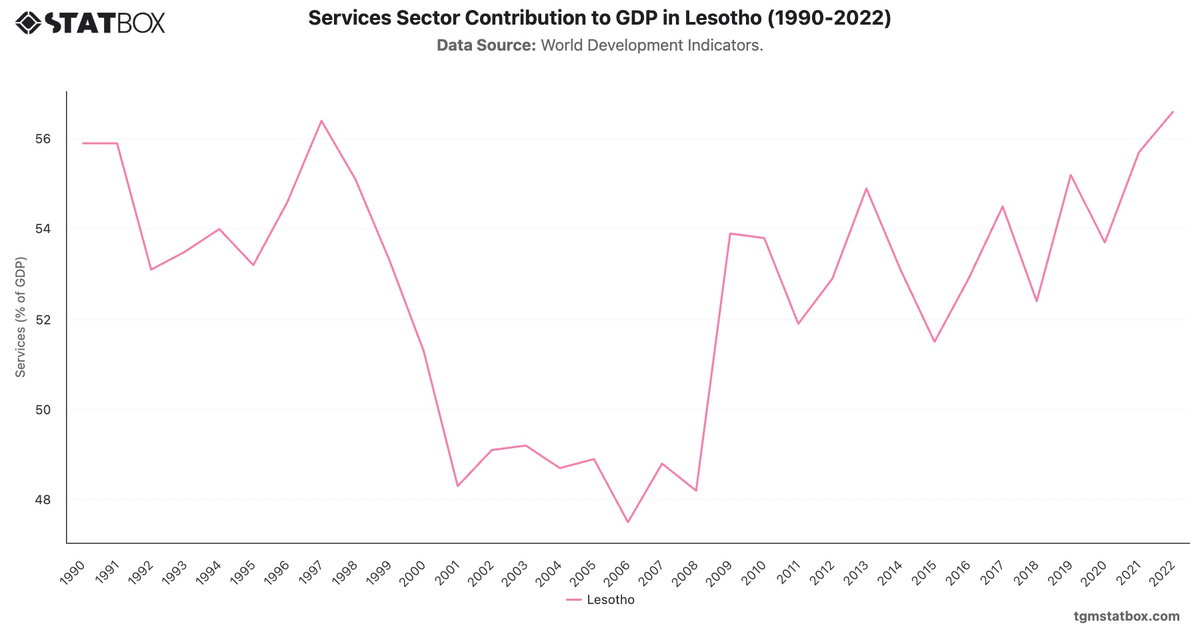
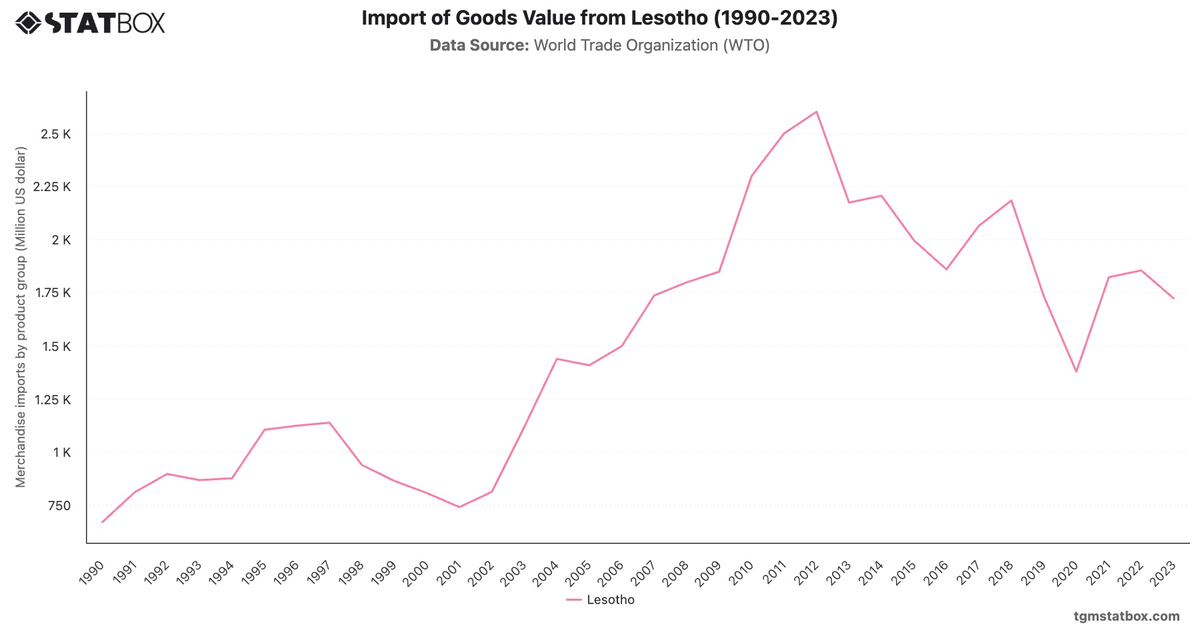
In Lesotho, agriculture's share of GDP declined significantly over the decades, from 12.2% in 1990 to a low of 3.8% in 2015. This decrease can be attributed to limited arable land, recurrent droughts, and the country's growing reliance on remittances and manufacturing, particularly textiles. The sharp drop to 7.3% in 1991 reflects the effects of severe drought conditions that impacted agricultural productivity.
From 2016 onwards, agriculture's contribution experienced slight recovery, peaking at 6.2% in 2022. This resurgence aligns with government efforts to improve food security through agricultural modernization programs and irrigation projects. However, the sector remains a small part of the economy, emphasizing Lesotho's dependence on external economic drivers like mining and remittances.
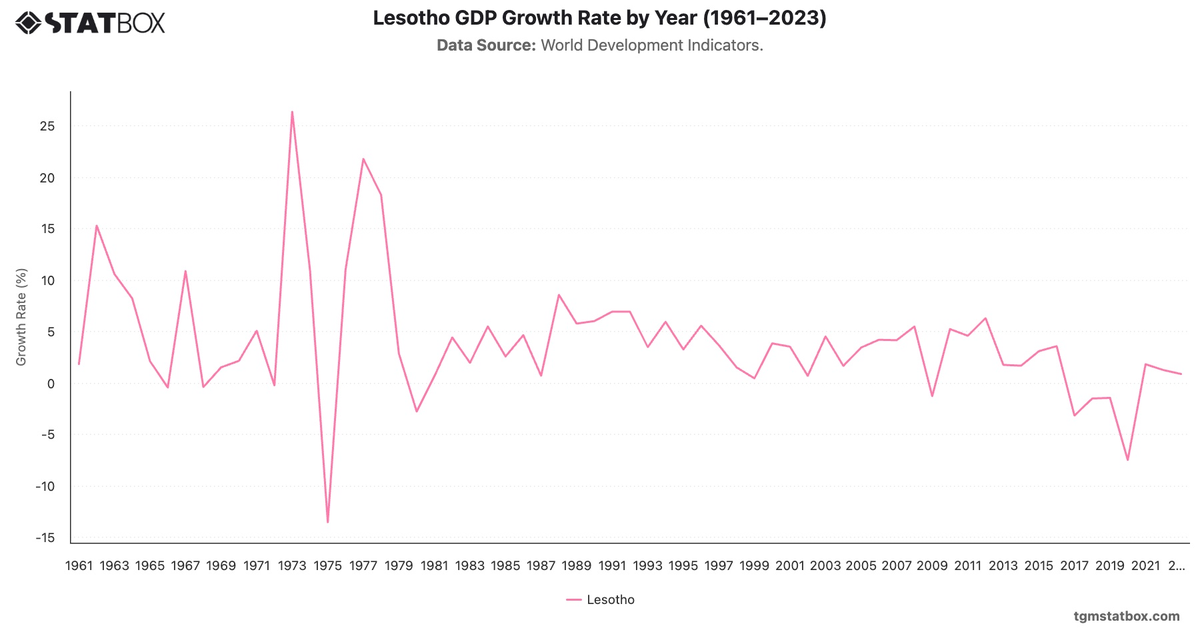
Gain a broader perspective by reviewing Lesotho’s annual GDP growth rate, Lesotho’s military personnel data, Lesotho’s military spending.