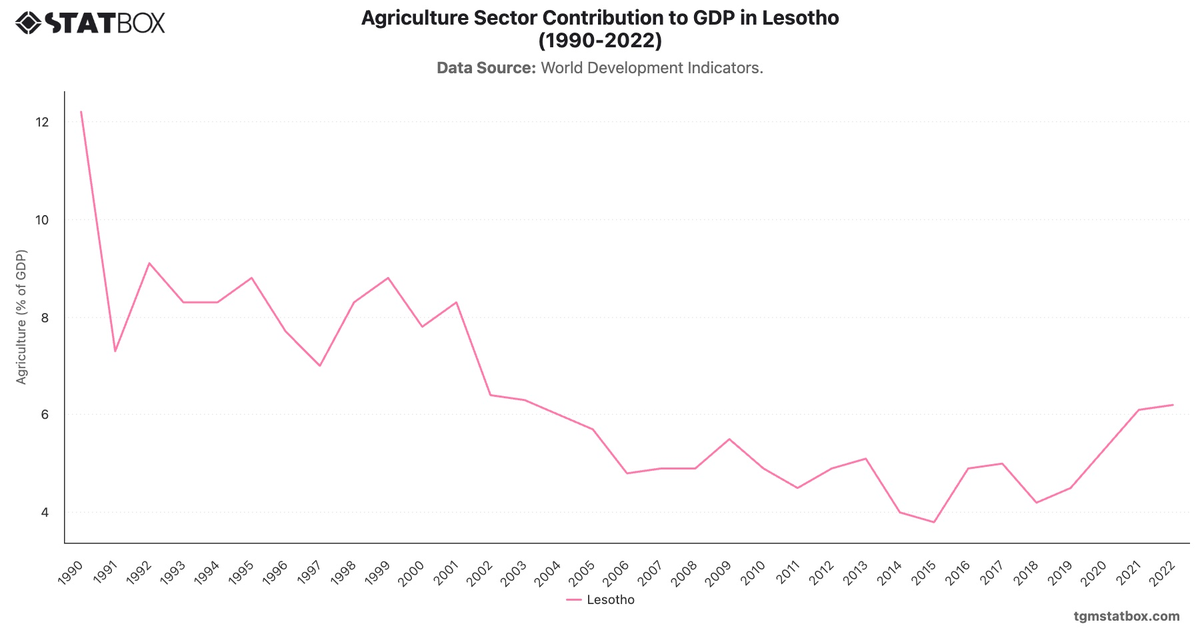
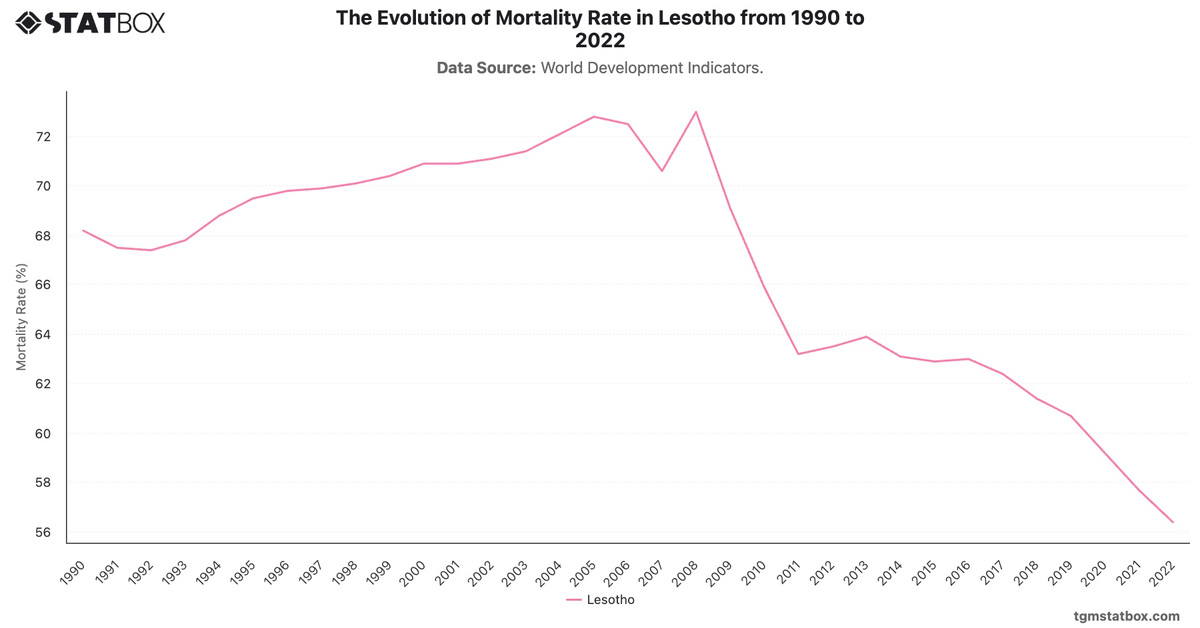
Lesotho's economic growth has seen significant fluctuations over the decades, influenced by both domestic and external factors. In the 1960s and 1970s, the economy experienced periods of rapid growth, such as 15.3% in 1962, driven by agriculture and mining. However, political instability and droughts led to contractions, like -0.4% in 1966 and -13.5% in 1975.
The 1980s and 1990s saw major infrastructure projects, such as the Lesotho Highlands Water Project, which contributed to high growth rates, peaking at 21.8% in 1977. However, dependence on external factors, including remittances and regional demand, caused fluctuations.
In the 2000s, the economy benefited from the textile industry and infrastructure. However, external shocks like the global financial crisis led to downturns, such as -1.3% in 2009. By the 2010s, growth stabilized but remained modest, with growth hitting 6.3% in 2012.
The 2020s brought new challenges with the COVID-19 pandemic, causing a sharp contraction of -7.5% in 2020. Recovery has been slow, with growth at 1.9% in 2021 and 1.3% in 2022, as the country faces ongoing economic challenges.
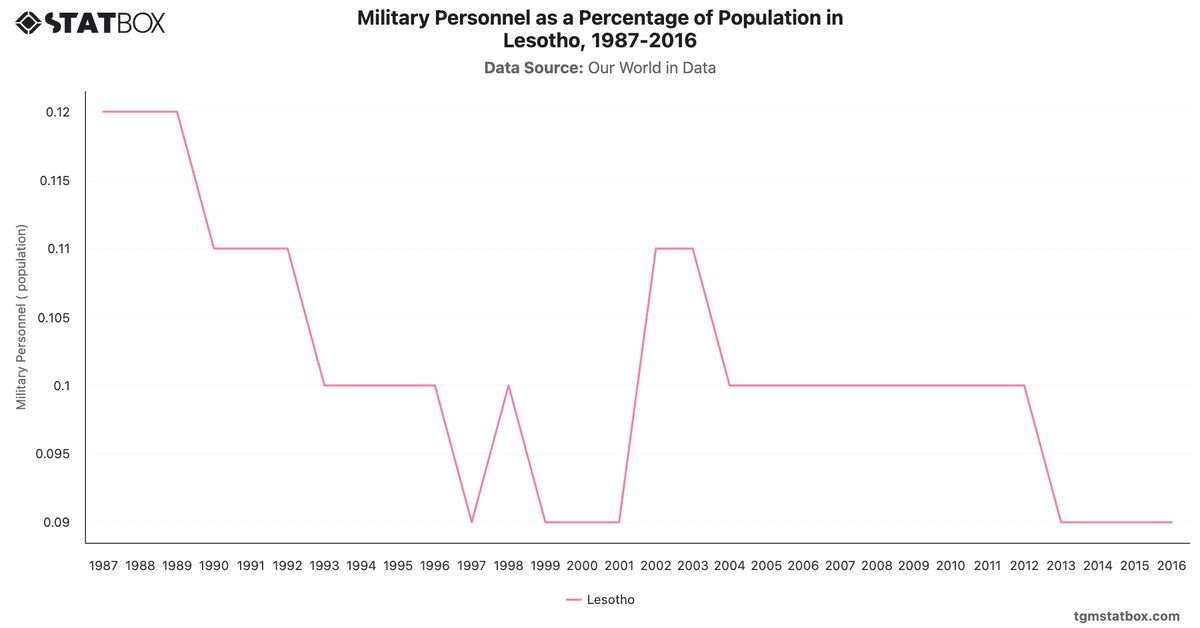
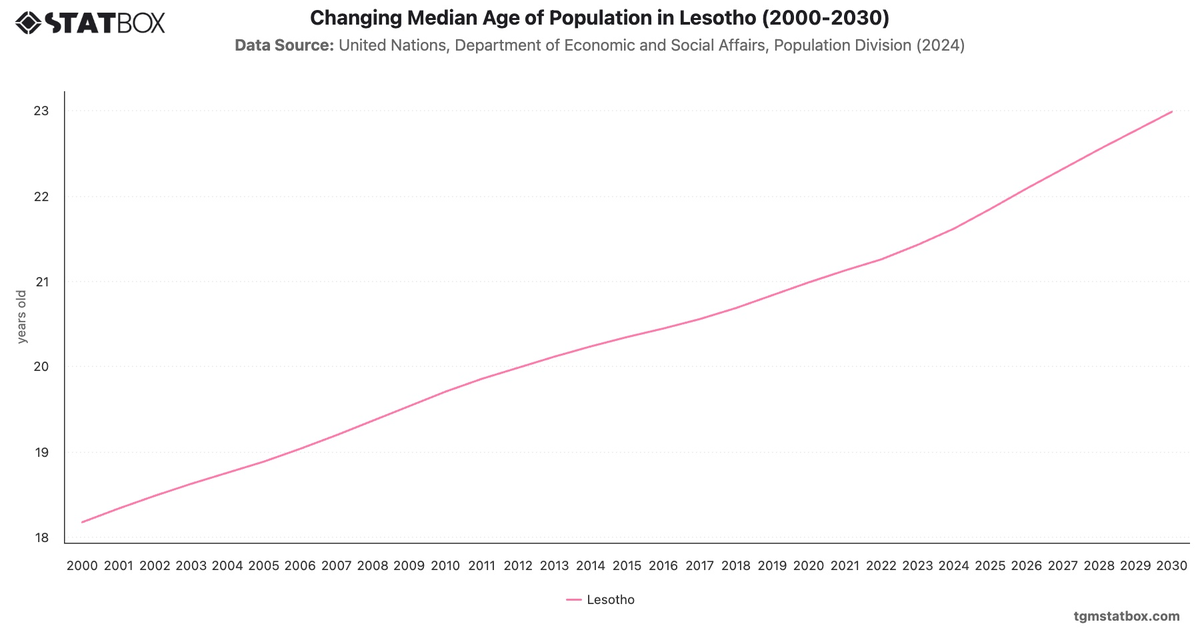
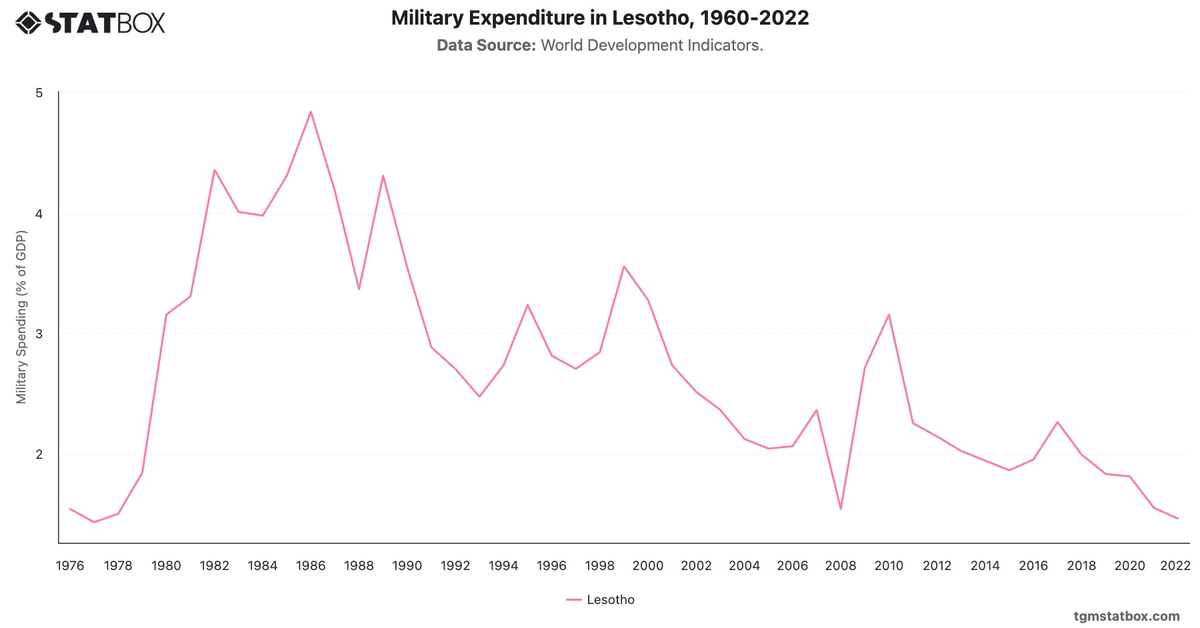
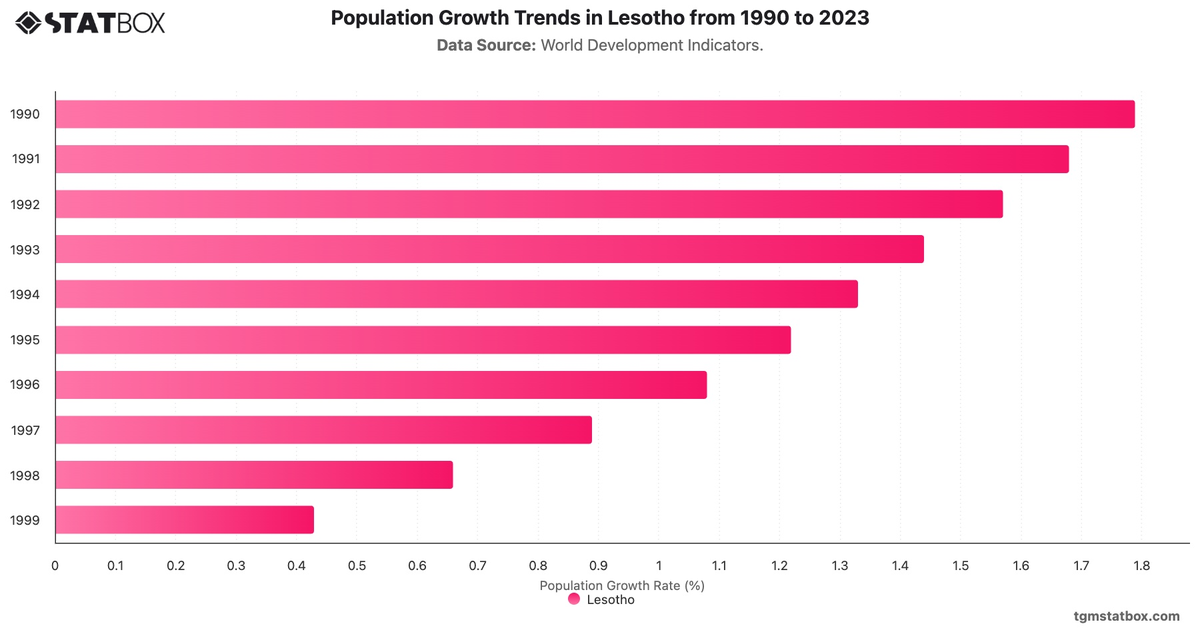
For additional information, visit statistics on Lesotho’s population figures, Lesotho’s military spending, Lesotho’s manufacturing sector share in GDP.