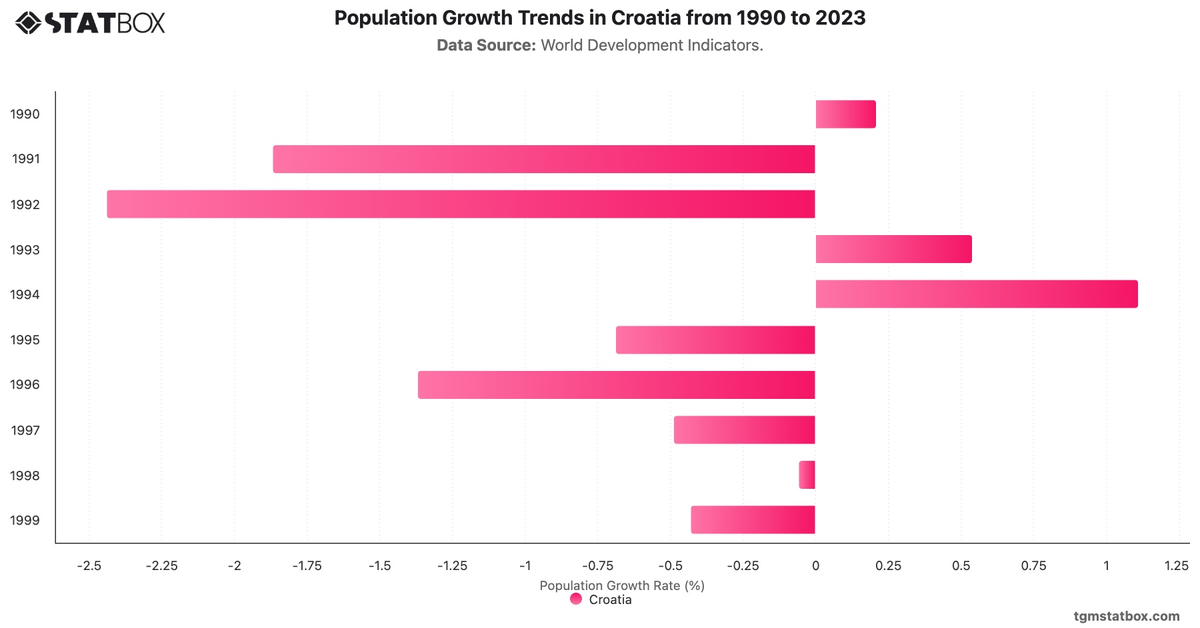
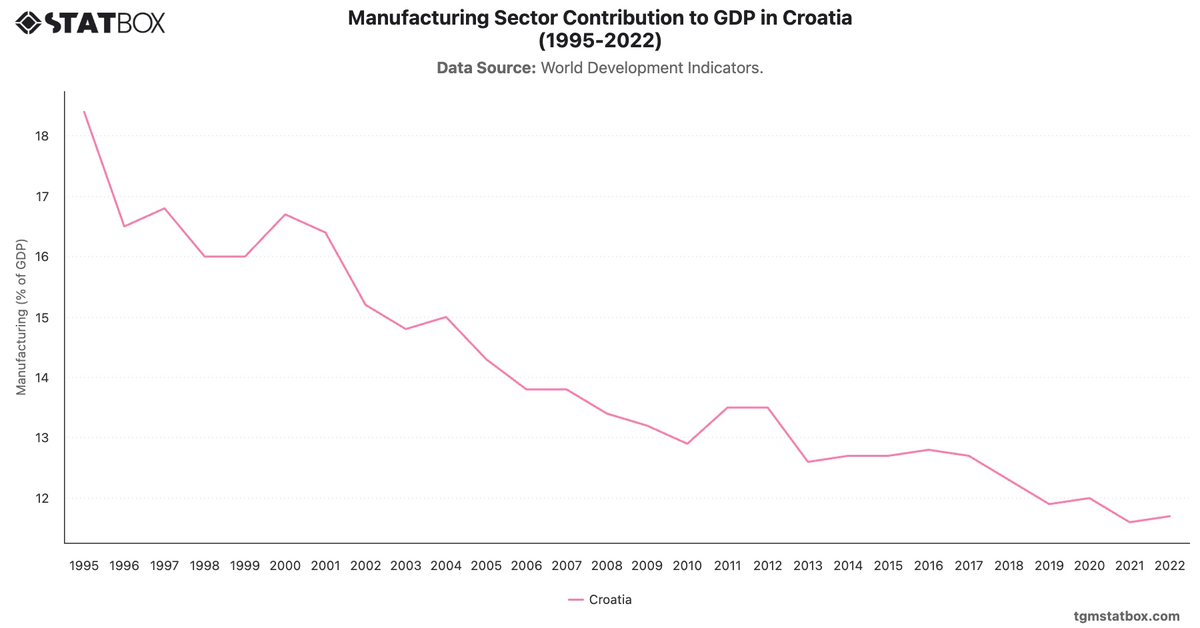
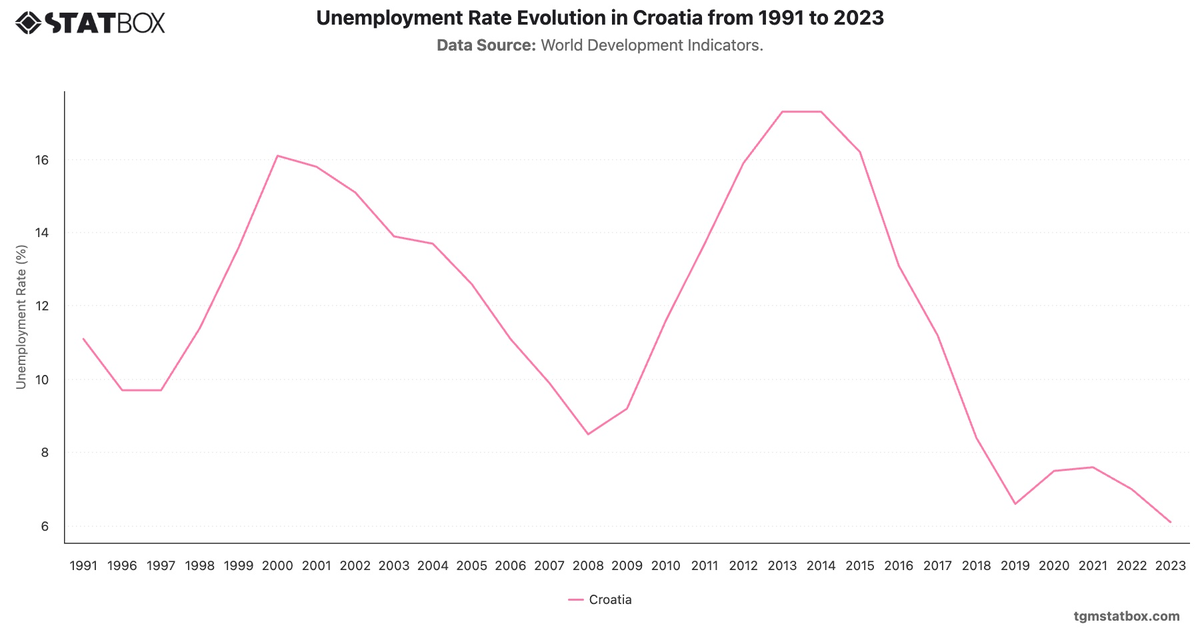
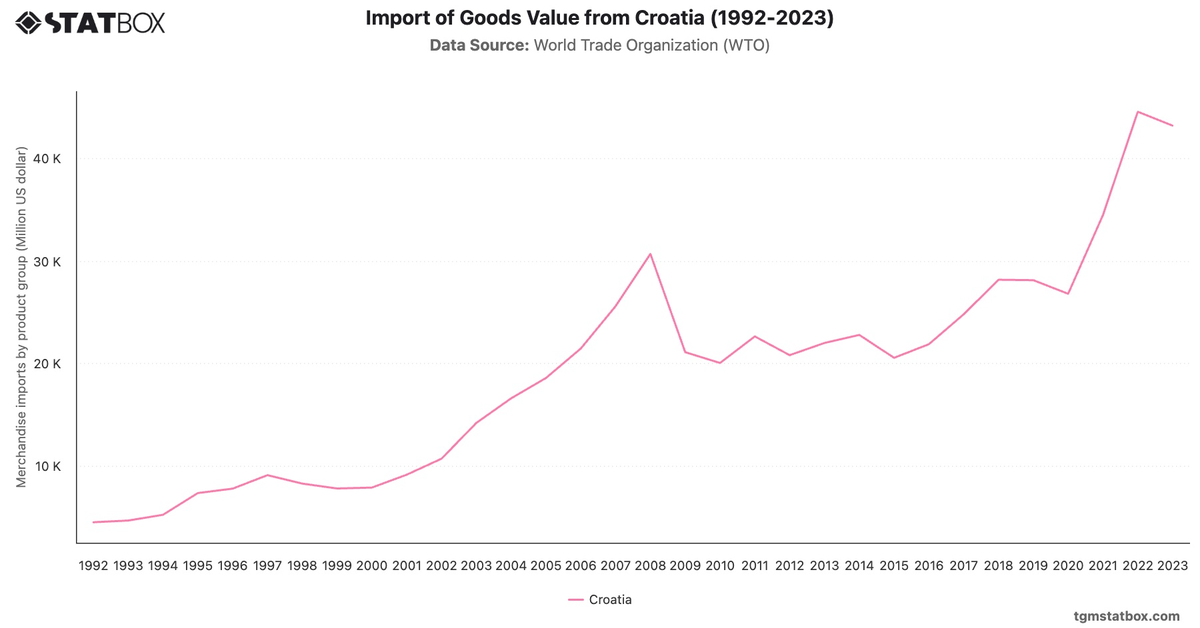
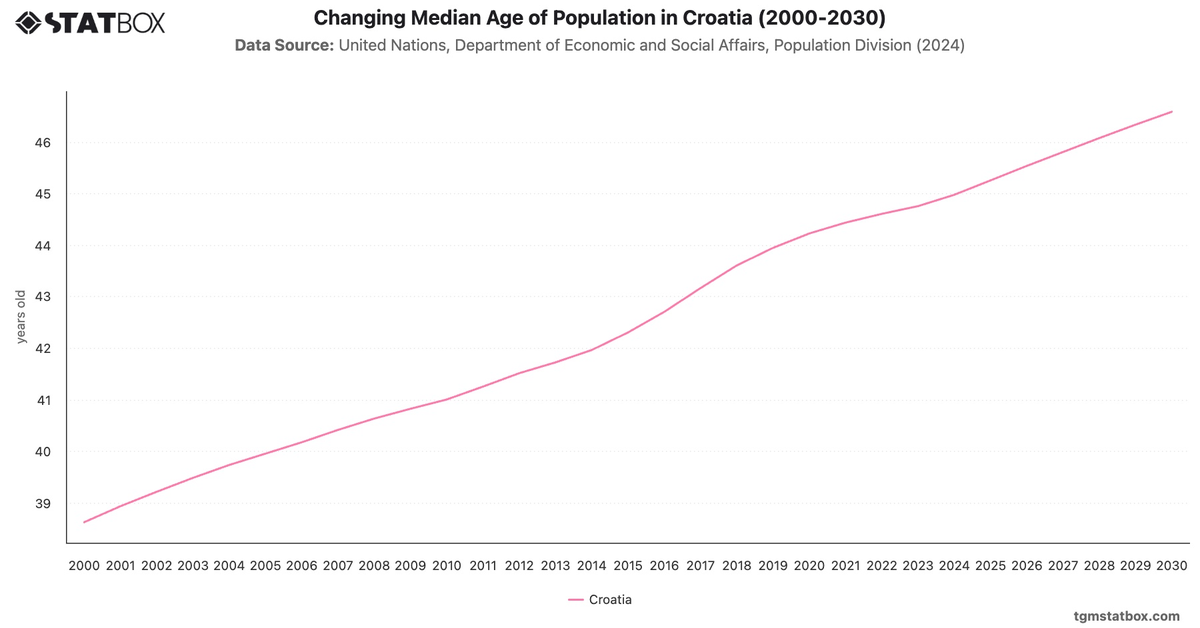
Croatia's working-age population percentage saw a minor decrease from 68.4% in 1990 to 66.7% in 2008, maintaining a relatively stable rate until 2015. A notable drop occurred thereafter, reaching 63.6% by 2022. Emigration following Croatia’s EU accession in 2013, along with an aging population, contributed to this decline. The demographic shift poses challenges to Croatia’s workforce sustainability and reflects broader regional trends of labor migration and aging in Central and Eastern Europe.
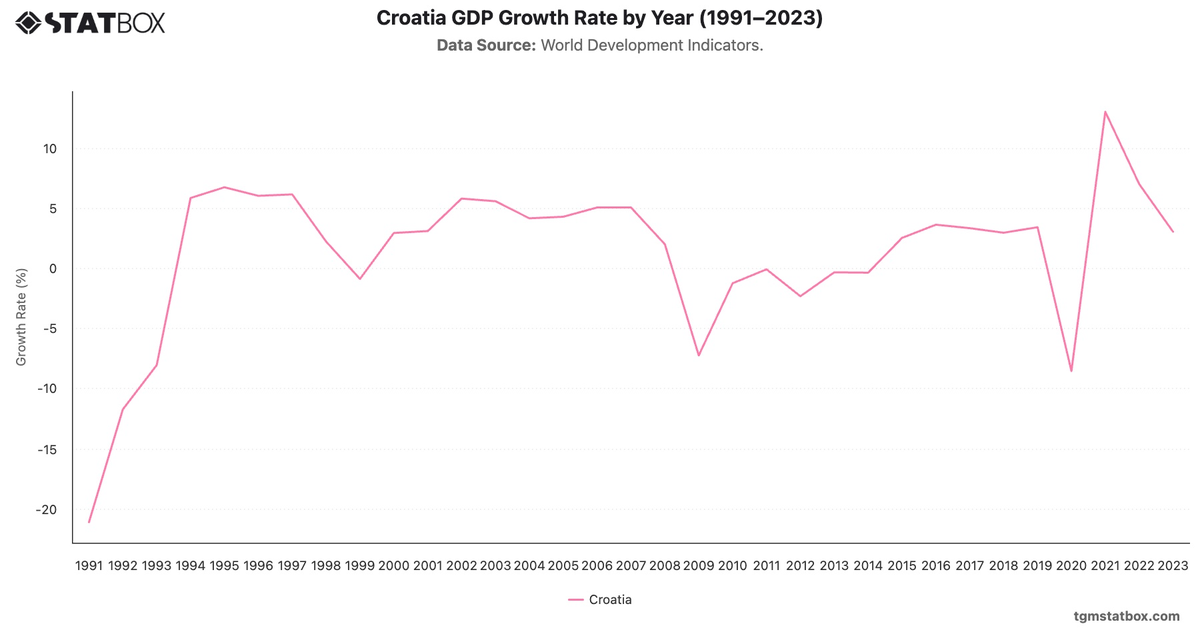
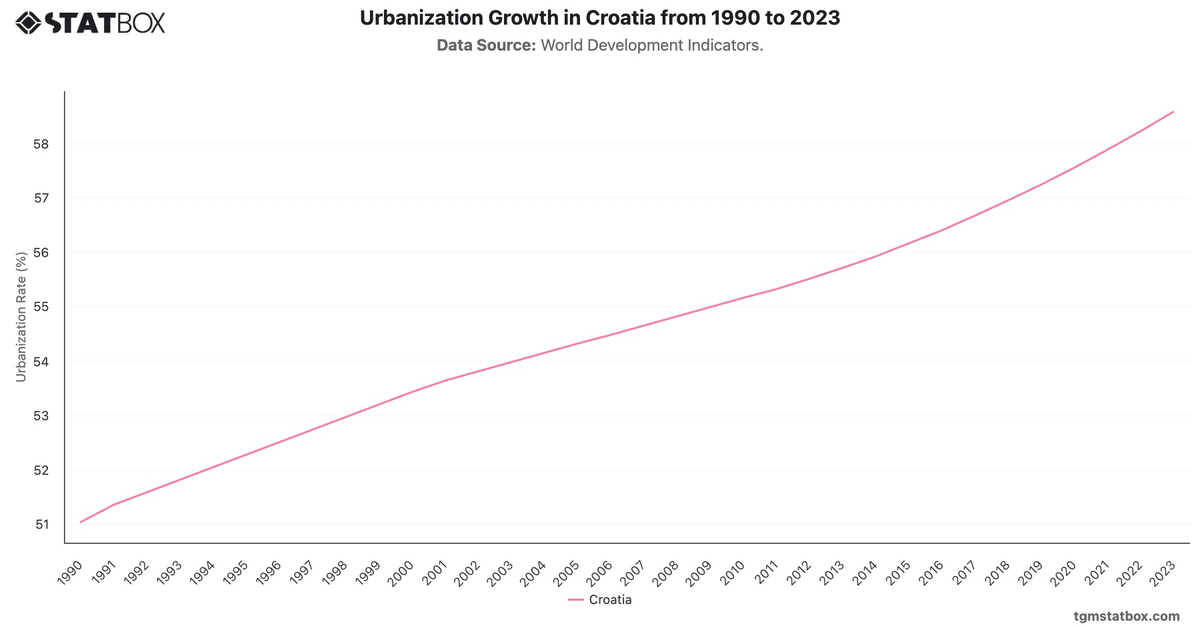
Find out more through related statistics on rise in urbanization in croatia, Croatia’s military personnel share, Croatia’s annual GDP growth rate.