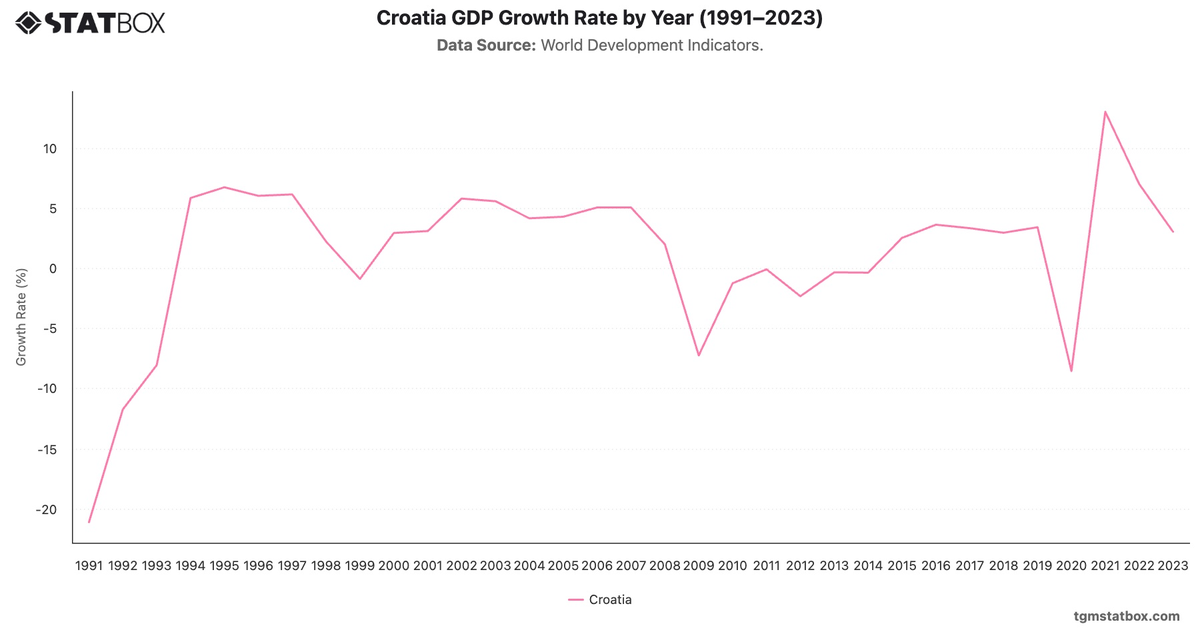
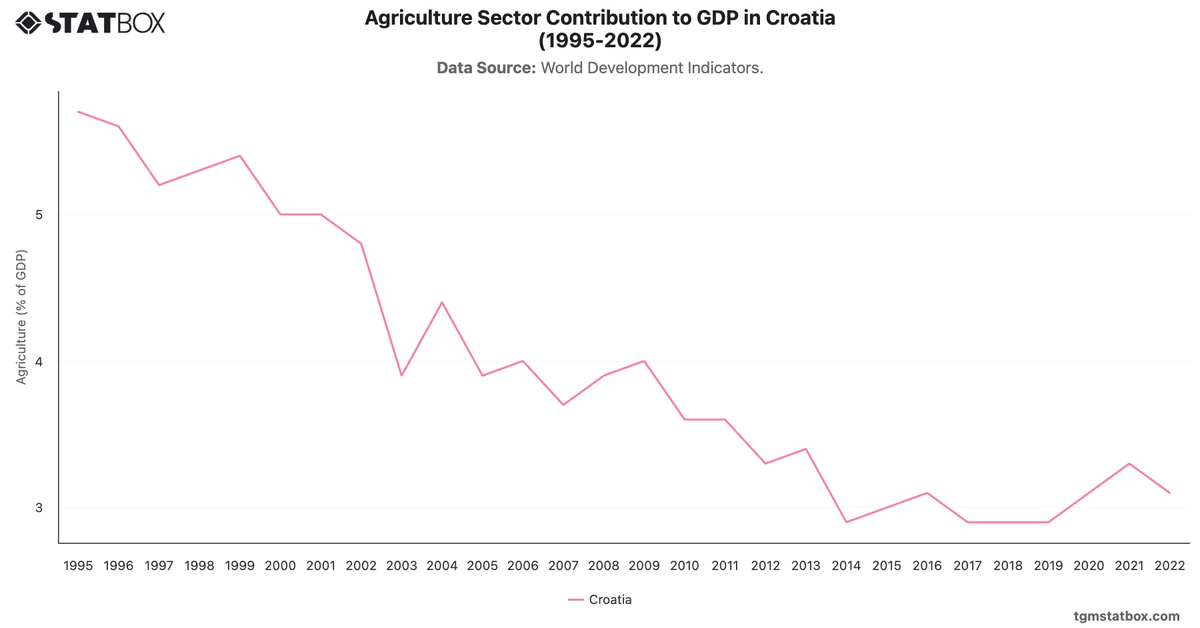
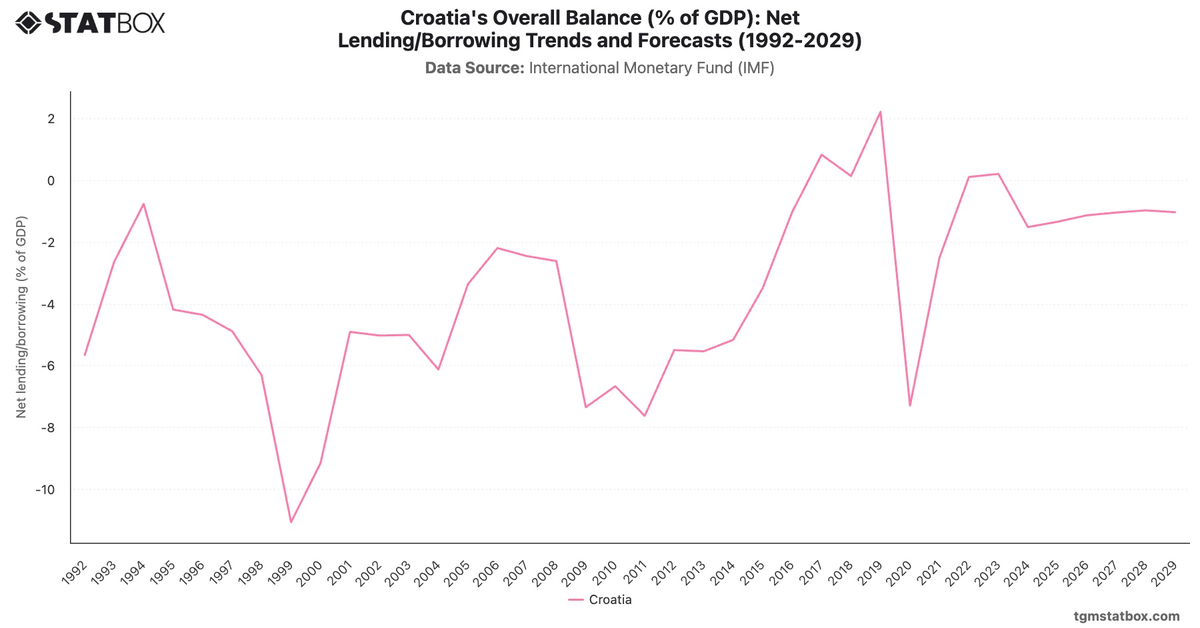
Croatia’s unemployment rate reflects its transition from a war-impacted economy in the 1990s to a stable member of the European Union. Starting high at 11.1% in 1991, Croatia faced elevated unemployment rates due to the economic disruptions from the Croatian War of Independence. The situation worsened through the late 1990s, with unemployment peaking at 16.1% in 2000 as the country rebuilt its economy.
The 2008 financial crisis led to a new wave of job losses, reaching 17.3% in 2013–2014. However, with economic reforms and Croatia’s accession to the EU in 2013, unemployment gradually decreased. By 2019, the rate had reached a low of 6.6%. Despite a slight increase to 7.5% in 2020 due to the pandemic, Croatia’s unemployment rate resumed its decline, standing at 6.1% in 2023.
The 2008 financial crisis led to a new wave of job losses, reaching 17.3% in 2013–2014. However, with economic reforms and Croatia’s accession to the EU in 2013, unemployment gradually decreased. By 2019, the rate had reached a low of 6.6%. Despite a slight increase to 7.5% in 2020 due to the pandemic, Croatia’s unemployment rate resumed its decline, standing at 6.1% in 2023.
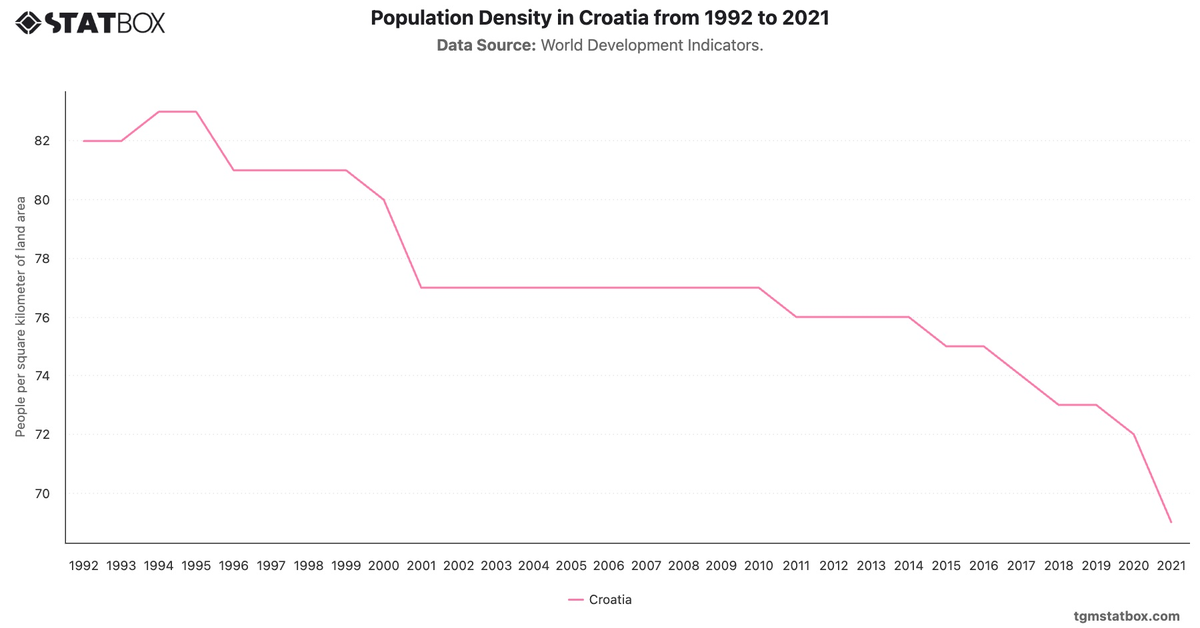
For a deeper dive into the topic, explore Croatia’s death rate fluctuations, Croatia’s population density, Croatia’s mortality rate changes.