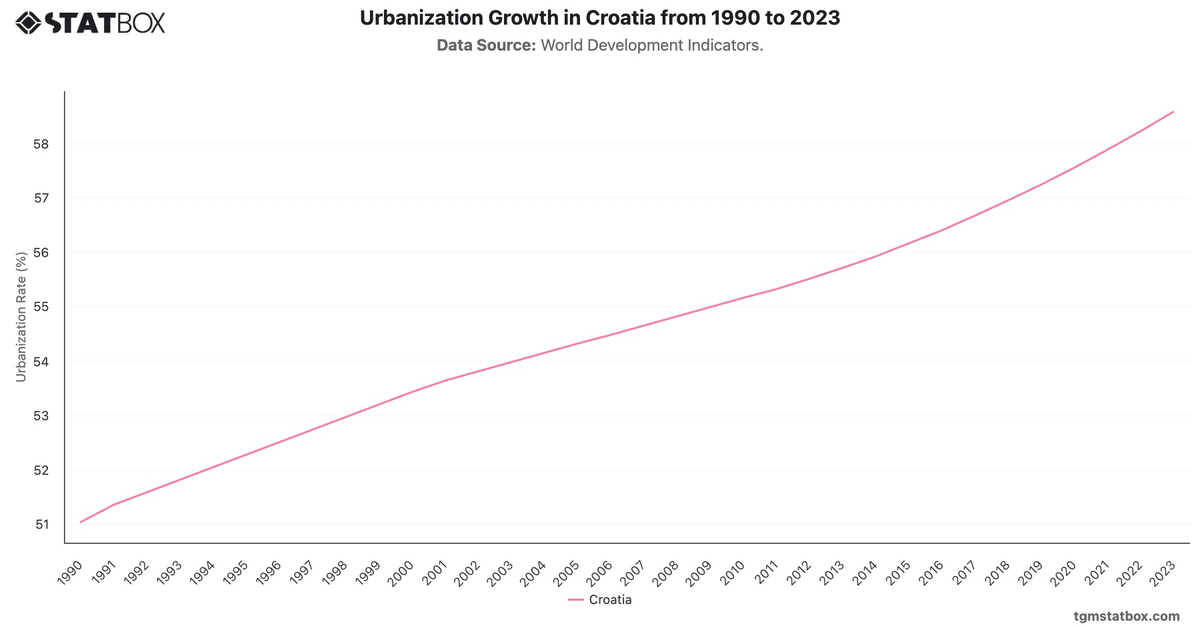
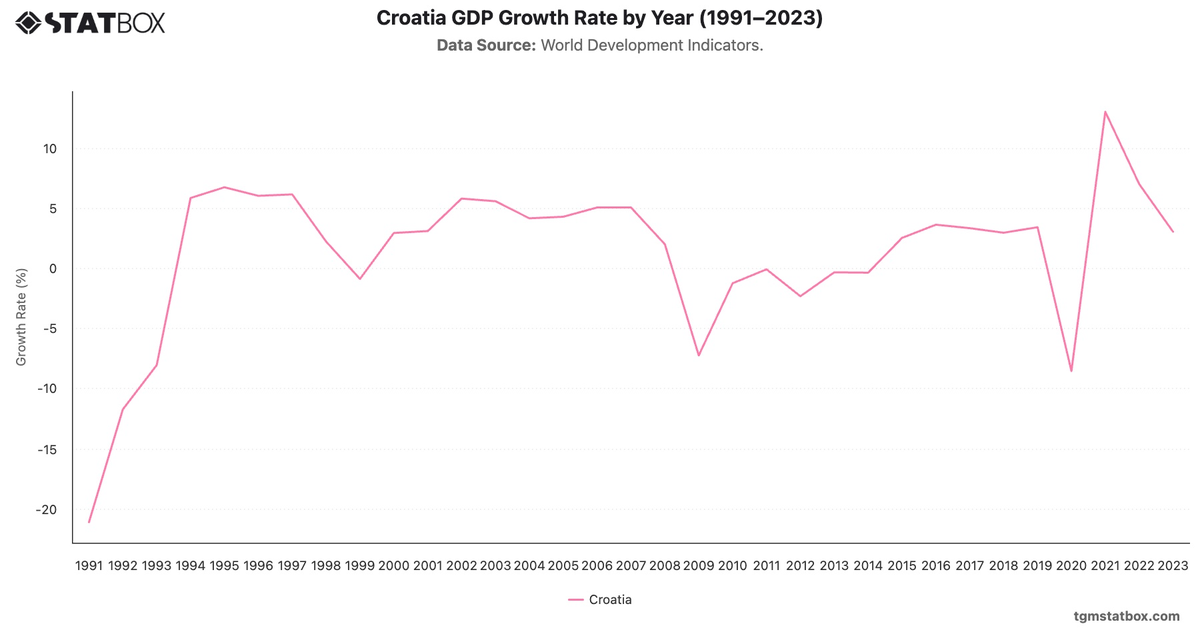
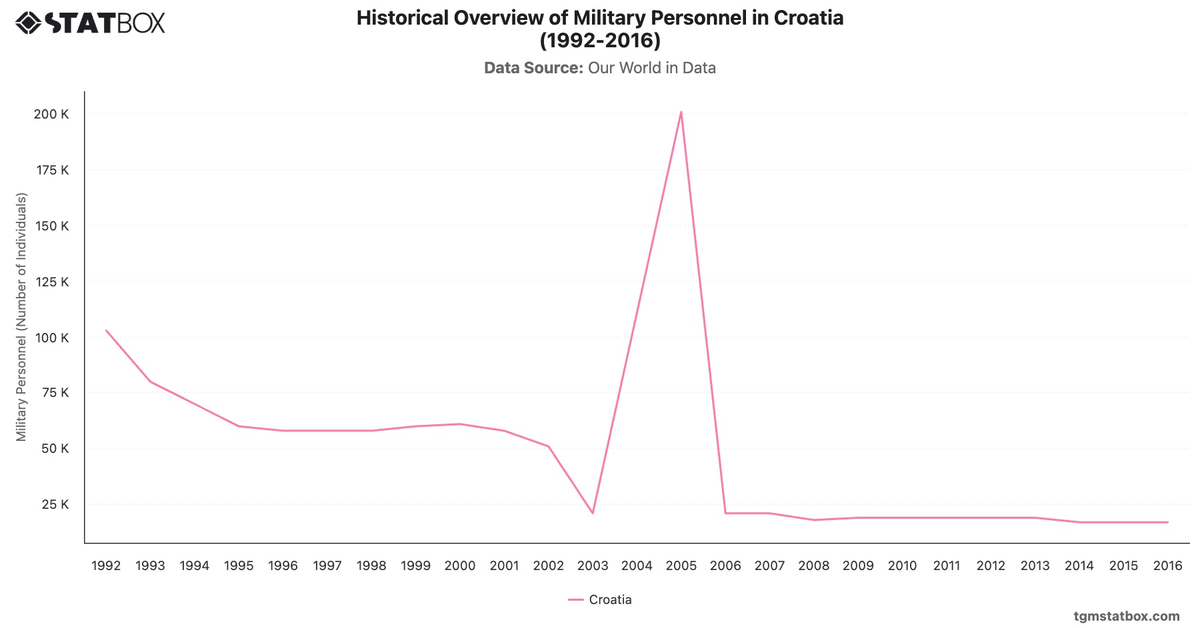
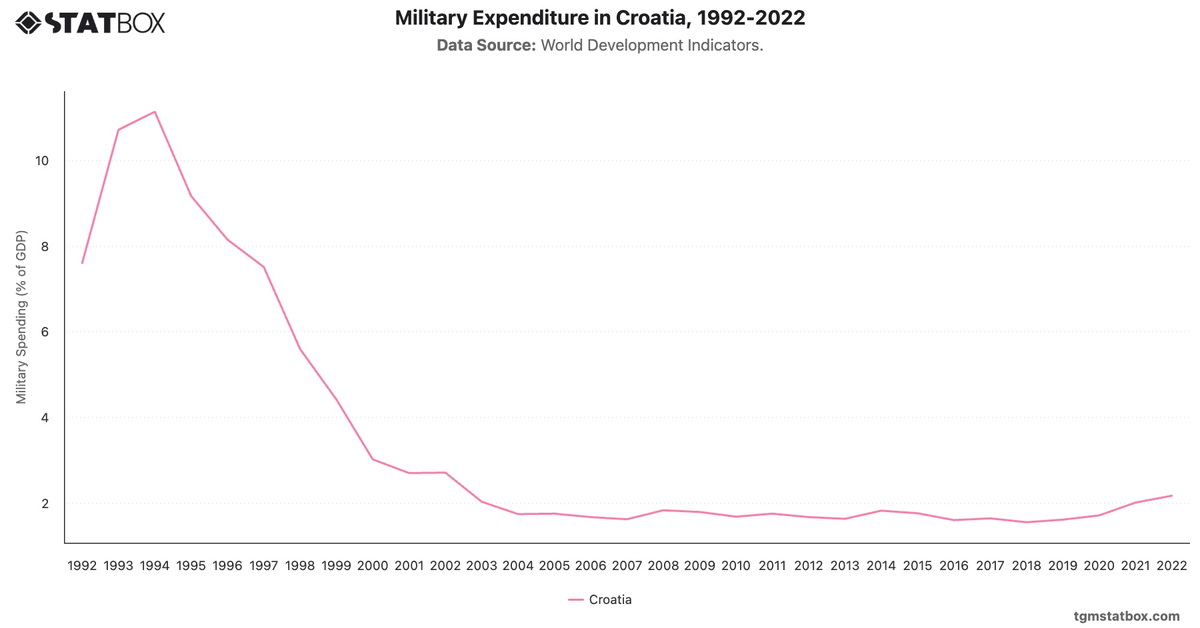
Croatia's military personnel as a percentage of the population experienced significant fluctuations during the 1990s, primarily due to the Croatian War of Independence (1991-1995). Starting at 2.3% in 1992, Croatia’s military personnel percentage dropped to 1.3% by 1995, reflecting the end of the war and the country’s demobilization efforts. In the post-war period, urbanization increased as people moved to cities for economic opportunities, influencing a gradual shift toward a peacetime economy.
The most notable spike occurred in 2005, with military personnel reaching 4.6% of the population—a temporary increase likely linked to restructuring and defense reforms. After 2006, the military percentage dropped significantly, stabilizing at 0.4% from 2008 onward. This decline correlates with Croatia’s alignment with NATO standards, modernization, and focus on urban growth, reducing the need for a large standing military.
The most notable spike occurred in 2005, with military personnel reaching 4.6% of the population—a temporary increase likely linked to restructuring and defense reforms. After 2006, the military percentage dropped significantly, stabilizing at 0.4% from 2008 onward. This decline correlates with Croatia’s alignment with NATO standards, modernization, and focus on urban growth, reducing the need for a large standing military.
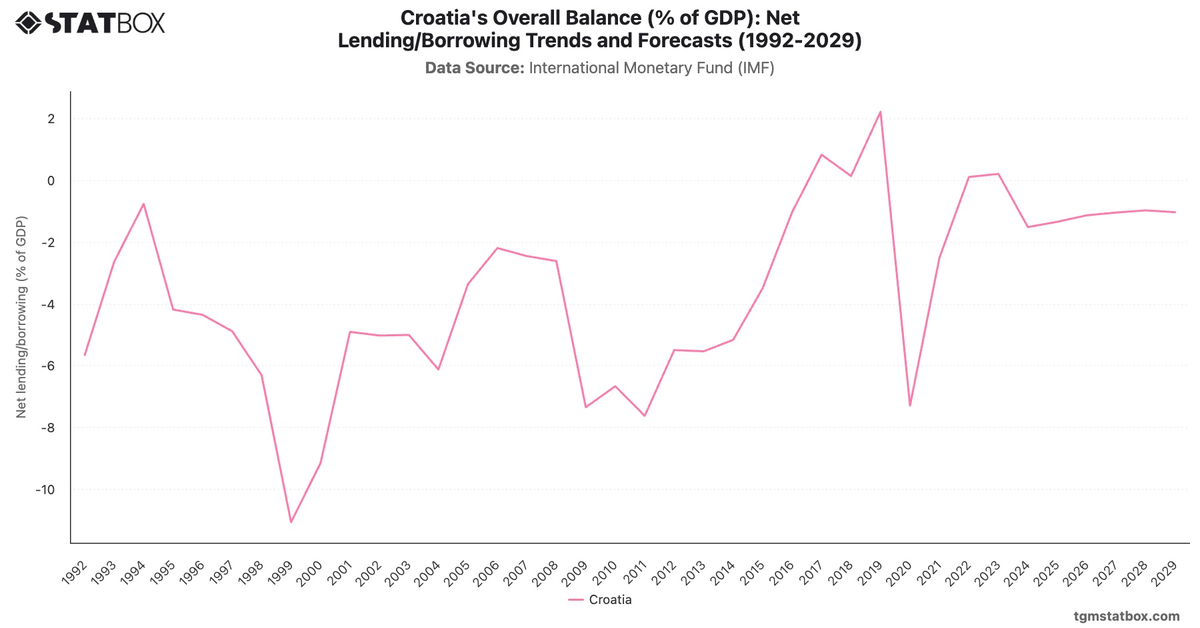
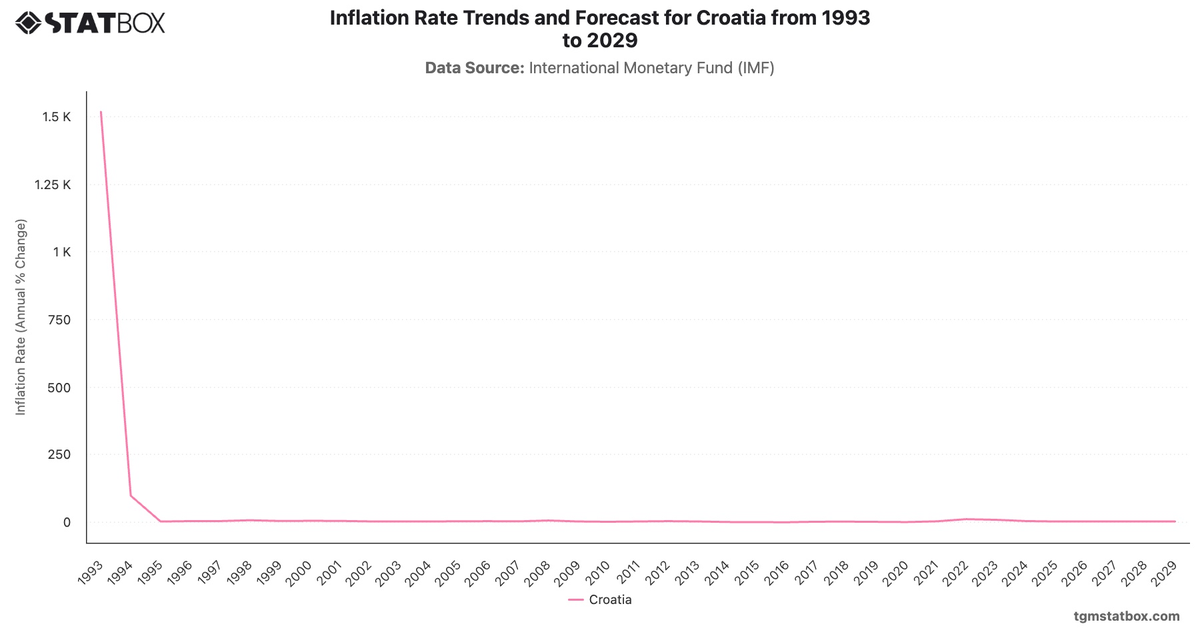
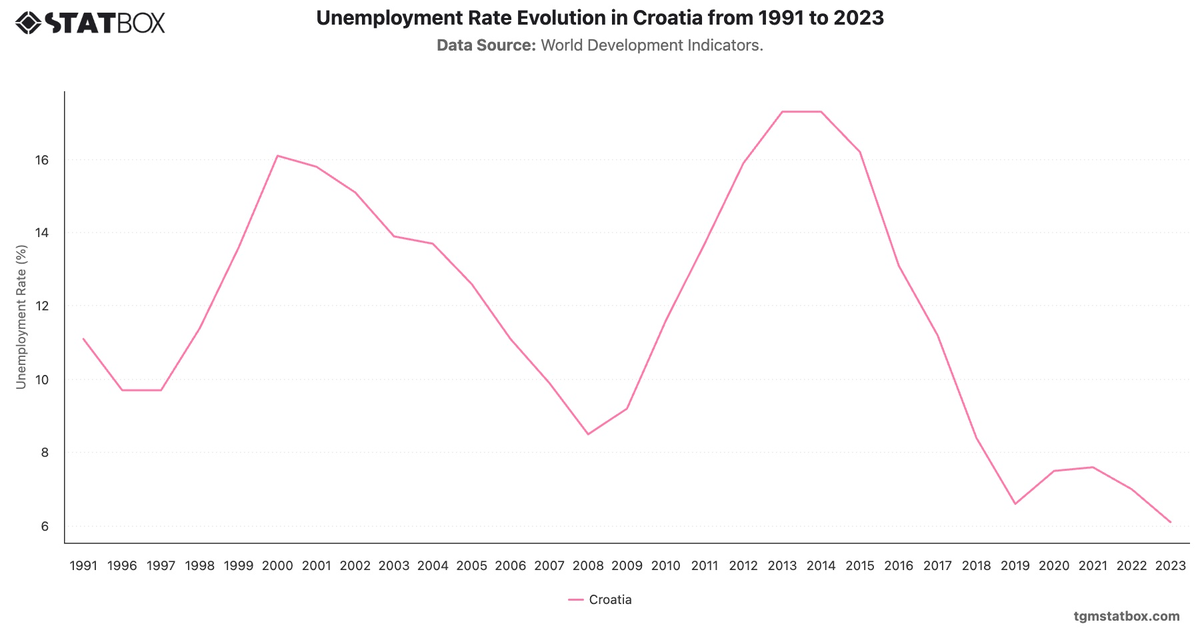
For a broader context, visit other statistics on Croatia’s annual GDP growth rate, rise in urbanization in croatia, Croatia’s unemployment rate.