Tunisia’s fiscal history reflects economic and political challenges. Deficits were moderate in the 1990s, averaging around -3%. However, the Arab Spring in 2011 triggered economic disruptions, leading to deficits peaking at -7.0% in 2013.
The COVID-19 pandemic deepened the deficit to -9.0% in 2020. While recovery efforts have reduced the deficit to -6.6% in 2023, projections suggest stabilization around -5.0% by 2029, emphasizing the need for structural reforms to enhance fiscal sustainability.
The COVID-19 pandemic deepened the deficit to -9.0% in 2020. While recovery efforts have reduced the deficit to -6.6% in 2023, projections suggest stabilization around -5.0% by 2029, emphasizing the need for structural reforms to enhance fiscal sustainability.
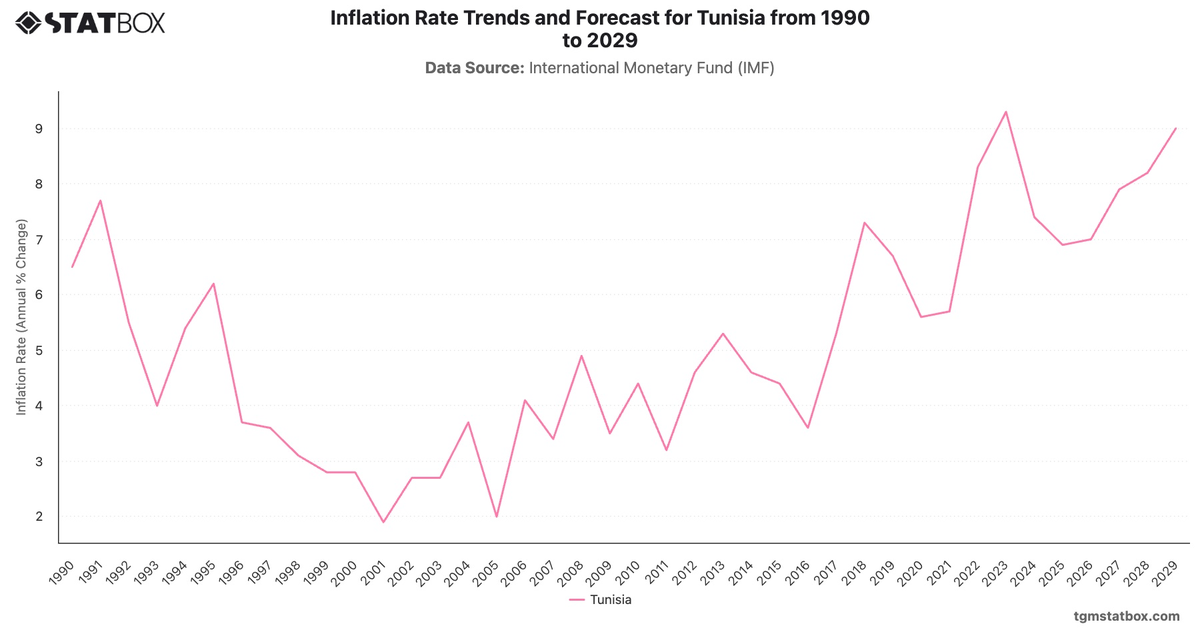
For additional information, visit statistics on Tunisia’s inflation rate trajectory, Tunisia’s annual GDP growth rate, Tunisia’s net ODA received.