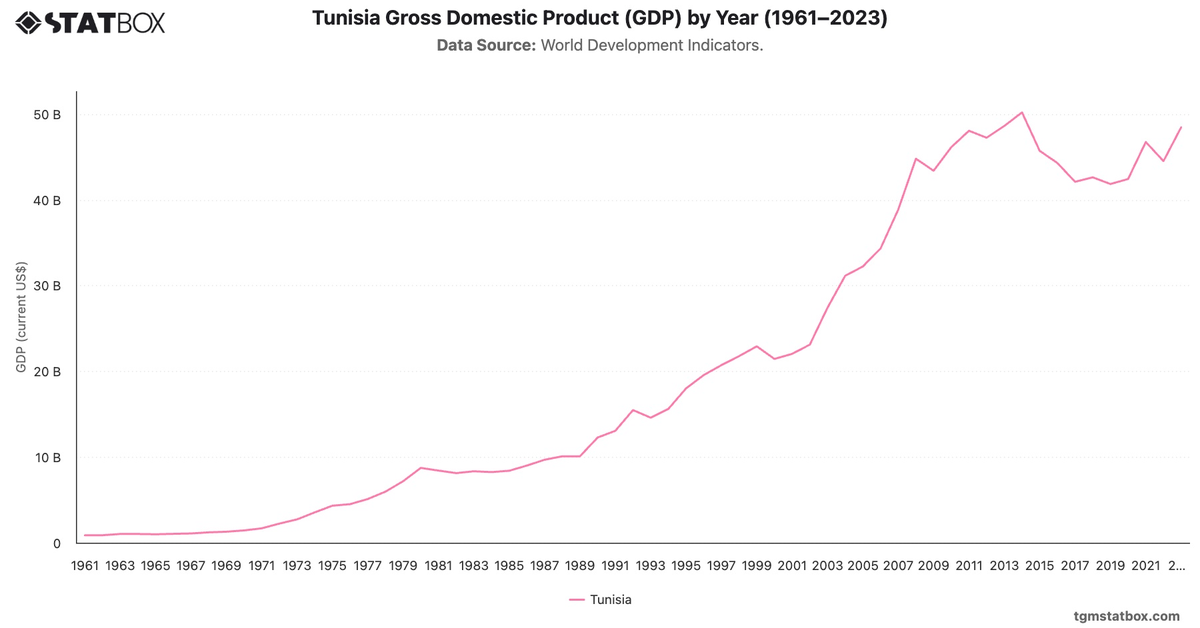
Tunisia's central government debt fluctuated between 47.7% and 54.28% of GDP during the 1990s, reflecting efforts to balance economic growth with public spending. The 2000s saw gradual debt reduction, declining to 42.7% by 2007, as the country benefited from economic liberalization and steady growth.
However, the Arab Spring in 2011 marked a turning point, with debt climbing to 46.97% as political instability and increased public spending strained the economy. By 2020, debt reached 77.62%, driven by slower growth and the COVID-19 pandemic. Despite stabilizing slightly at 79.36% in 2022, Tunisia's debt challenges highlight ongoing fiscal pressures.
However, the Arab Spring in 2011 marked a turning point, with debt climbing to 46.97% as political instability and increased public spending strained the economy. By 2020, debt reached 77.62%, driven by slower growth and the COVID-19 pandemic. Despite stabilizing slightly at 79.36% in 2022, Tunisia's debt challenges highlight ongoing fiscal pressures.
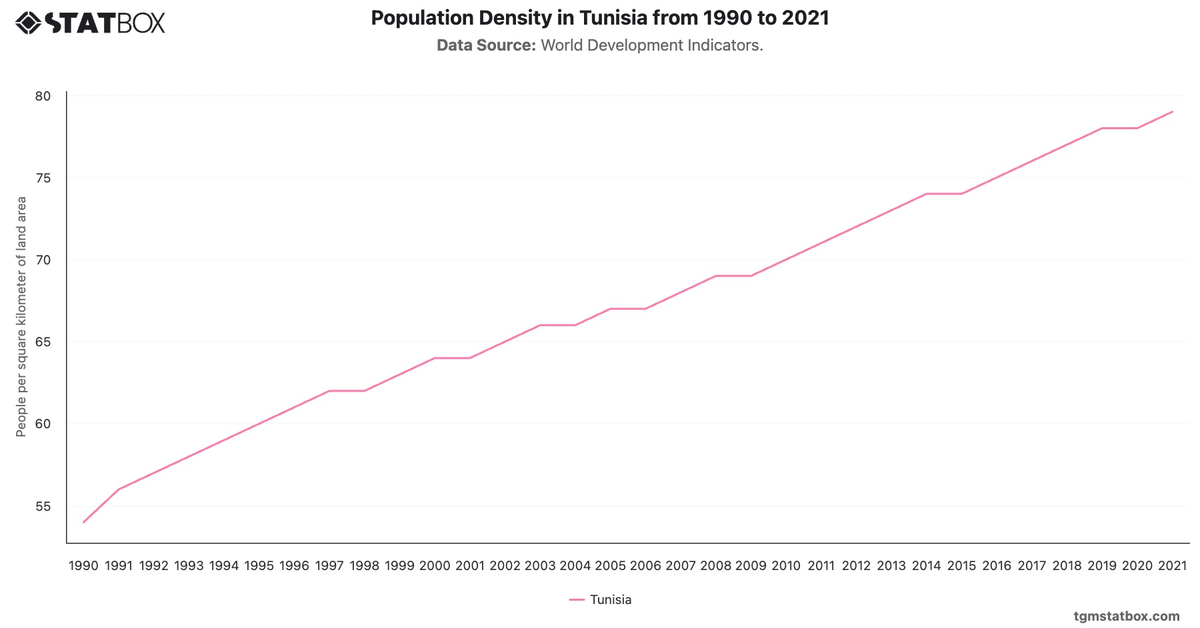
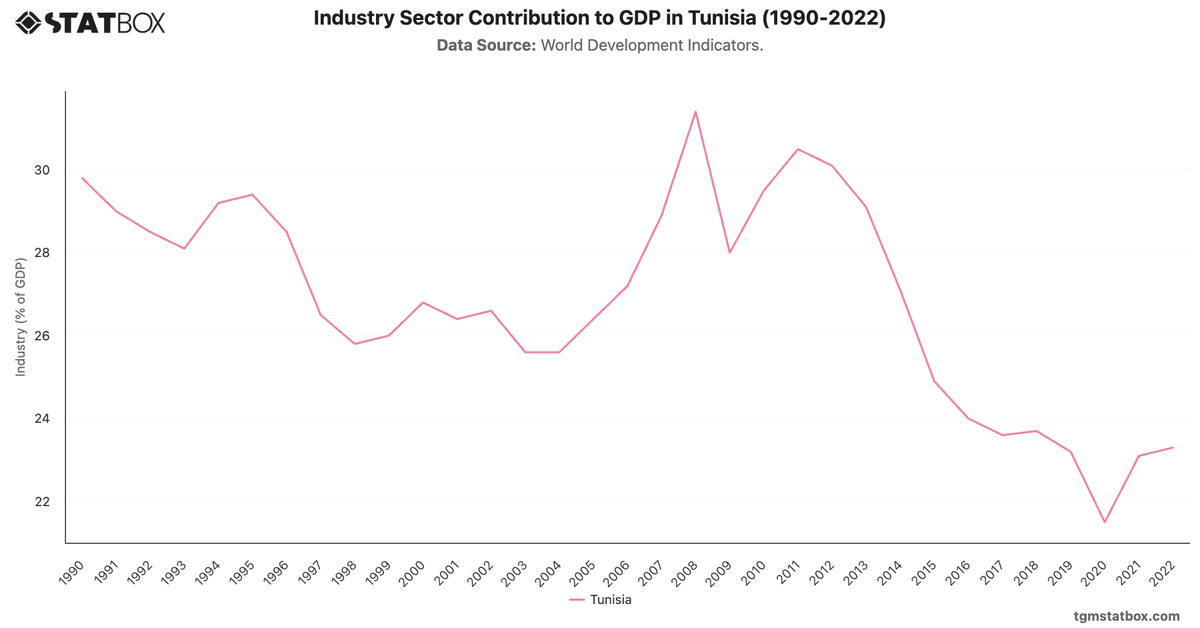
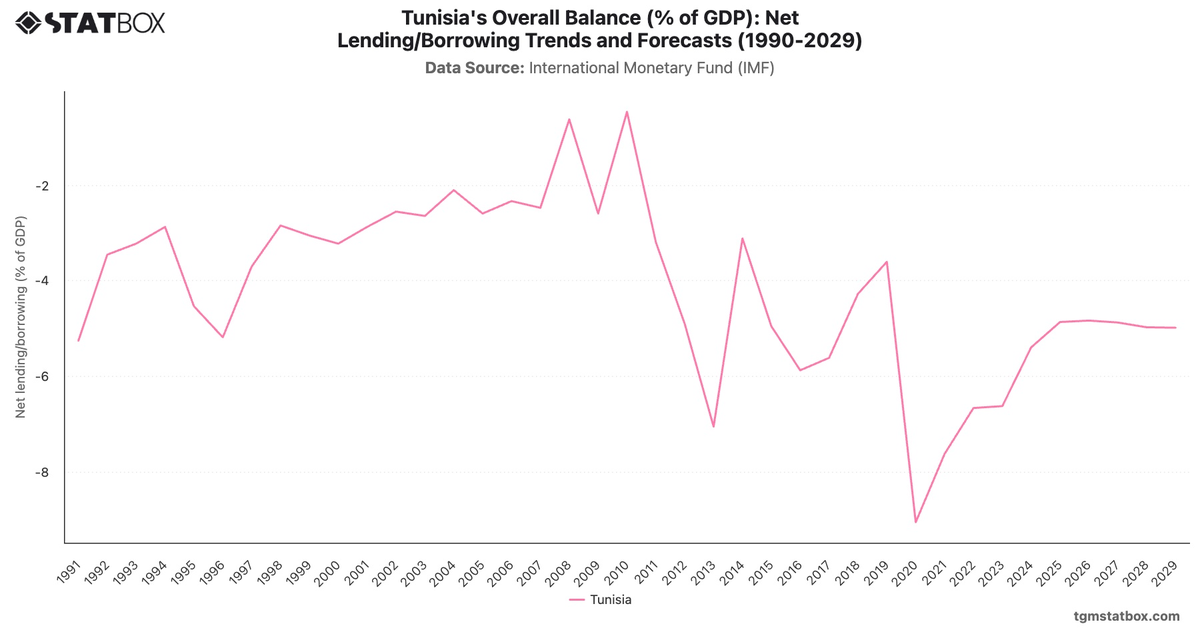
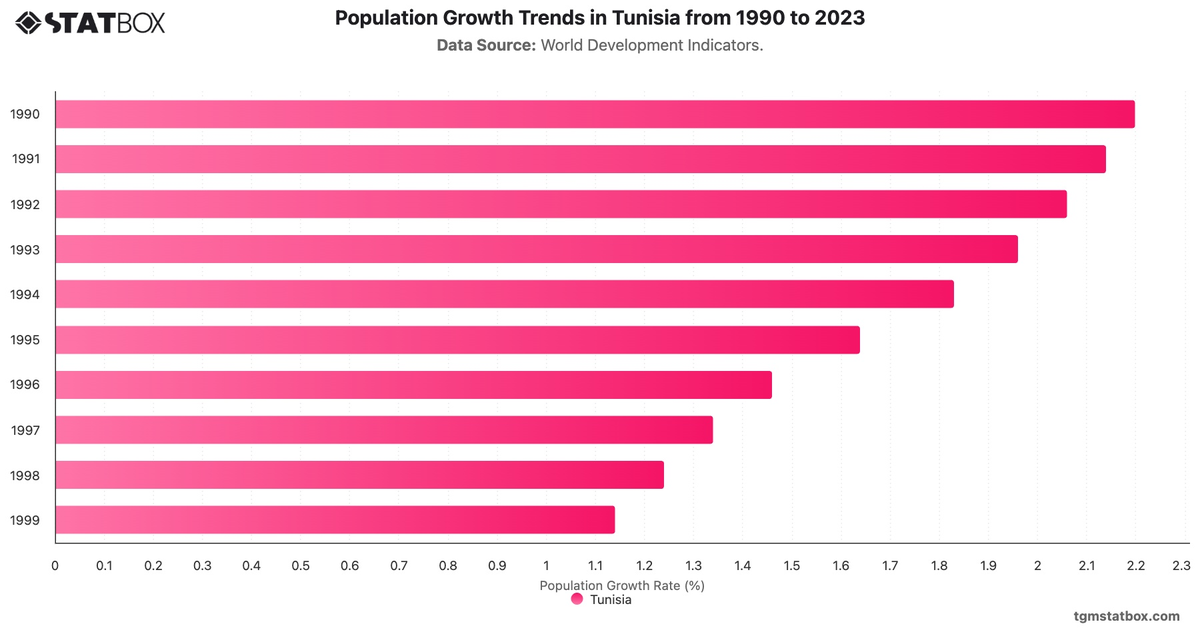
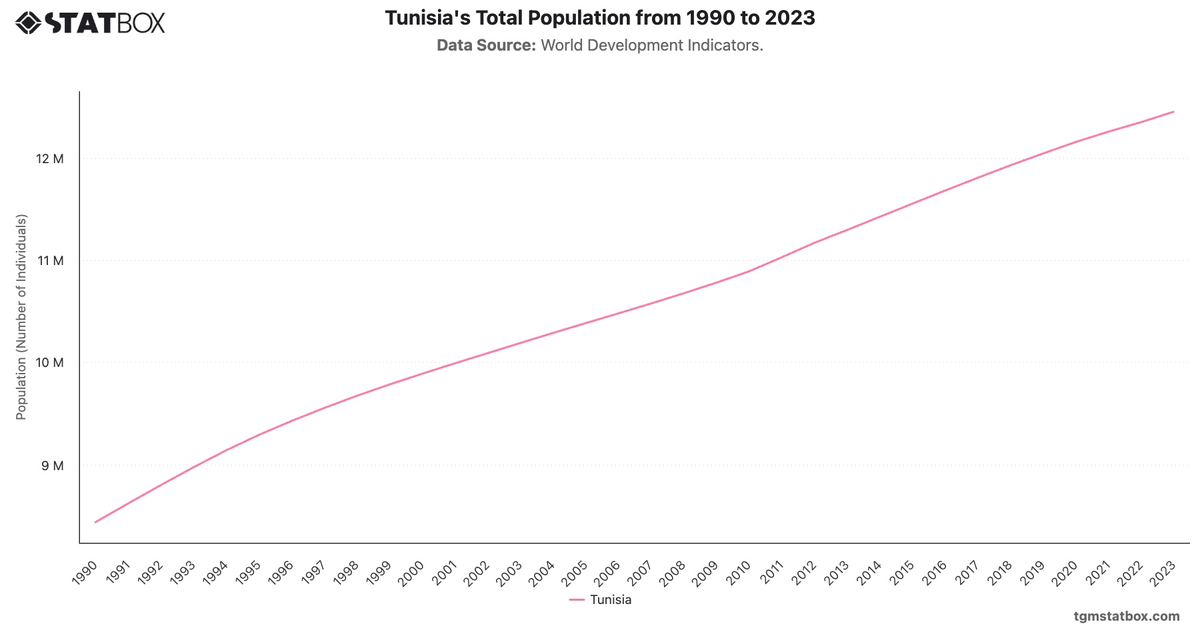
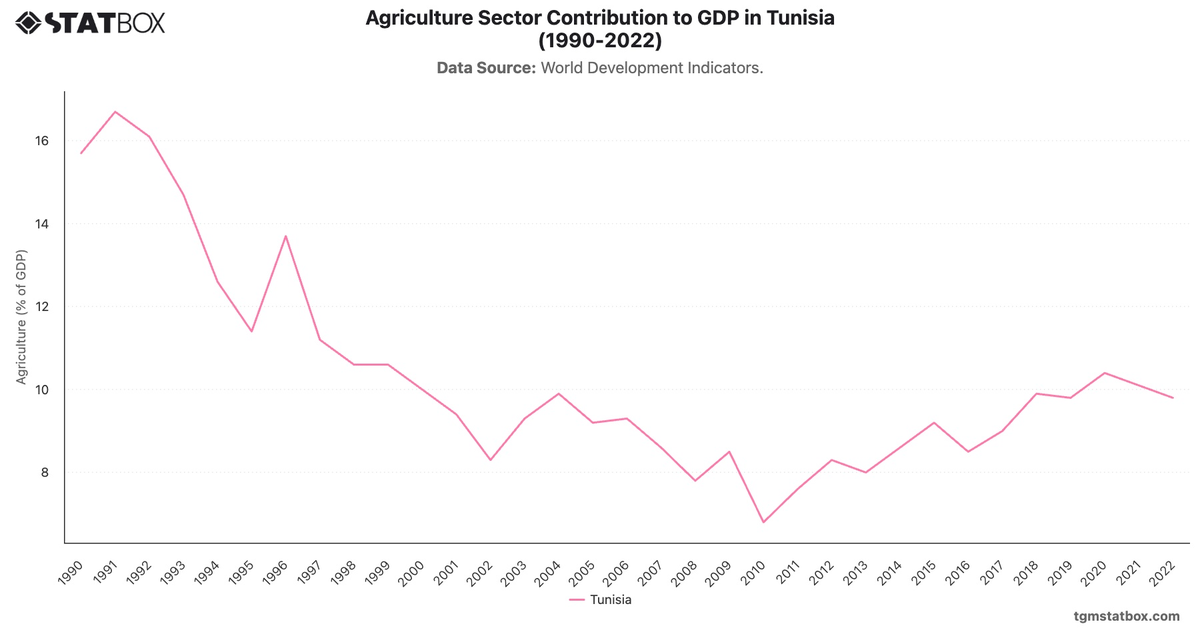
Gain a broader perspective by reviewing Tunisia’s manufacturing sector share in GDP, Tunisia’s population total, Tunisia’s net lending/borrowing relative to the GDP.