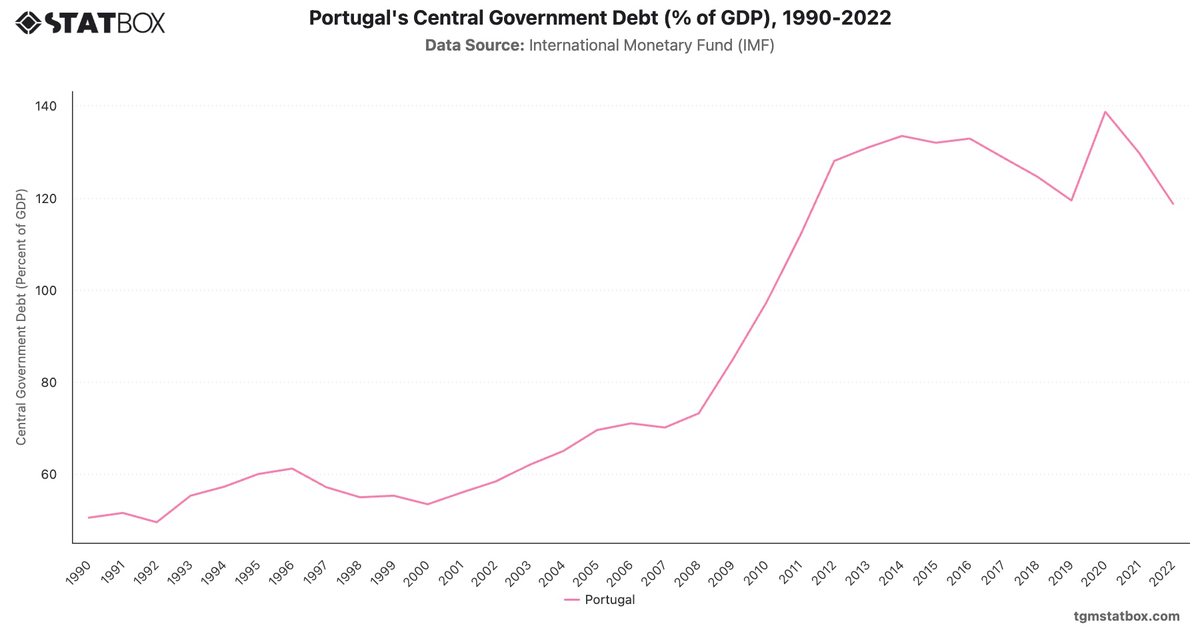
Portugal’s debt-to-GDP ratio saw sharp increases and decreases between 1990 and 2022. From 60.2% in 1990, debt rose steadily through the early 2000s, reaching 72.2% by 2005. The global financial crisis of 2008 and subsequent European debt crisis caused a rapid escalation, with debt levels peaking at 132.9% in 2014 as Portugal sought financial support from international institutions to stabilize its economy.
Post-2014, Portugal pursued austerity measures and structural reforms, which gradually reduced the debt ratio to 116.6% by 2019. The COVID-19 pandemic caused a temporary surge, pushing debt to 134.9% in 2020 as the government implemented stimulus measures. By 2022, Portugal’s debt ratio declined to 116.0%, showing recovery efforts and a return to fiscal stability.
Post-2014, Portugal pursued austerity measures and structural reforms, which gradually reduced the debt ratio to 116.6% by 2019. The COVID-19 pandemic caused a temporary surge, pushing debt to 134.9% in 2020 as the government implemented stimulus measures. By 2022, Portugal’s debt ratio declined to 116.0%, showing recovery efforts and a return to fiscal stability.
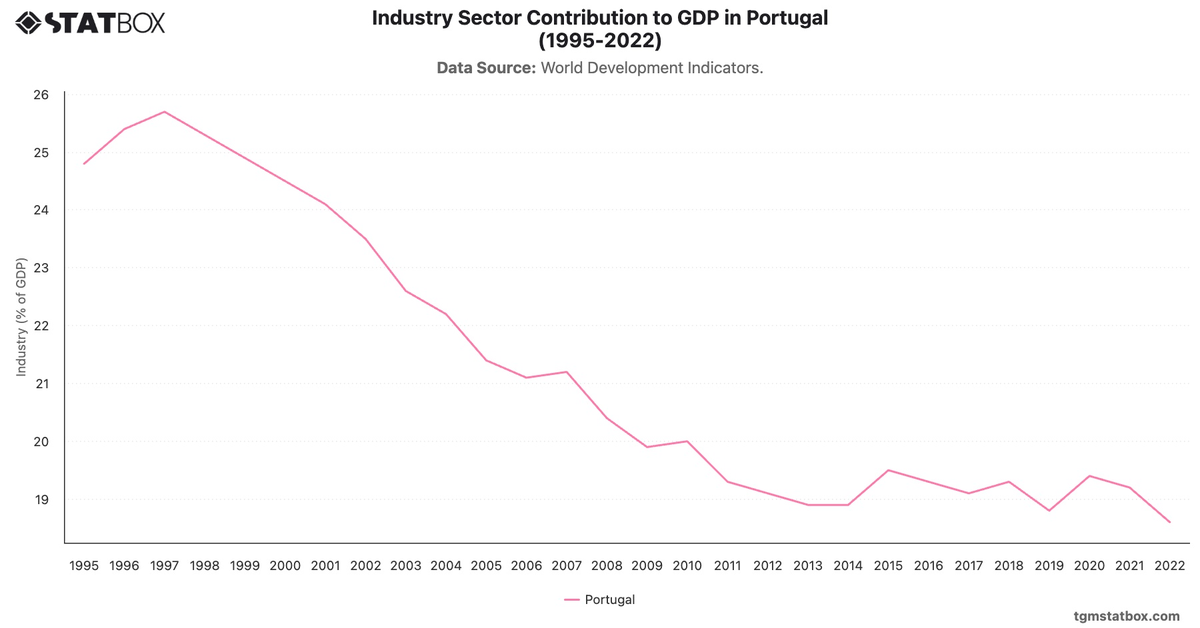
Find out more through related statistics on Portugal’s central government debt-to-GDP ratio, Portugal’s evolving mortality rate, Portugal’s industry sector share in GDP.