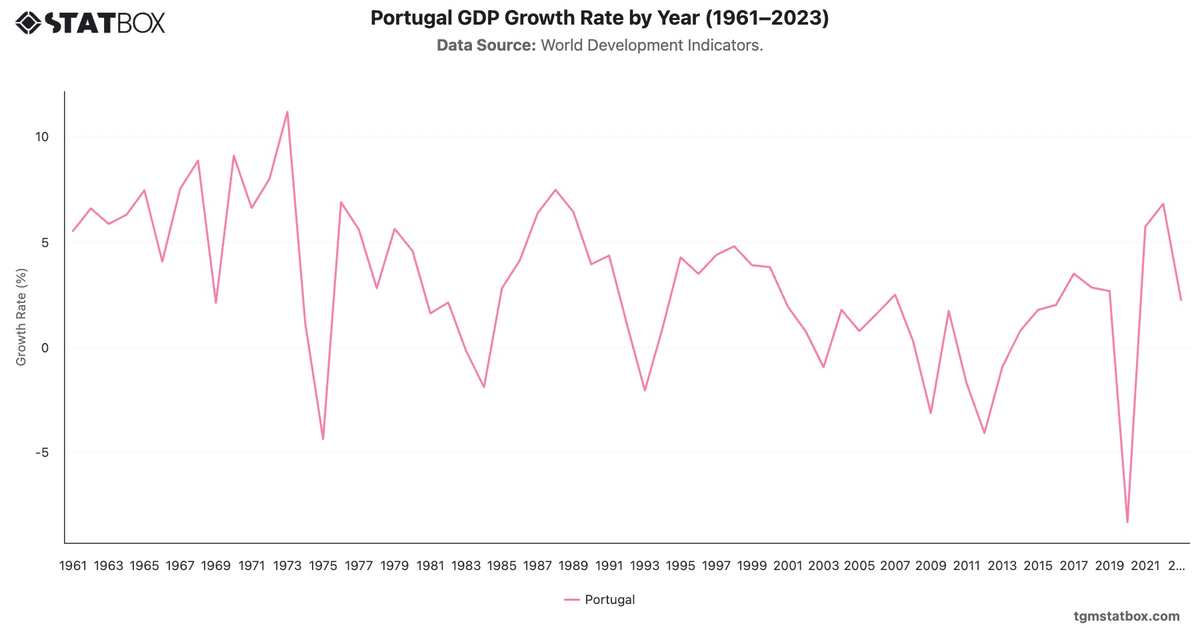
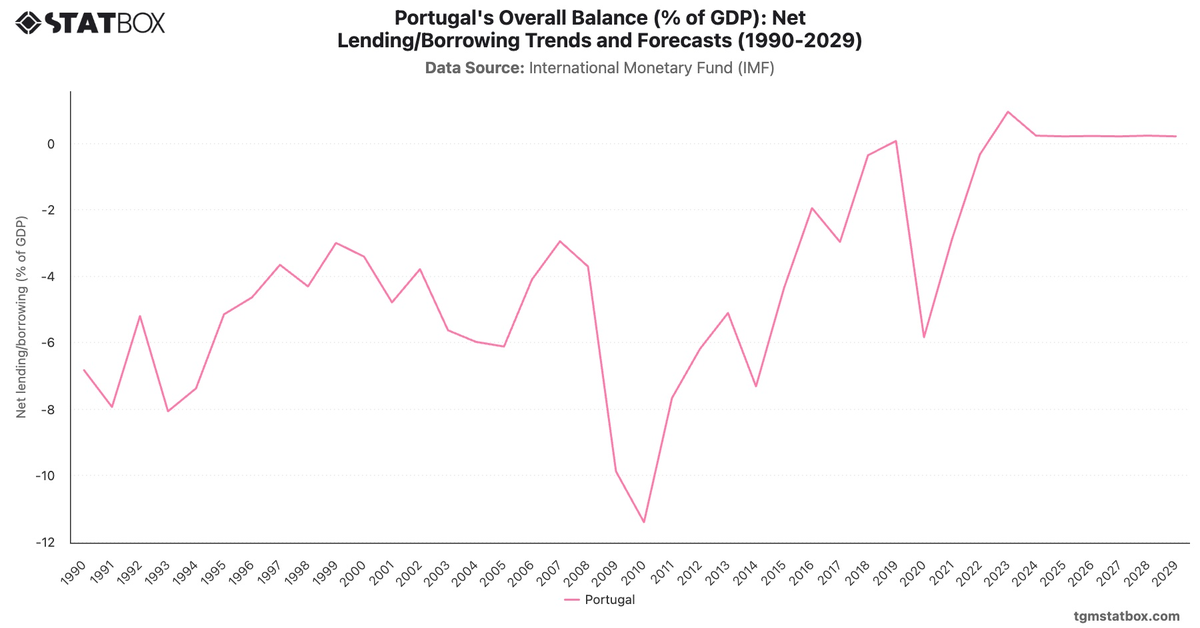
Portugal's debt trajectory highlights periods of fiscal stress and recovery. Debt rose steadily from 50.65% in 1990 to 71.12% in 2006 due to weak fiscal discipline and growing public spending. The global financial crisis and subsequent Eurozone debt crisis caused a sharp increase, with debt peaking at 133.51% in 2014.
Post-crisis fiscal reforms and economic recovery efforts reduced debt to 119.51% by 2019. However, pandemic-related spending pushed debt to 138.76% in 2020, before declining to 118.77% in 2022 as fiscal consolidation resumed.
Post-crisis fiscal reforms and economic recovery efforts reduced debt to 119.51% by 2019. However, pandemic-related spending pushed debt to 138.76% in 2020, before declining to 118.77% in 2022 as fiscal consolidation resumed.
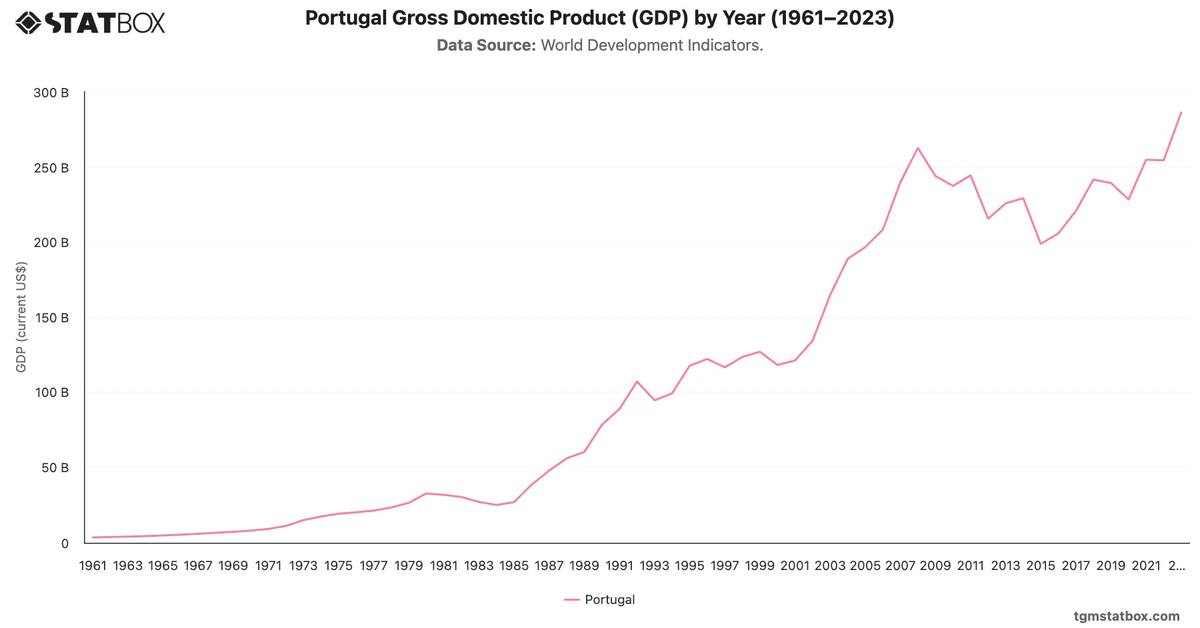
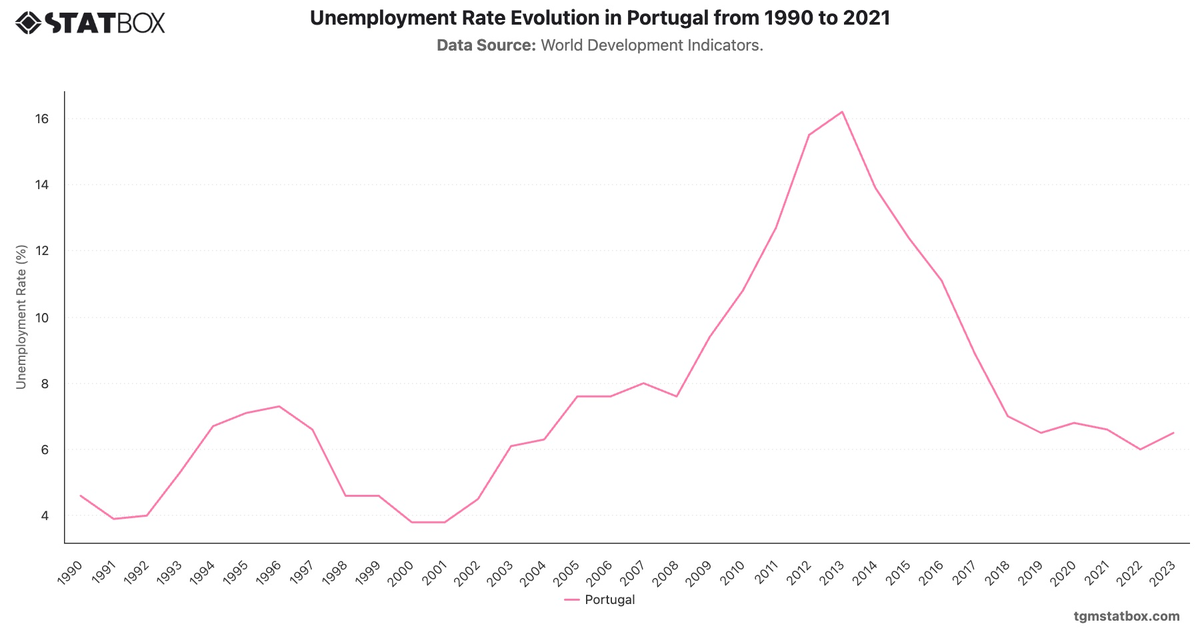
Discover additional trends and data on Portugal’s unemployment rate trend, Portugal’s industry sector share in GDP, Portugal’s annual GDP figures.