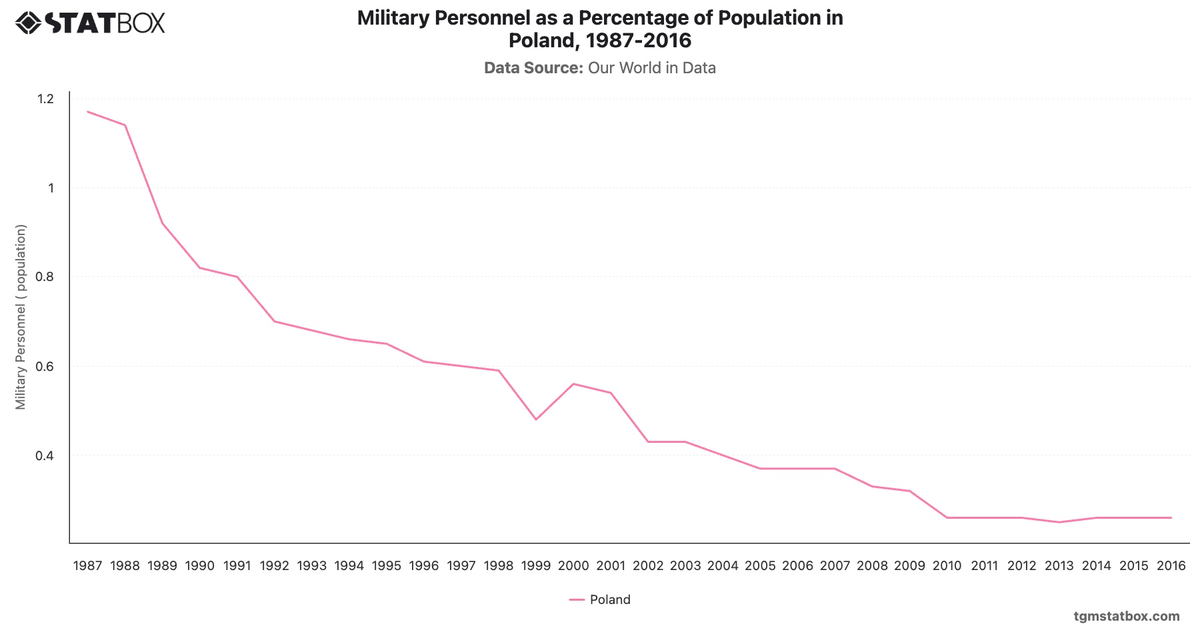
Poland's military expenditure showed a distinctive trend influenced by its political and economic transition. During the 1980s, spending hovered between 2.7% and 3.2%, reflecting Cold War dynamics as a Warsaw Pact member. The post-1989 political transition saw a dramatic drop, with expenditure falling to 1.8% by 1989 as Poland shifted from a centralized economy to a market-based system.
From 2000 onwards, spending remained stable at around 1.8–2.0% of GDP, with a slight uptick in the mid-2010s to 2.1% by 2015. This increase aligned with NATO's 2% guideline and growing regional security concerns following Russia's actions in Ukraine. By 2022, military spending rose to 2.4%, reflecting Poland's commitment to bolstering defense in response to escalating geopolitical tensions in Eastern Europe.
From 2000 onwards, spending remained stable at around 1.8–2.0% of GDP, with a slight uptick in the mid-2010s to 2.1% by 2015. This increase aligned with NATO's 2% guideline and growing regional security concerns following Russia's actions in Ukraine. By 2022, military spending rose to 2.4%, reflecting Poland's commitment to bolstering defense in response to escalating geopolitical tensions in Eastern Europe.
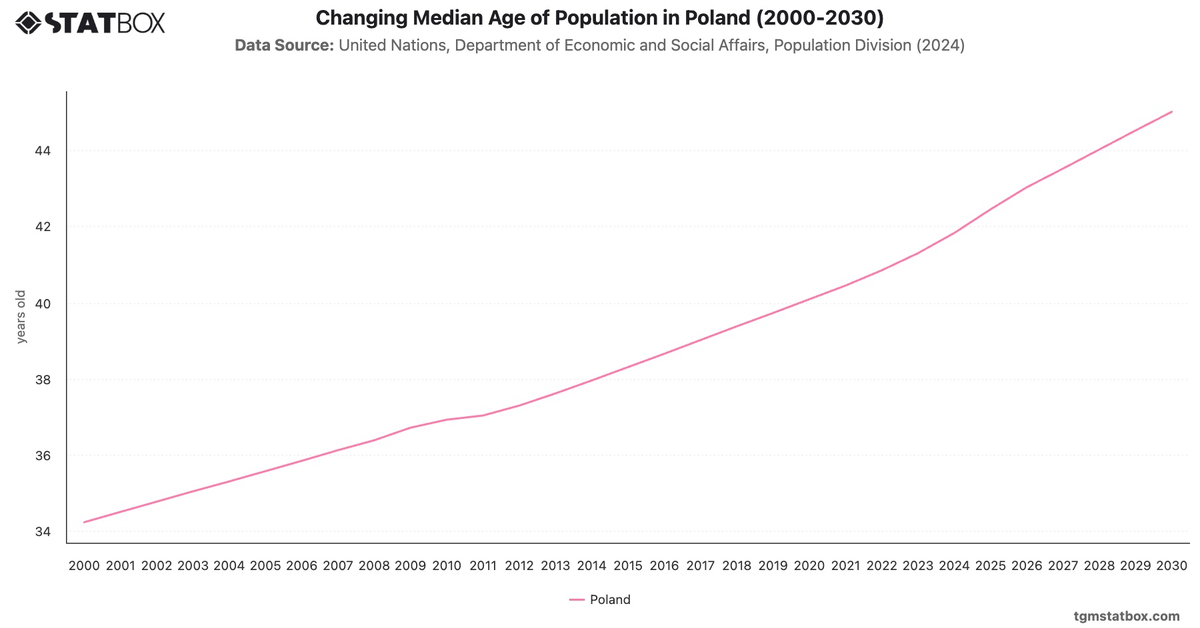
Gain a broader perspective by reviewing Poland’s general government debt-to-GDP ratio, Poland’s shifting demographic age, Poland’s population growth trend.