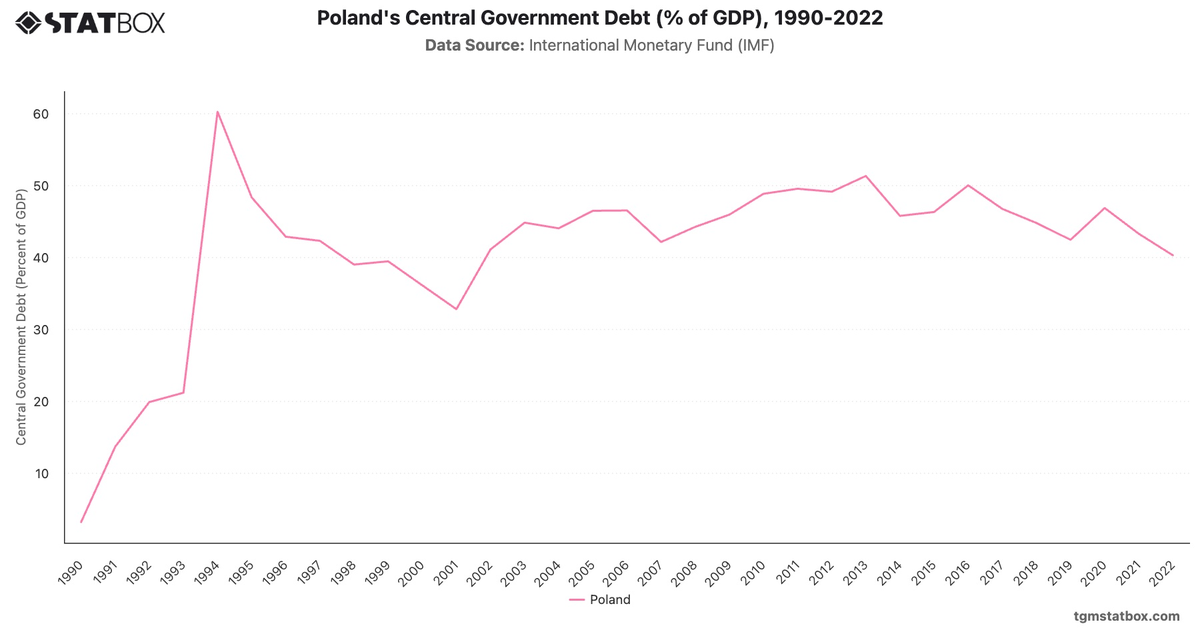
Poland's debt-to-GDP ratio demonstrated significant fluctuations from 1990 to 2022, beginning with a high of 90.0% in 1990. Efforts to stabilize and restructure the economy in the early 1990s led to a steady decline, with debt levels falling to 42.8% by 1997. By 2000, Poland's debt dropped further to 36.5% due to economic reforms and improvements in fiscal policy.
However, the 2008 financial crisis led to increased government borrowing, resulting in a gradual rise in debt-to-GDP, peaking at 57.1% in 2013. Poland managed to reduce its debt ratio in subsequent years, hitting 45.7% by 2019. The COVID-19 pandemic brought another spike, raising the ratio to 57.2% in 2020 due to increased spending on health and economic recovery measures. By 2022, Poland’s debt had decreased to 49.6%, indicating a shift back toward fiscal consolidation.
However, the 2008 financial crisis led to increased government borrowing, resulting in a gradual rise in debt-to-GDP, peaking at 57.1% in 2013. Poland managed to reduce its debt ratio in subsequent years, hitting 45.7% by 2019. The COVID-19 pandemic brought another spike, raising the ratio to 57.2% in 2020 due to increased spending on health and economic recovery measures. By 2022, Poland’s debt had decreased to 49.6%, indicating a shift back toward fiscal consolidation.
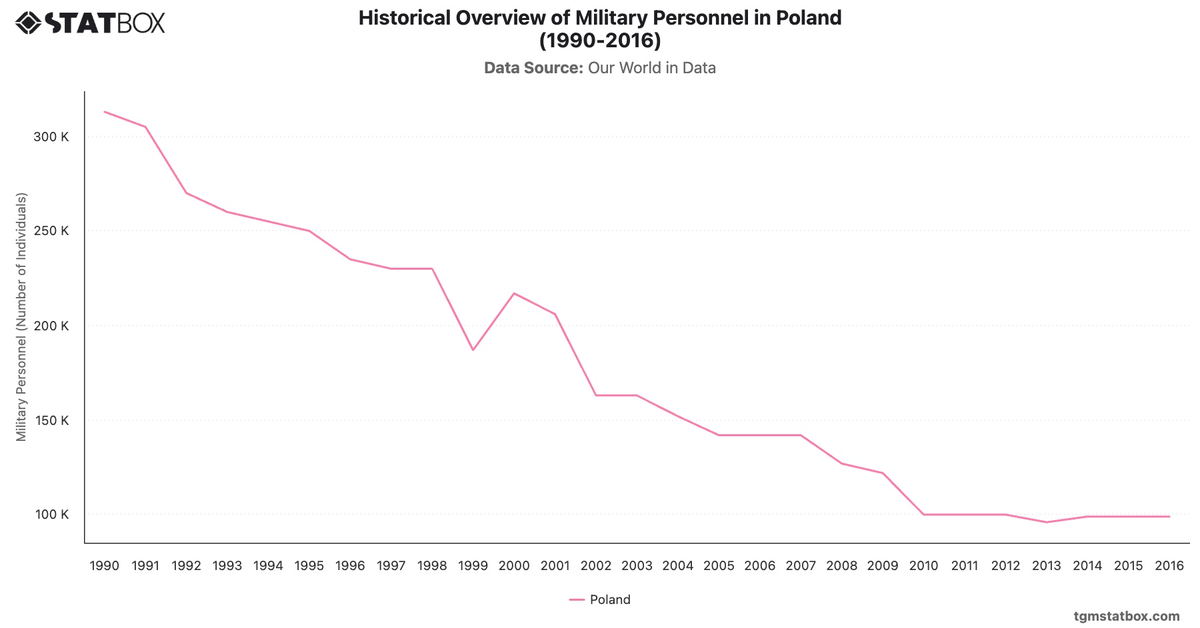
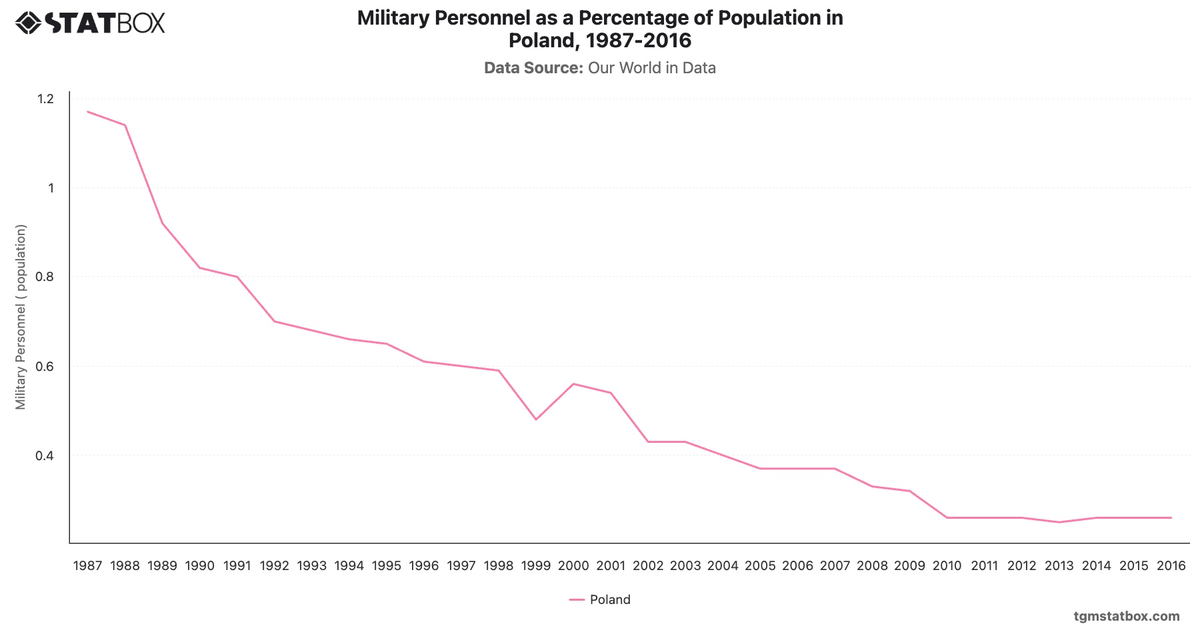
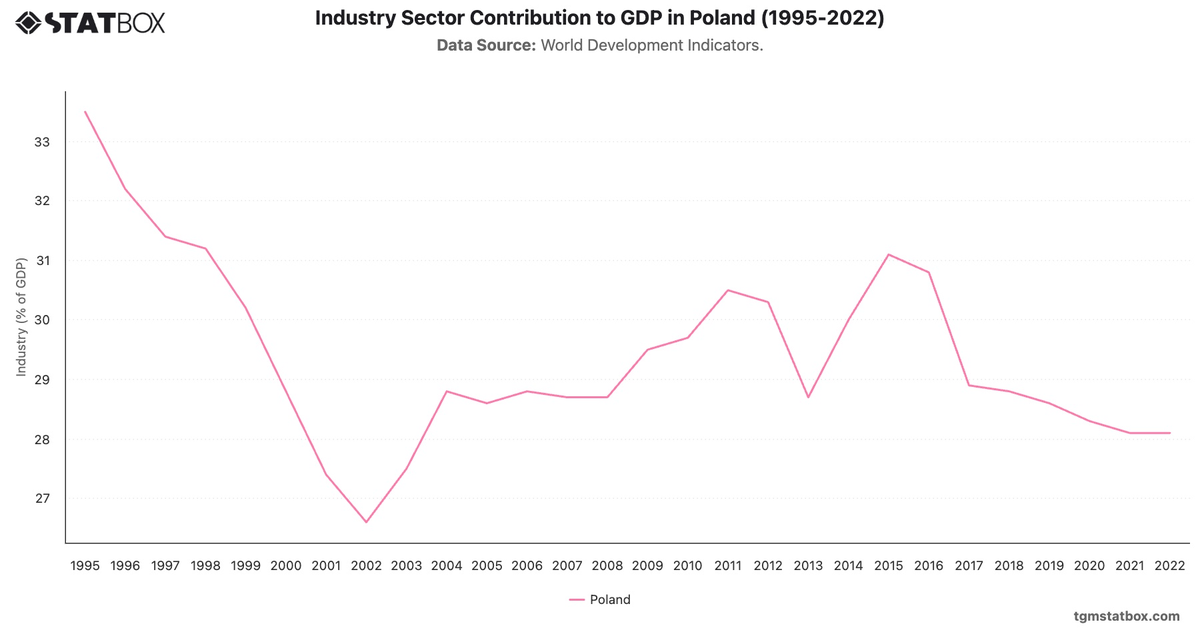
For a broader context, visit other statistics on Poland’s annual GDP growth rate, Poland’s manufacturing sector’s GDP contribution, military personnel ratio in Poland.