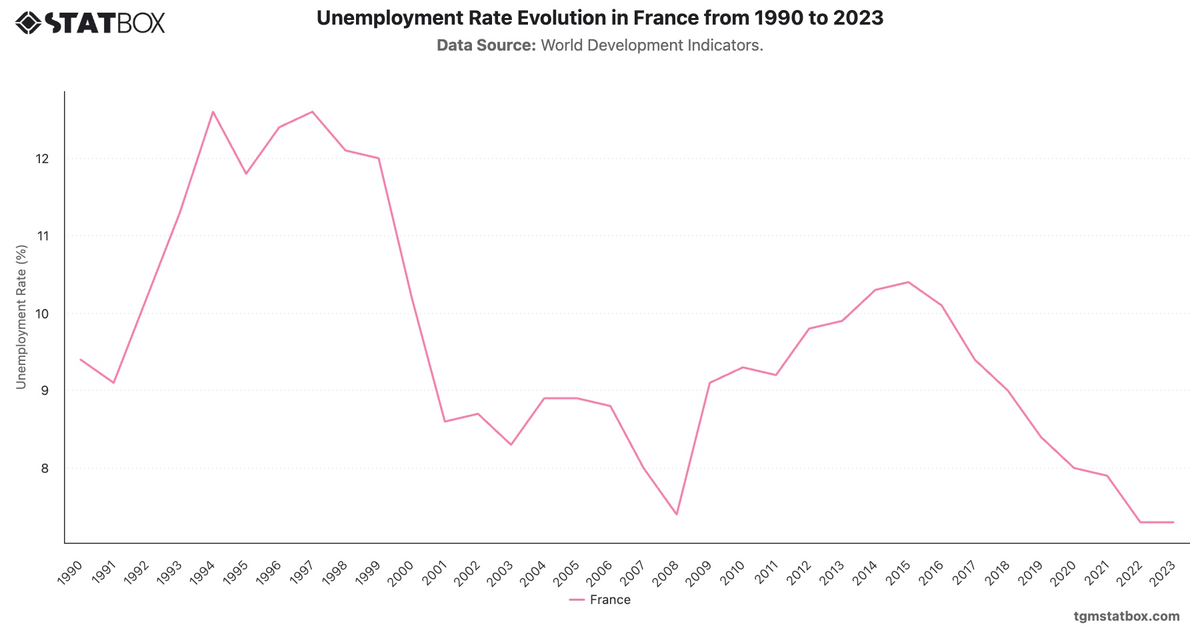
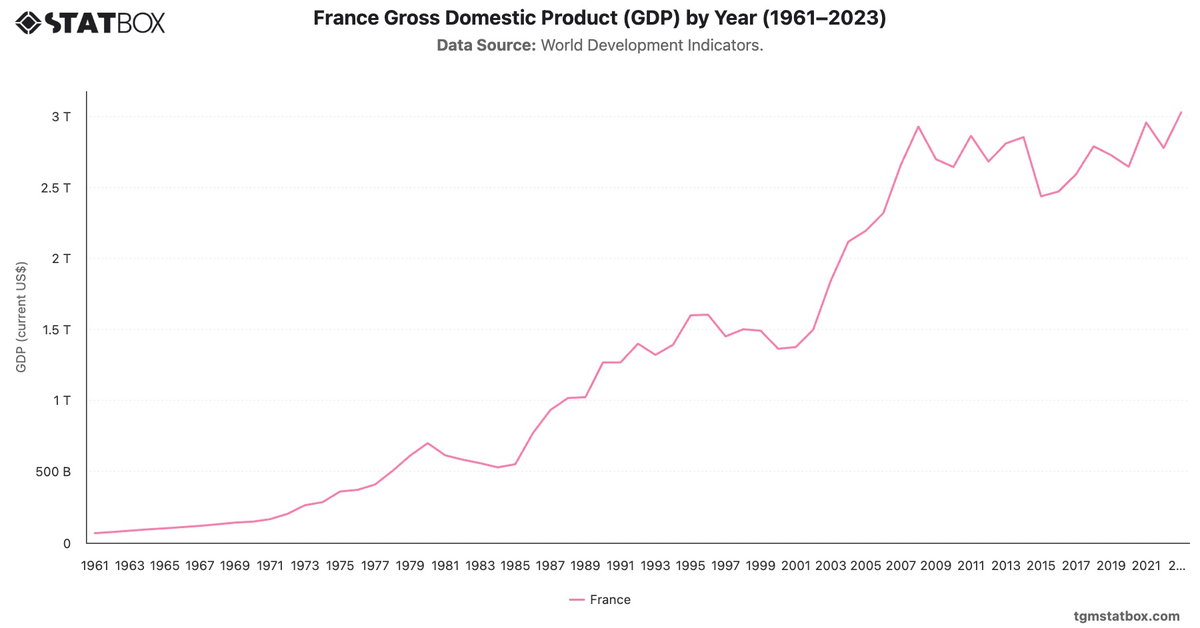
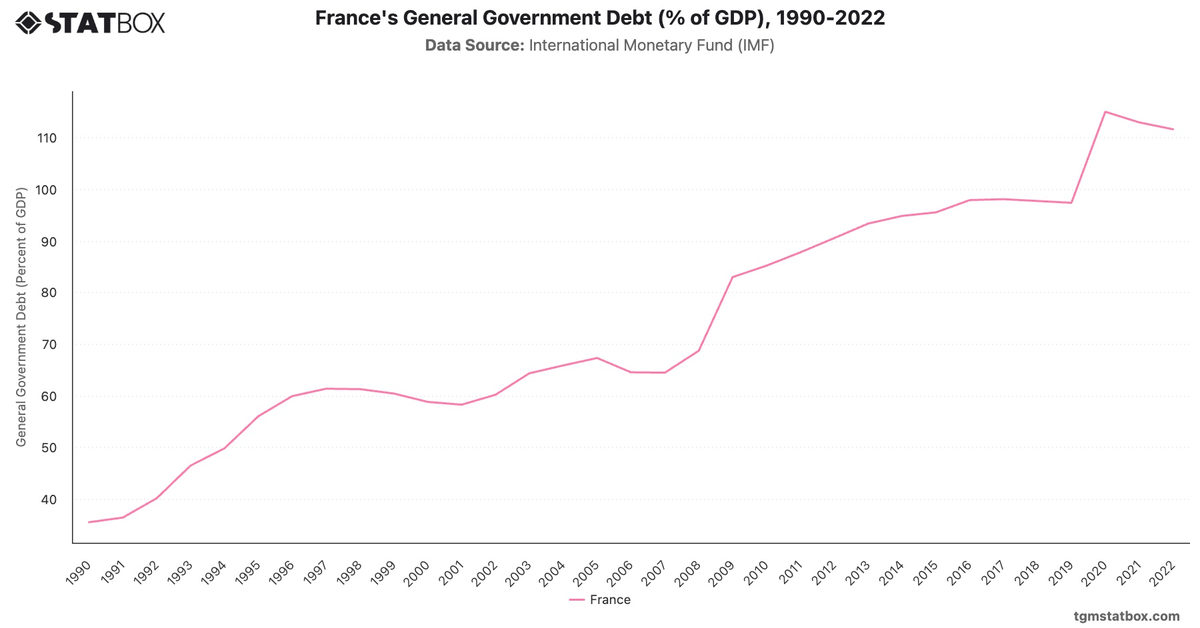
France's fiscal performance reflects cyclical pressures and structural challenges. The early 1990s saw deficits peak at -6.4% in 1993 due to weak economic growth and high unemployment. Efforts to meet EU fiscal targets reduced deficits to -1.6% by 1999. However, economic crises, including the 2008 financial crisis, widened deficits to -7.2% in 2009.
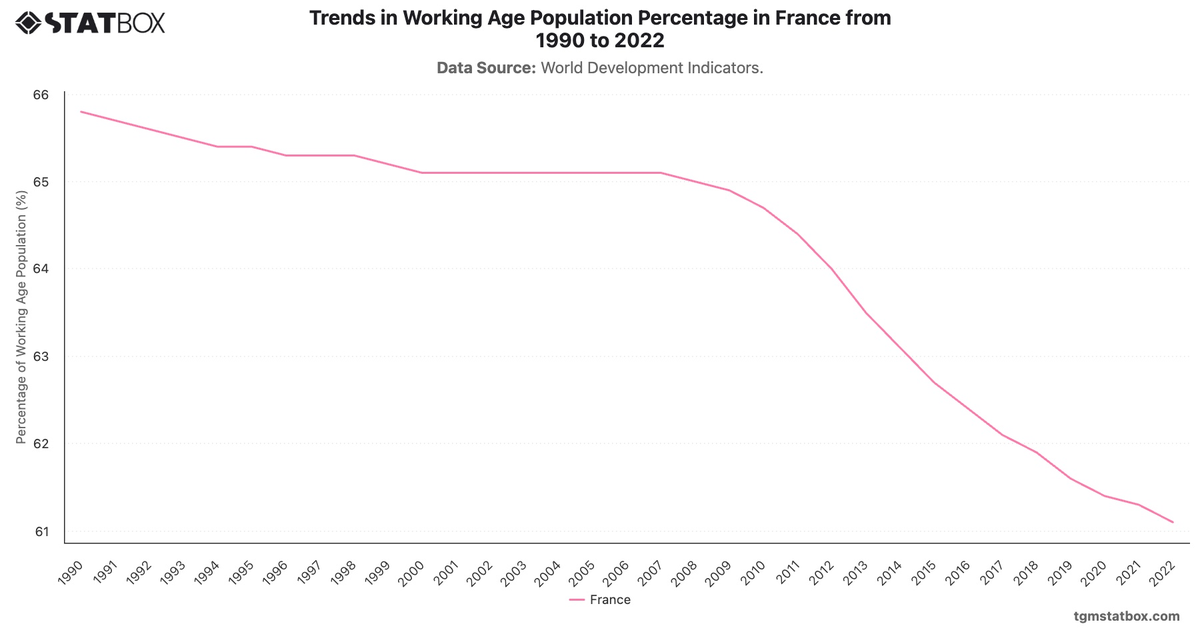
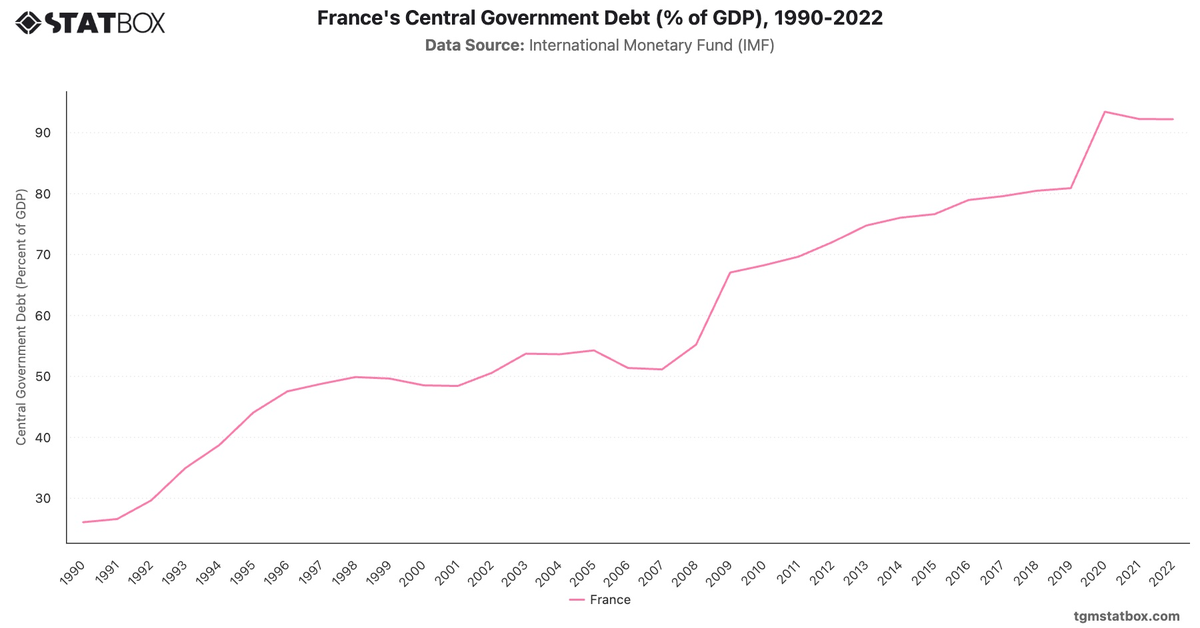
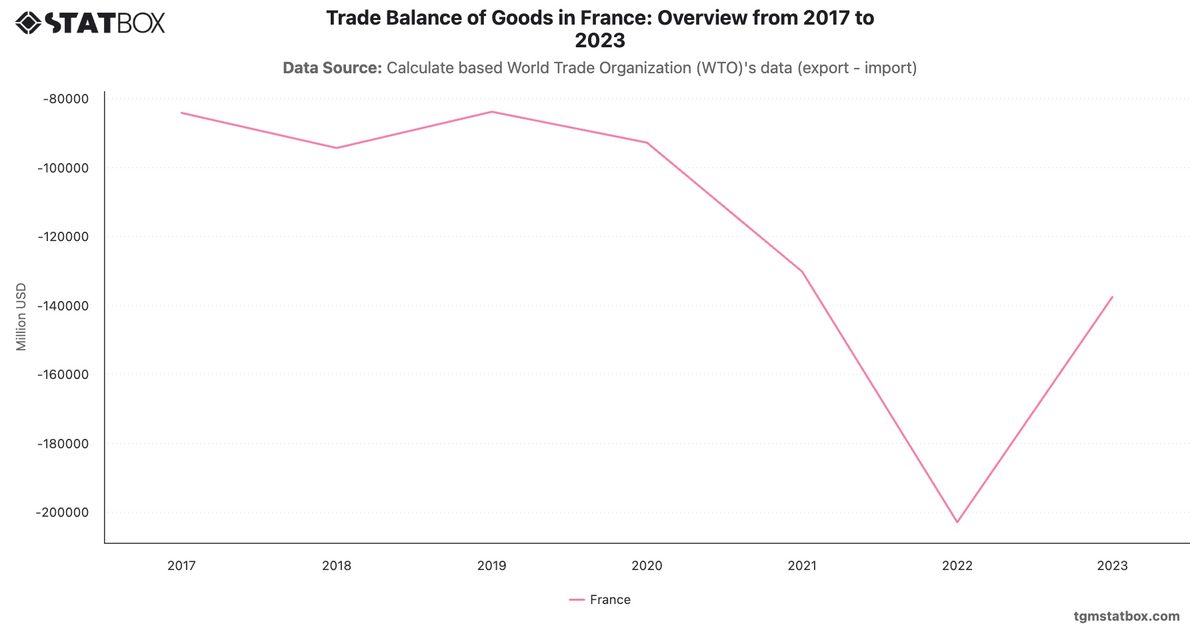
The COVID-19 pandemic caused significant fiscal strain, with deficits reaching -9.0% in 2020. While recovery is underway, with forecasts for deficits narrowing to -3.9% by 2029, structural reforms are needed to address persistent challenges like high public debt and rising social expenditures.
The COVID-19 pandemic caused significant fiscal strain, with deficits reaching -9.0% in 2020. While recovery is underway, with forecasts for deficits narrowing to -3.9% by 2029, structural reforms are needed to address persistent challenges like high public debt and rising social expenditures.
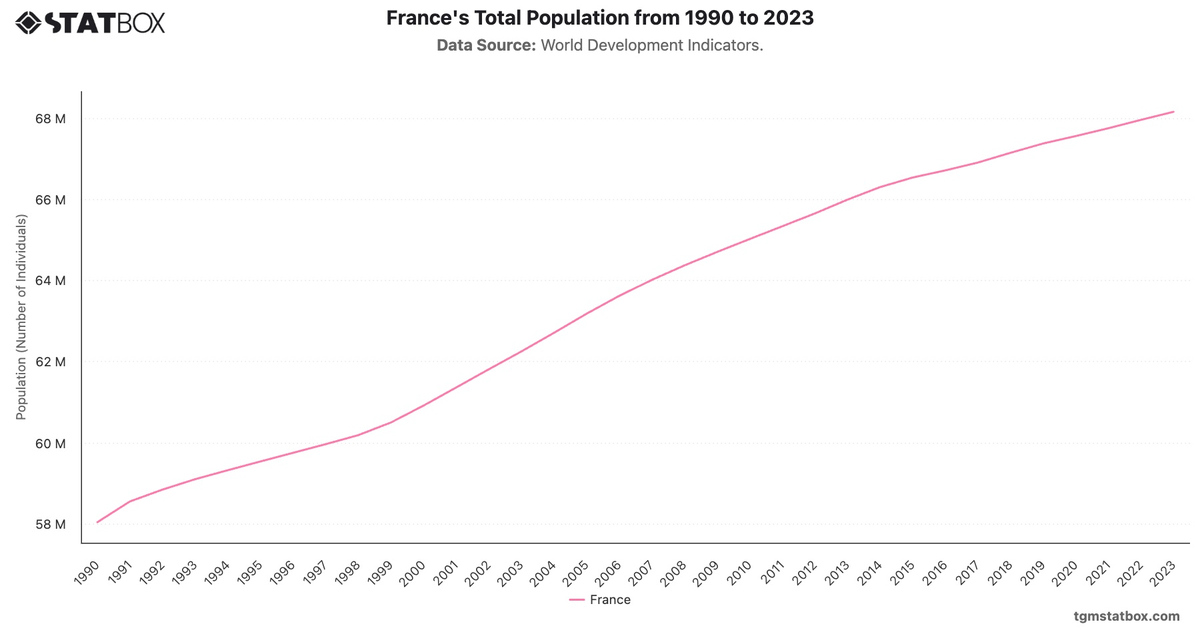
For a deeper dive into the topic, explore France’s government debt-to-GDP ratio, France’s population growth, France’s annual GDP growth rate.