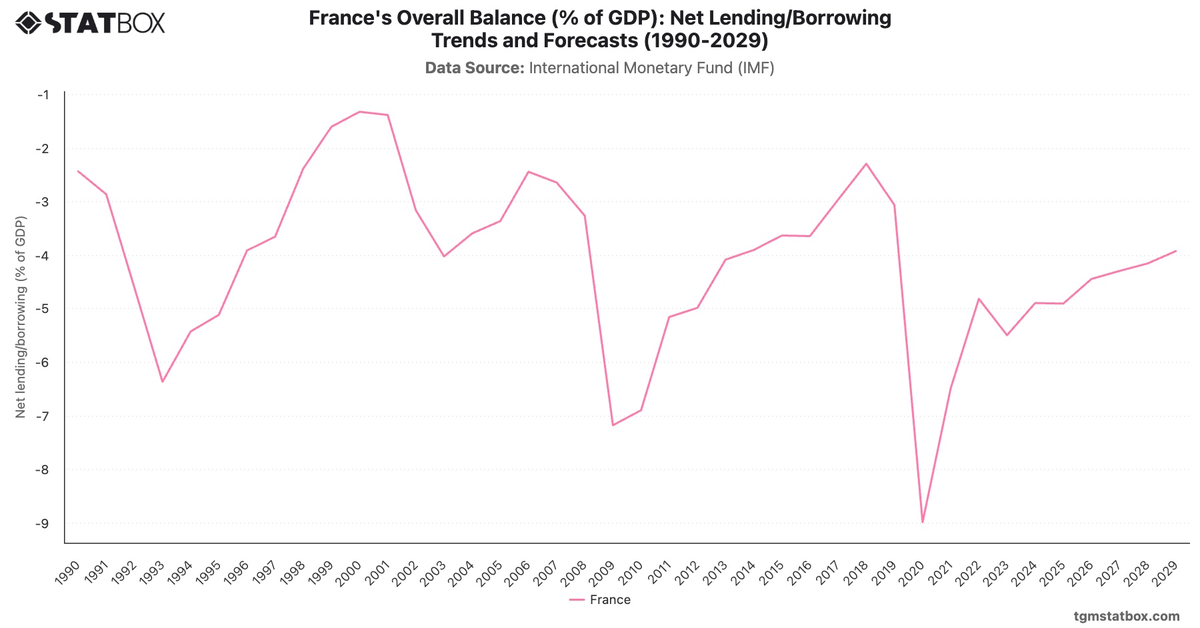
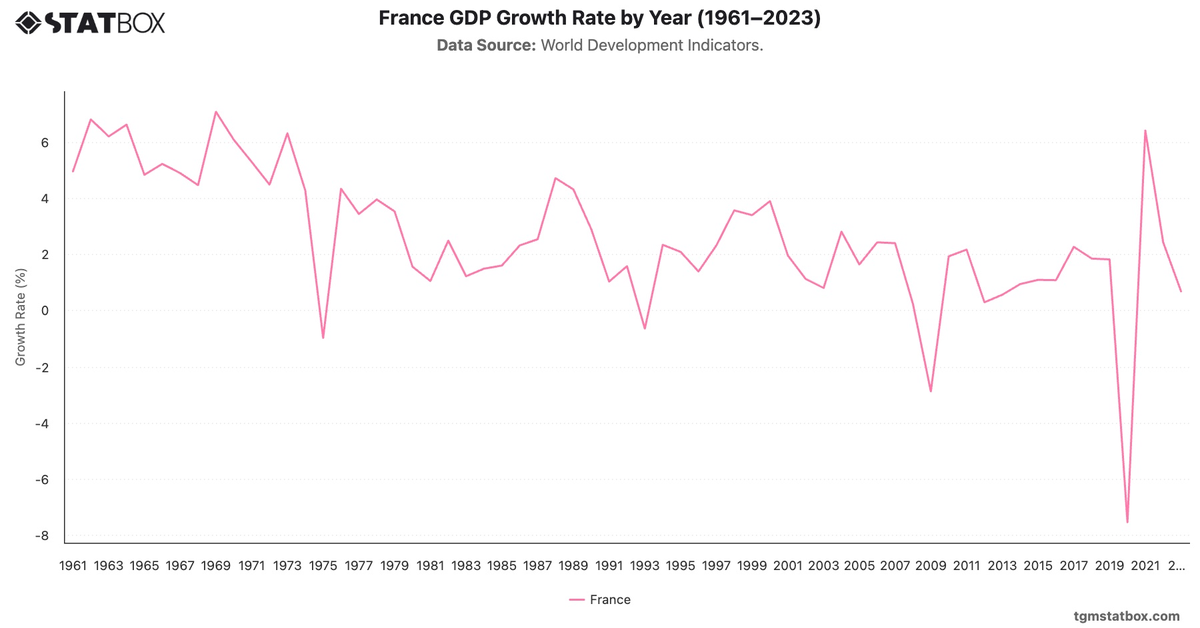
France’s debt-to-GDP ratio rose steadily from the early 1990s, starting at 35.6% in 1990 and climbing to 56.1% by 1995. Economic challenges in the late 2000s, including the global financial crisis, saw debt rise sharply to 83.0% in 2009, as the government engaged in stimulus spending to support growth. From there, debt levels continued to grow, reaching 98.1% by 2017 as France faced slower economic growth and structural budgetary challenges.
The impact of the COVID-19 pandemic drove France’s debt to a peak of 115.1% in 2020 as emergency spending surged. Though the debt ratio remained high post-pandemic, slight reductions brought it down to 111.7% by 2022, with the government focused on gradual fiscal recovery.
The impact of the COVID-19 pandemic drove France’s debt to a peak of 115.1% in 2020 as emergency spending surged. Though the debt ratio remained high post-pandemic, slight reductions brought it down to 111.7% by 2022, with the government focused on gradual fiscal recovery.
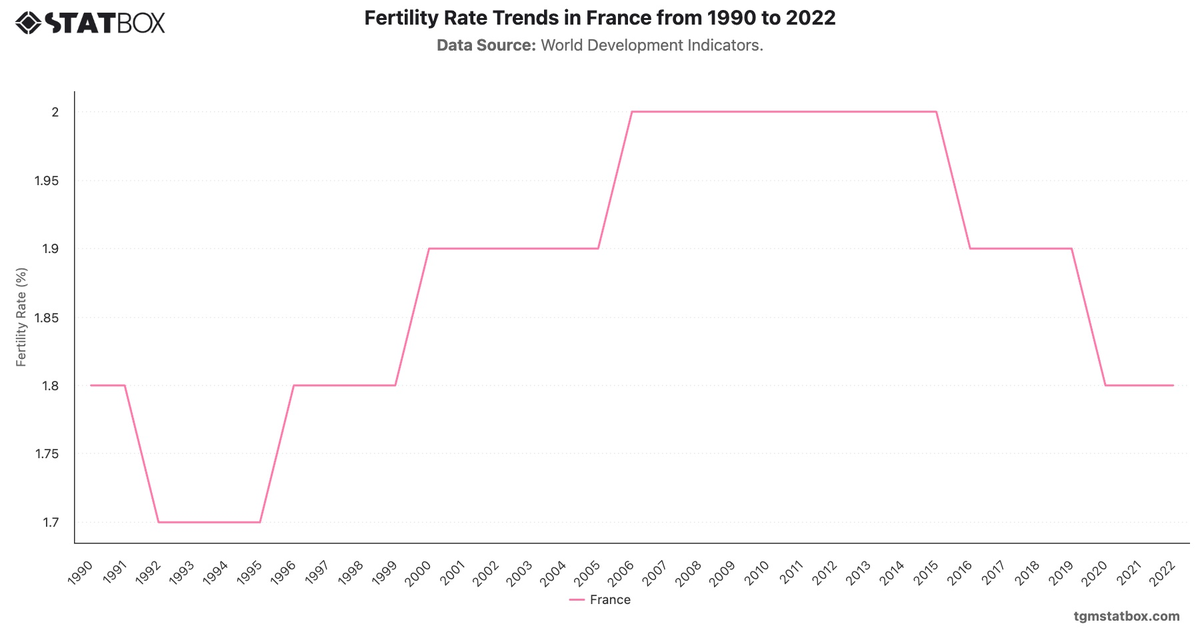
Gain a broader perspective by reviewing France’s fertility rate trends, France’s annual GDP figures, France’s agriculture share in GDP.