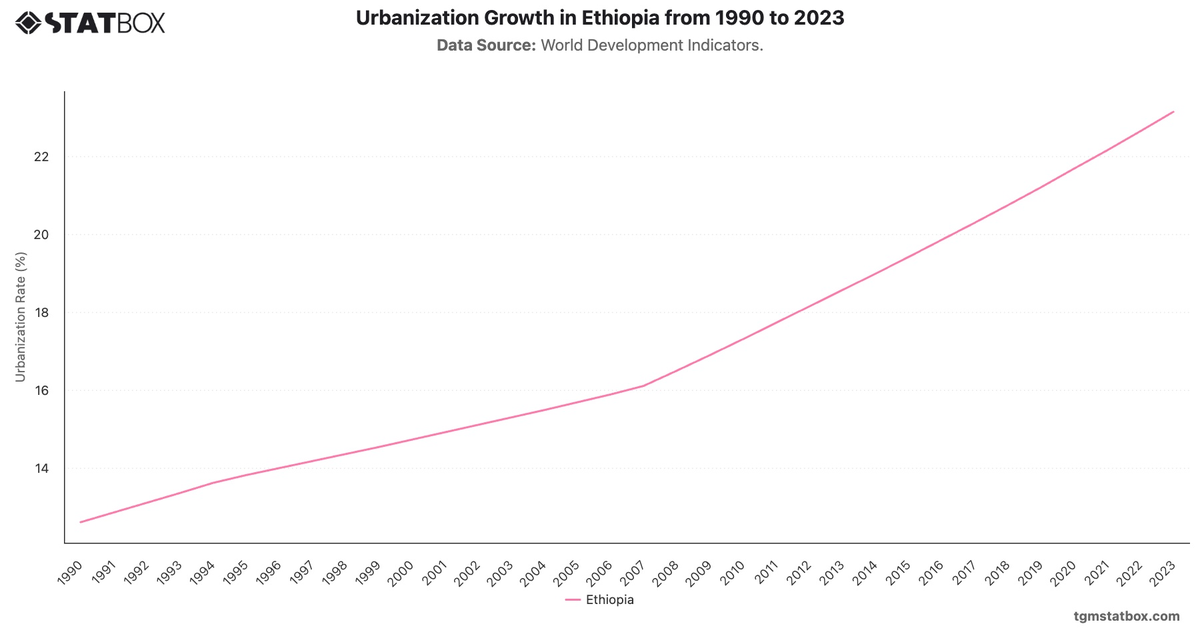
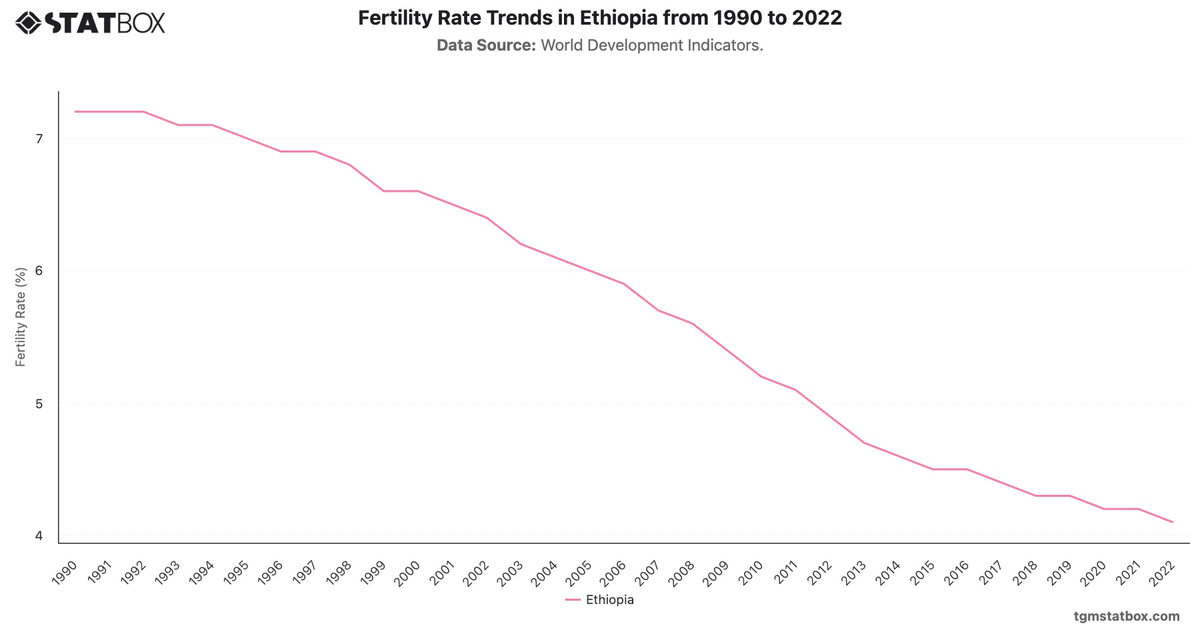
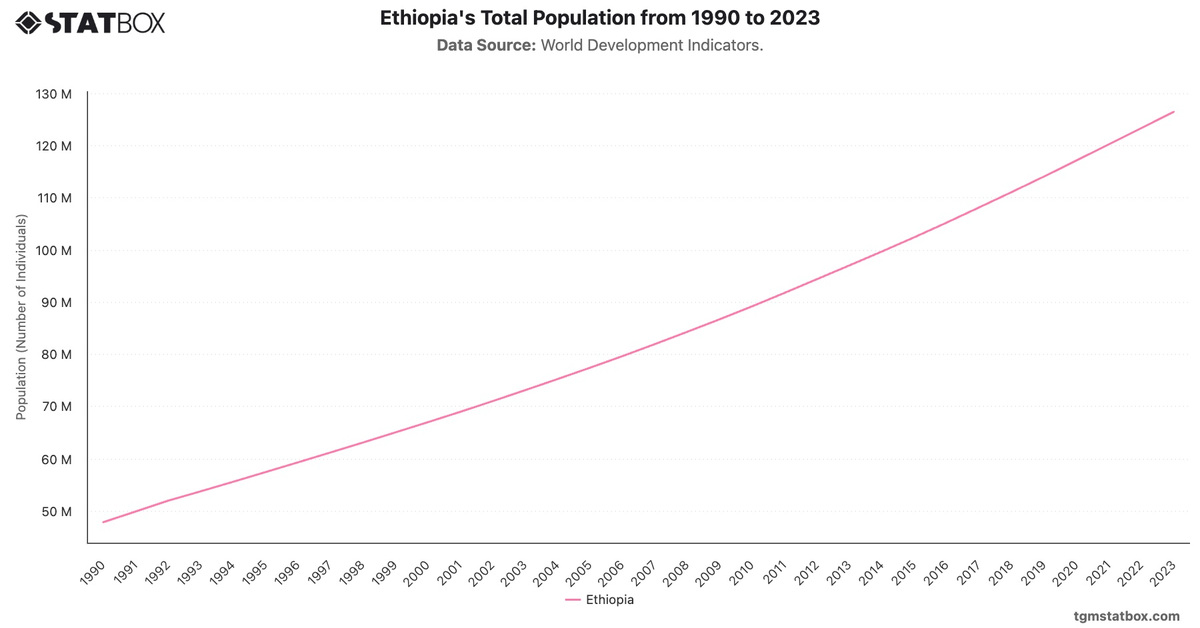
The chart reflects Ethiopia’s shift from exceptionally high growth rates in the early 1990s to a gradual decline over recent years. In 1990, Ethiopia’s population growth rate was substantial at 3.6%, peaking at 4.2% in 1991, which aligns with a period of high fertility and a predominantly rural population with limited access to family planning. Following this peak, growth began to decelerate, dropping to 3.0% by 1999 as urbanization and improved access to reproductive health services gradually influenced family sizes.
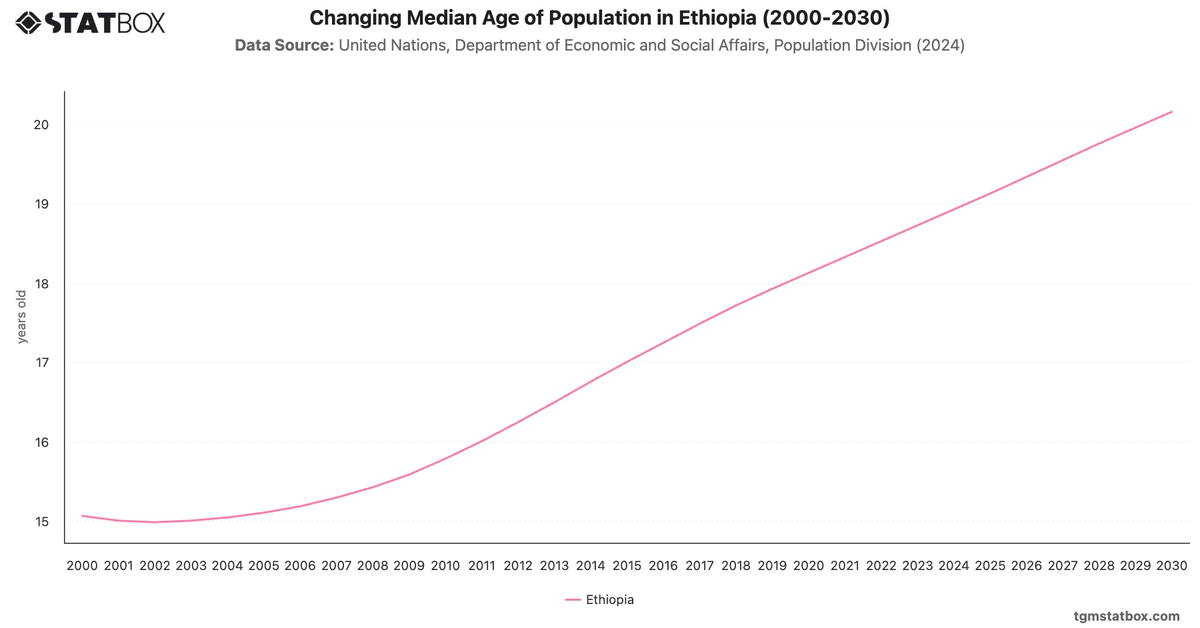
Throughout the 2000s, the rate continued to moderate, hovering between 2.8% and 2.9%, as economic growth and public health initiatives further stabilized population dynamics. From 2011 onward, growth rates slowly declined, reaching 2.5% in 2023, likely due to continued urban migration, increasing education levels, and a shift toward smaller family norms. Ethiopia's demographic trend reflects a youthful yet maturing population, with implications for urban infrastructure, labor markets, and future economic planning.
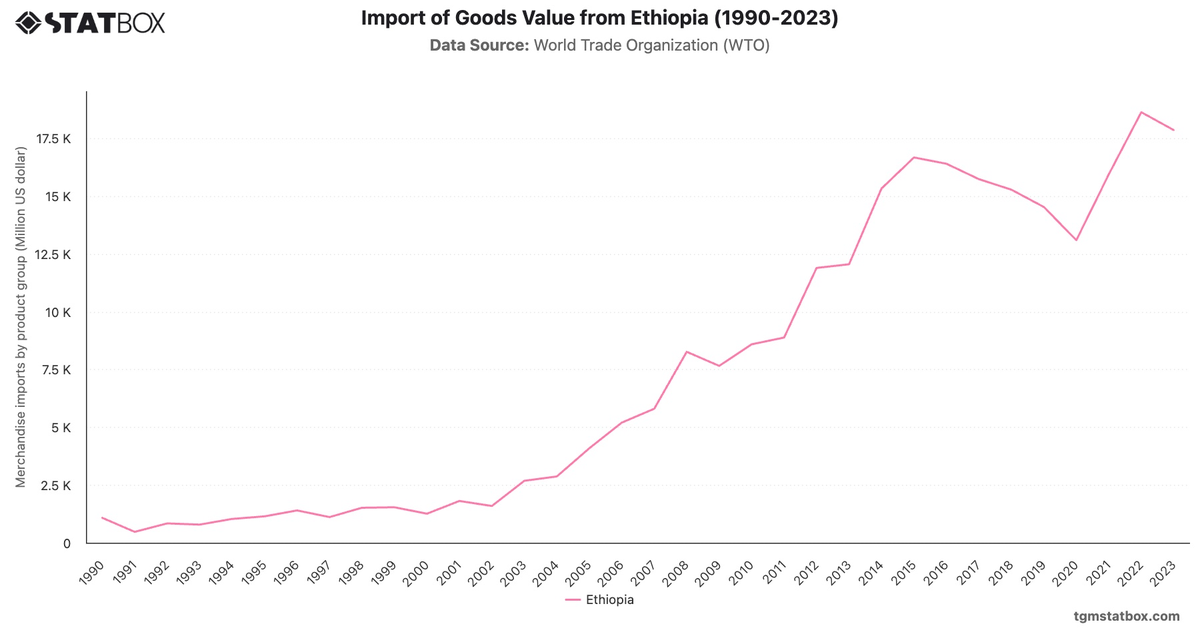
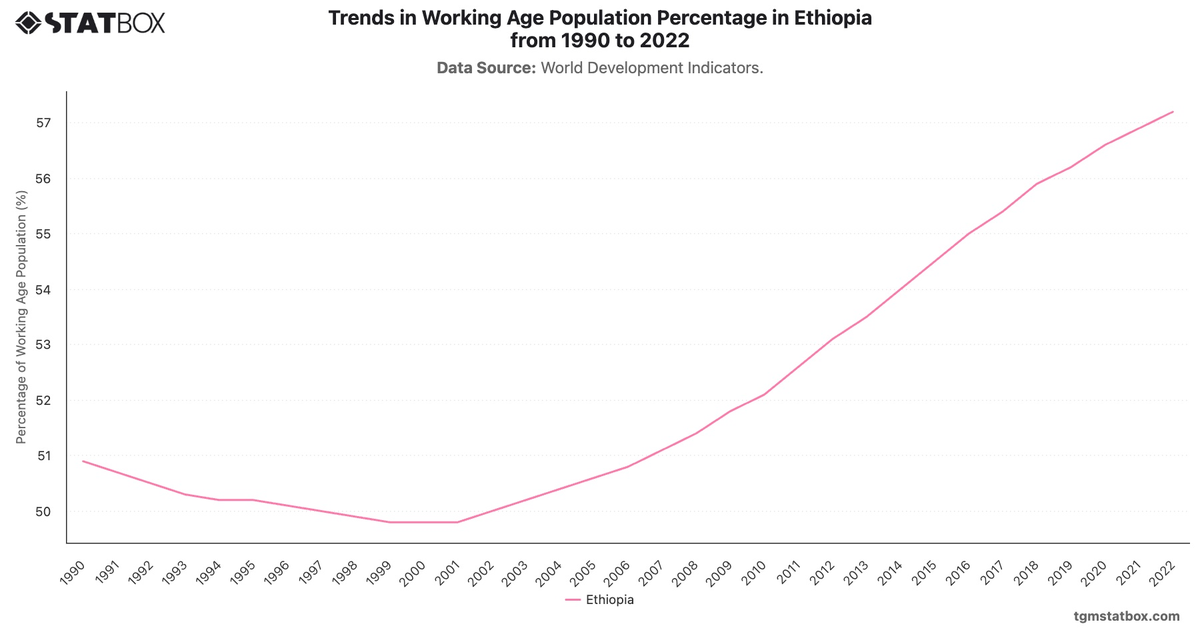
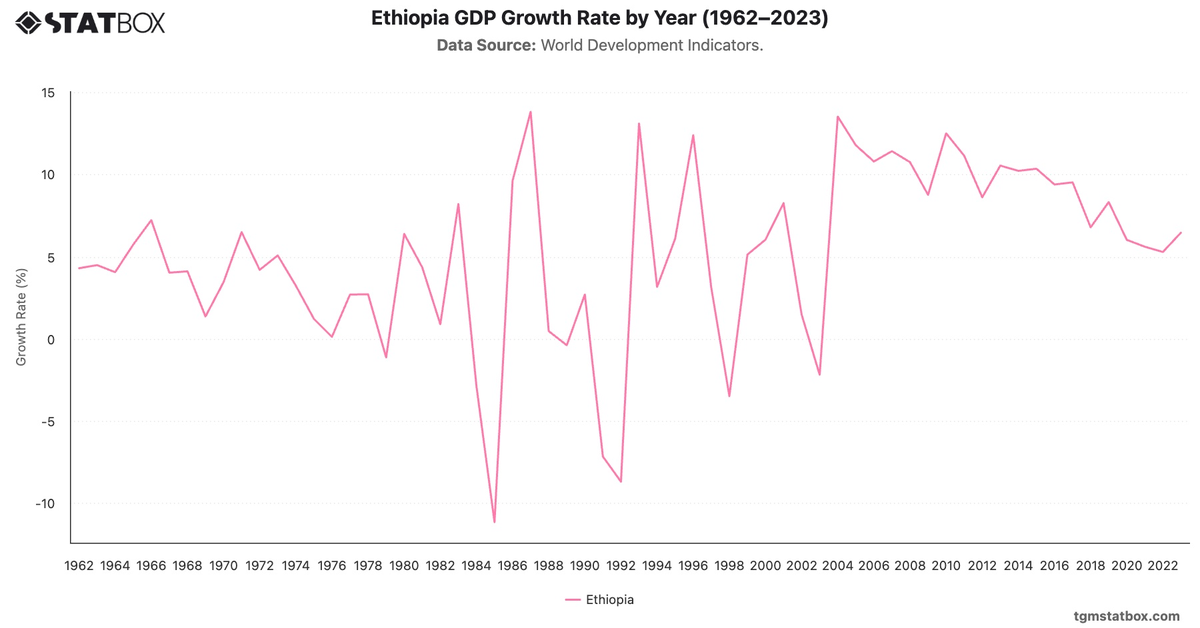
Explore related charts to gain a better understanding of Ethiopia’s annual GDP growth rate, Ethiopia’s mortality rate, Ethiopia’s shifting population age.