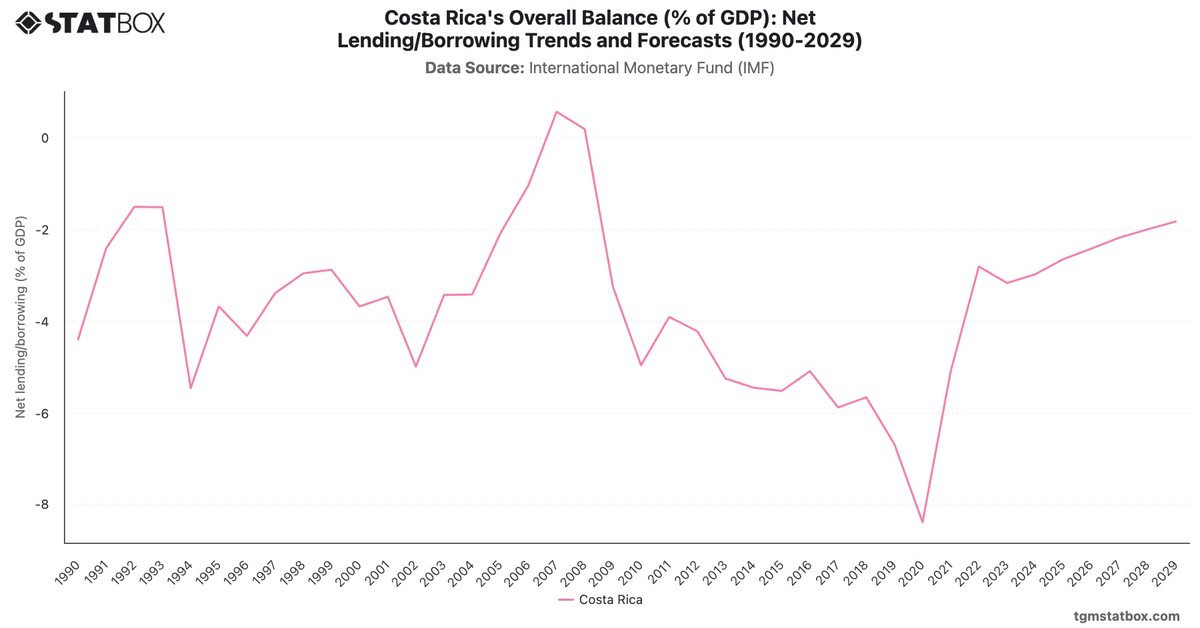
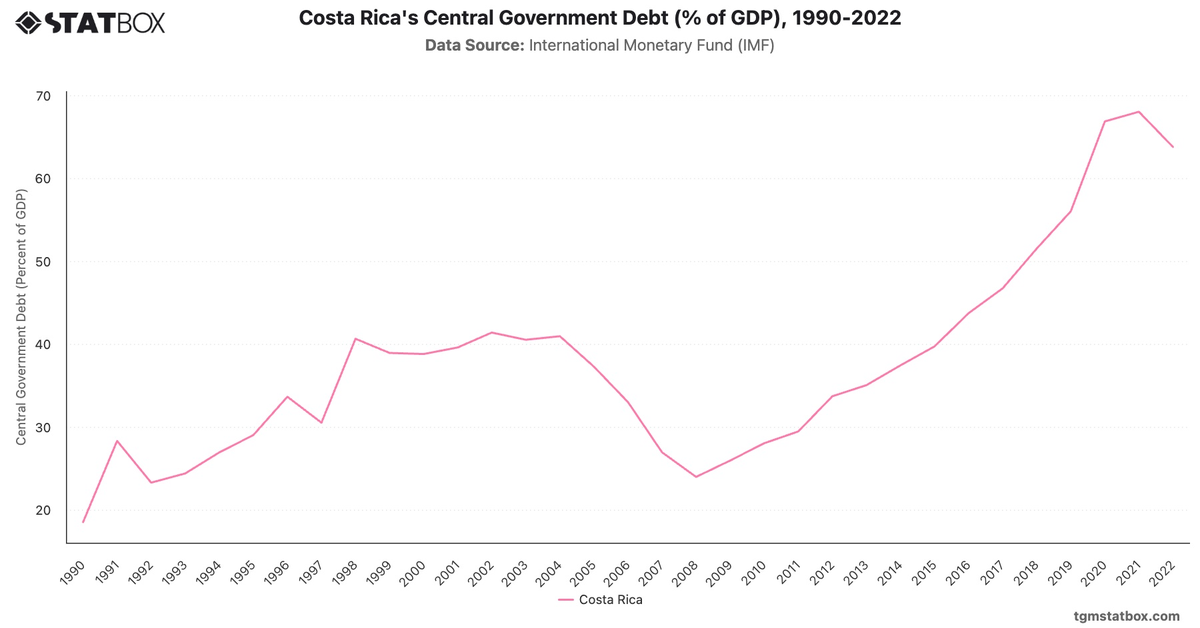
Costa Rica's debt as a share of GDP rose steadily from 26.1% in 2009 to 40.2% in 2015, driven by increased social spending and limited revenue growth. The pace of debt accumulation accelerated as the government sought to address fiscal deficits and maintain economic stability, with debt reaching 56.9% of GDP by 2019. Costa Rica's rising debt reflects fiscal challenges, with expenditures outpacing revenues in areas such as social programs and infrastructure development.
The COVID-19 pandemic in 2020 brought unprecedented strain on Costa Rica's economy, with debt jumping to 67.4% that year as the government increased spending to mitigate the economic fallout. Debt peaked at 68.5% in 2021 before slightly declining to 64.3% in 2022, highlighting ongoing fiscal pressures. Costa Rica’s government debt trajectory emphasizes the country’s need for structural reforms to stabilize its fiscal outlook amid growing economic demands.
The COVID-19 pandemic in 2020 brought unprecedented strain on Costa Rica's economy, with debt jumping to 67.4% that year as the government increased spending to mitigate the economic fallout. Debt peaked at 68.5% in 2021 before slightly declining to 64.3% in 2022, highlighting ongoing fiscal pressures. Costa Rica’s government debt trajectory emphasizes the country’s need for structural reforms to stabilize its fiscal outlook amid growing economic demands.
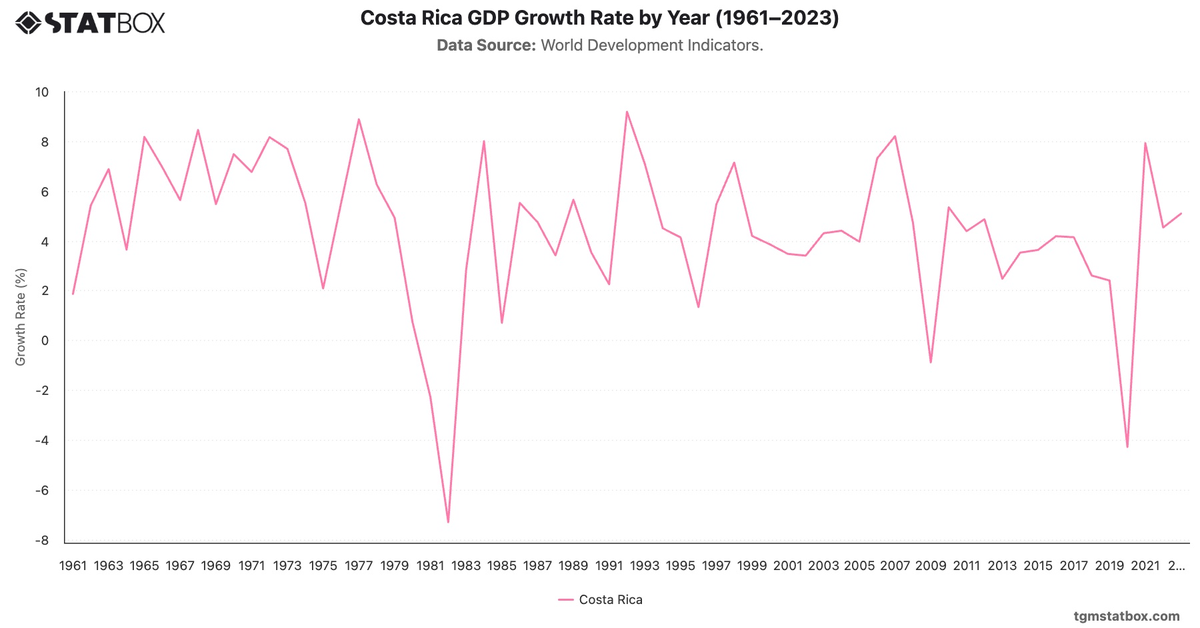
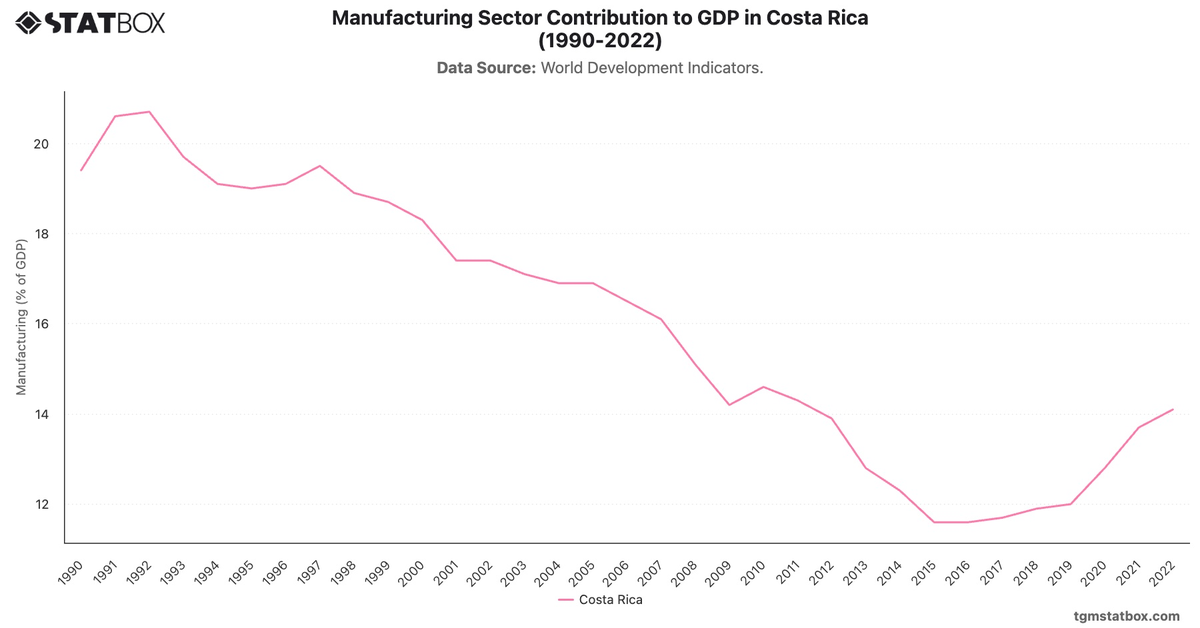
Gain a broader perspective by reviewing Costa Rica’s industrial sector GDP share, Costa Rica’s annual GDP growth rate, Manufacturing sector’s share in Costa Rica’s GDP.