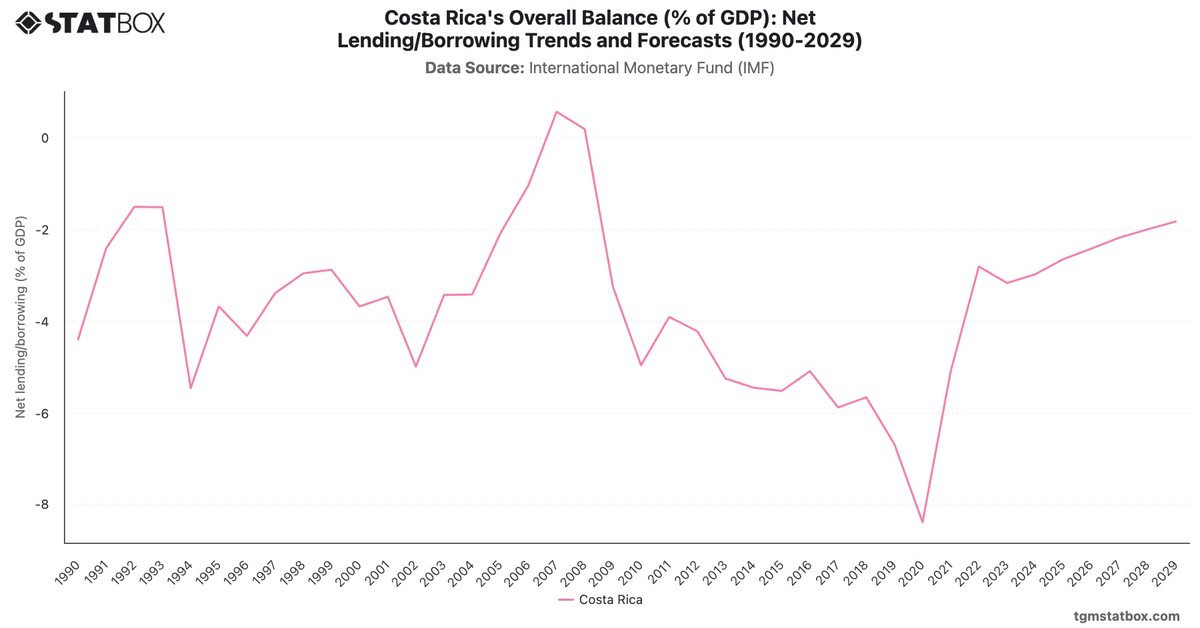
Costa Rica’s debt levels increased steadily from 18.54% in 1990 to 41.44% in 2002 due to persistent fiscal deficits and reliance on external financing. Debt stabilization efforts in the mid-2000s brought levels down to 24.01% by 2008, reflecting strong economic growth and fiscal discipline.
The trend reversed post-2008, with debt surging to 68.1% in 2021, driven by higher spending and the economic fallout from the COVID-19 pandemic. By 2022, debt slightly decreased to 63.85%, marking initial recovery steps. Costa Rica’s fiscal trajectory highlights challenges in balancing public spending with sustainable debt levels.
The trend reversed post-2008, with debt surging to 68.1% in 2021, driven by higher spending and the economic fallout from the COVID-19 pandemic. By 2022, debt slightly decreased to 63.85%, marking initial recovery steps. Costa Rica’s fiscal trajectory highlights challenges in balancing public spending with sustainable debt levels.
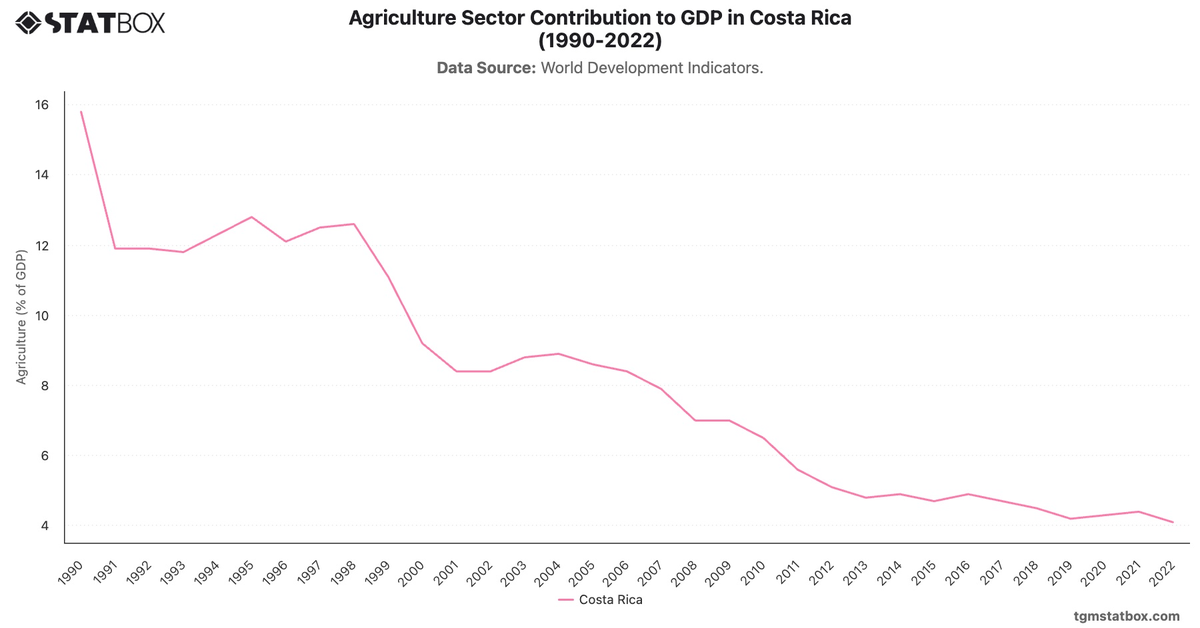
For additional information, visit statistics on Costa Rica’s agricultural sector share in GDP, Costa Rica’s industrial sector GDP share, Costa Rica’s government debt ratio.