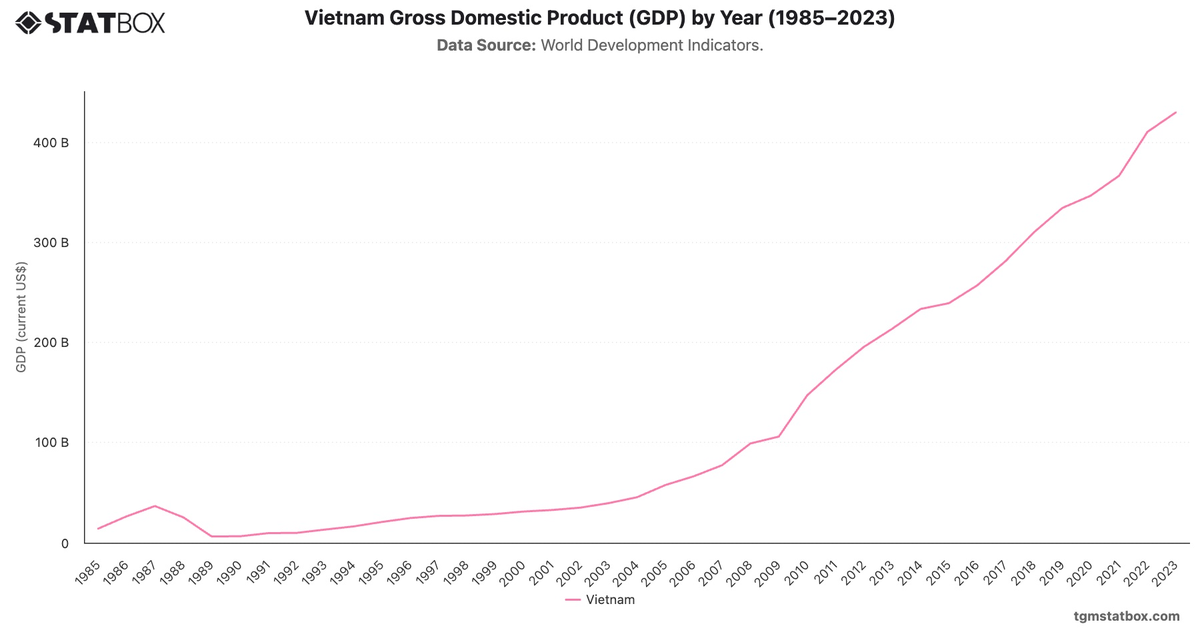
Vietnam's central government debt-to-GDP ratio showcased a dramatic decline from 1991 to 2000, falling from 220.13% in 1991 to 31.4% in 2001. This remarkable reduction was largely driven by high economic growth rates following the Đổi Mới (Renovation) reforms of the late 1980s, which modernized the economy and increased GDP. The period also witnessed effective debt restructuring and international support, which alleviated Vietnam's debt burden.
From 2001 onwards, Vietnam's debt levels remained relatively stable, fluctuating between 25% and 42% of GDP. The moderate increase from 2013 to 2016, peaking at 42.08%, was influenced by rising infrastructure investments to support rapid economic expansion. However, proactive fiscal management kept debt levels in check, maintaining a downward trend to 37.6% in 2019. The slight uptick in 2020 to 39.02% reflects the fiscal pressures of the COVID-19 pandemic, as Vietnam increased spending to cushion economic impacts. By 2022, the debt ratio remained relatively stable, demonstrating Vietnam's commitment to prudent fiscal policies.
From 2001 onwards, Vietnam's debt levels remained relatively stable, fluctuating between 25% and 42% of GDP. The moderate increase from 2013 to 2016, peaking at 42.08%, was influenced by rising infrastructure investments to support rapid economic expansion. However, proactive fiscal management kept debt levels in check, maintaining a downward trend to 37.6% in 2019. The slight uptick in 2020 to 39.02% reflects the fiscal pressures of the COVID-19 pandemic, as Vietnam increased spending to cushion economic impacts. By 2022, the debt ratio remained relatively stable, demonstrating Vietnam's commitment to prudent fiscal policies.
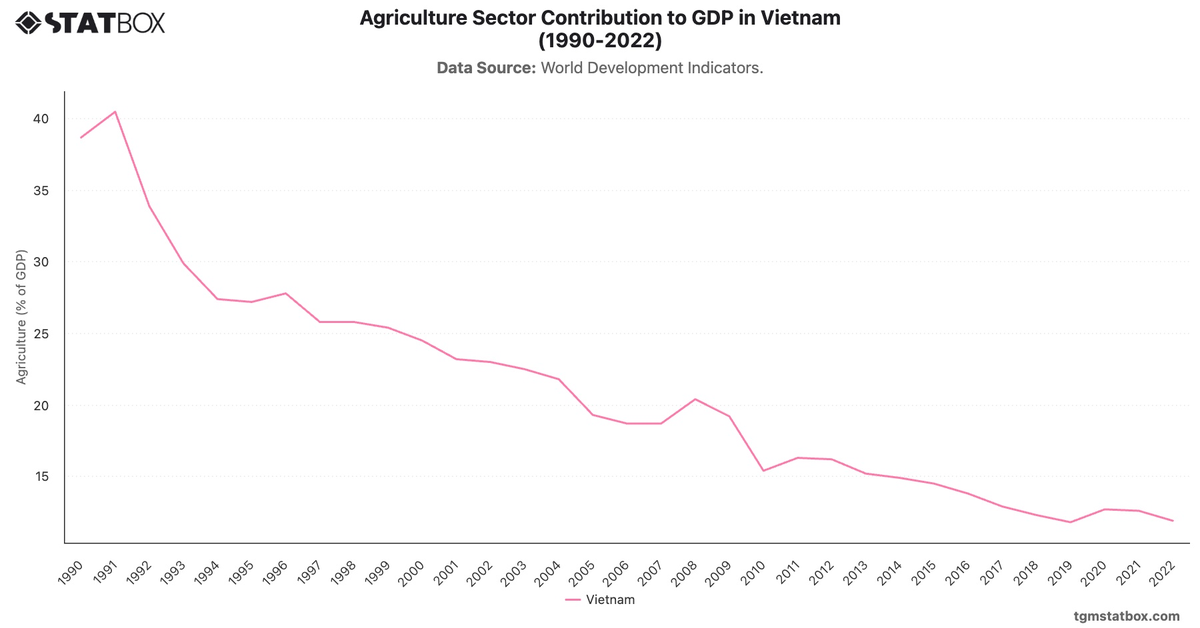
For a deeper dive into the topic, explore Vietnam’s agriculture share in GDP, Vietnam’s net lending/borrowing as percentage of GDP , Vietnam’s fertility rate trends.