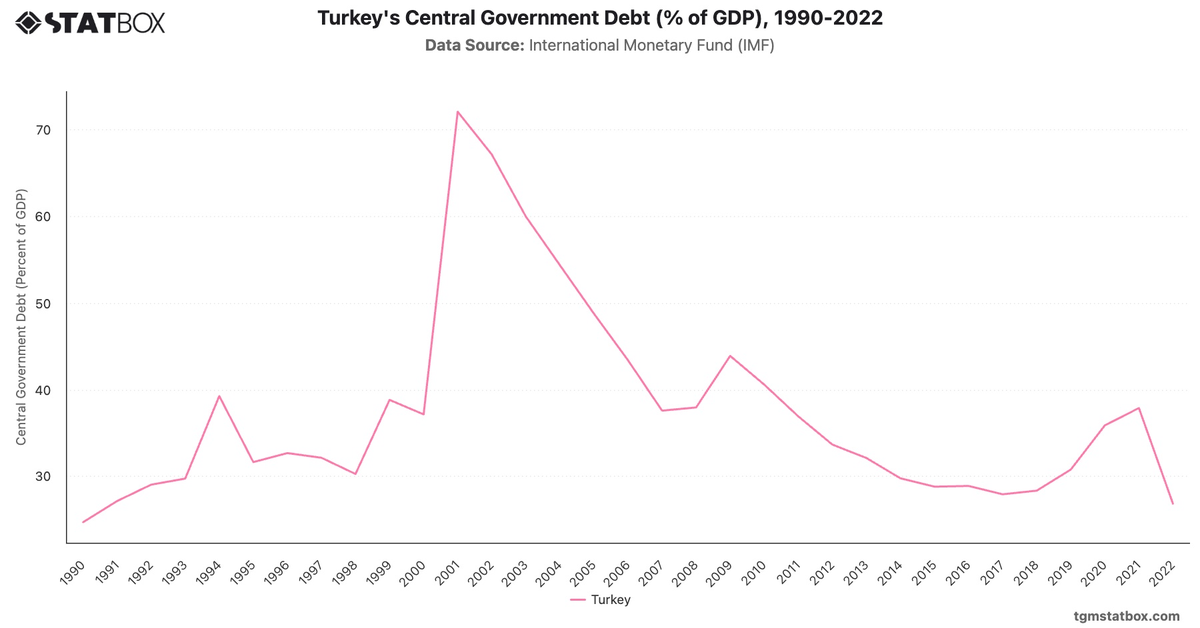
Turkey's fiscal trajectory highlights periods of significant economic instability and recovery efforts. The early 2000s marked severe deficits, peaking at -11.7% in 2001 during a financial crisis. Swift reforms, including fiscal discipline and economic stabilization programs, reduced deficits to -0.7% by 2005.
Economic challenges resurfaced in 2018, with deficits widening to -4.8% in 2019, exacerbated by currency devaluation and inflation. The COVID-19 pandemic further pressured the budget, maintaining deficits at -4.7% in 2020. Forecasts indicate stabilization around -3.3% by 2029, reflecting efforts to balance fiscal pressures with economic growth.
Economic challenges resurfaced in 2018, with deficits widening to -4.8% in 2019, exacerbated by currency devaluation and inflation. The COVID-19 pandemic further pressured the budget, maintaining deficits at -4.7% in 2020. Forecasts indicate stabilization around -3.3% by 2029, reflecting efforts to balance fiscal pressures with economic growth.
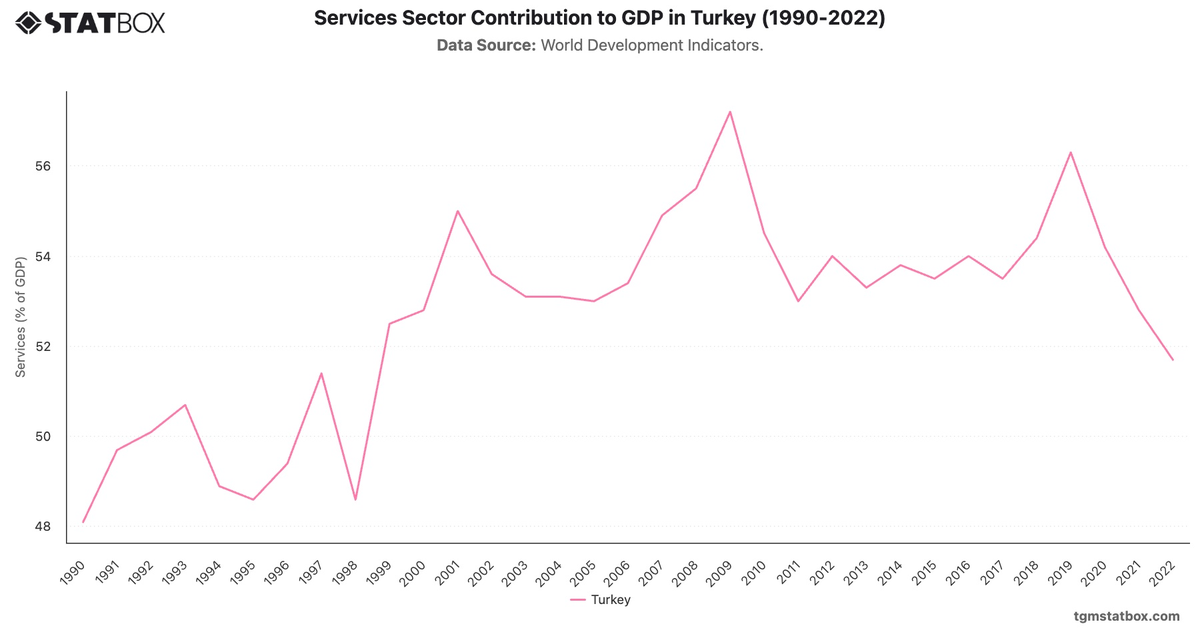
For a deeper dive into the topic, explore Turkey’s annual GDP growth rate, Turkey’s services sector share in GDP, Turkey’s annual GDP.