Spain’s unemployment has historically been high, with the rate exceeding 20% in the early 1990s due to structural economic issues. By the late 1990s, unemployment decreased significantly, reaching 13.8% by 2000, as economic reforms and EU integration supported job growth. The global financial crisis, however, caused a sharp rise to 26.1% in 2013, with Spain among the hardest-hit EU economies.
Unemployment gradually fell in the following years, reaching 14.1% by 2019, as the economy rebounded. The COVID-19 pandemic led to an increase in unemployment in 2020, though government support measures helped prevent further spikes, with the rate moderating to 12.2% by 2023.
Unemployment gradually fell in the following years, reaching 14.1% by 2019, as the economy rebounded. The COVID-19 pandemic led to an increase in unemployment in 2020, though government support measures helped prevent further spikes, with the rate moderating to 12.2% by 2023.
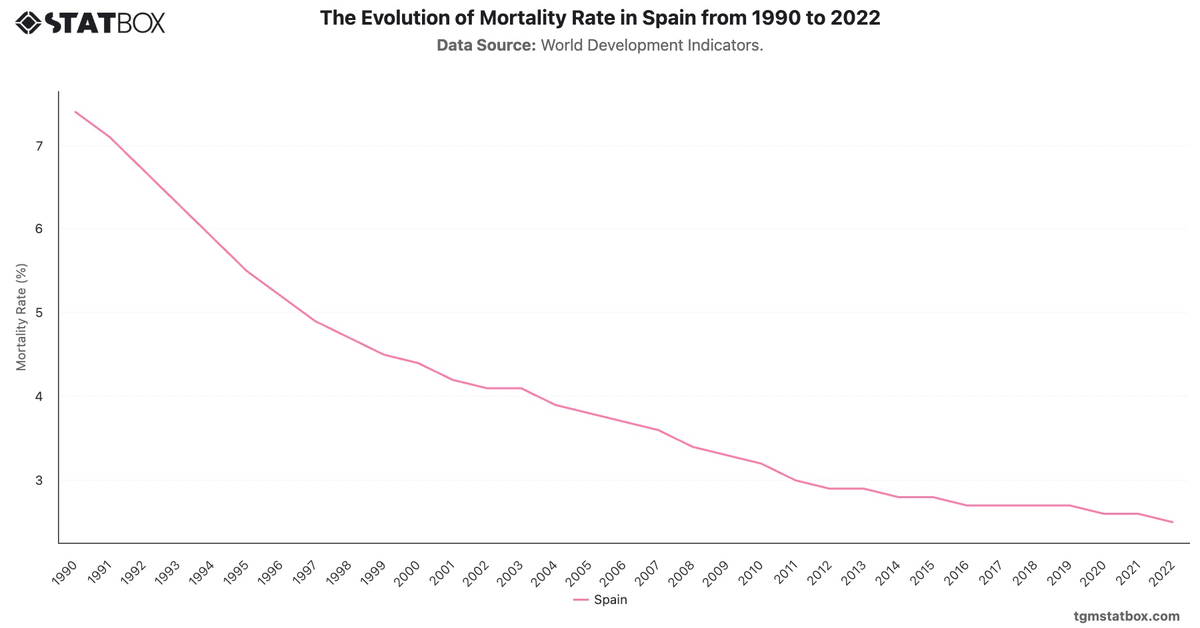
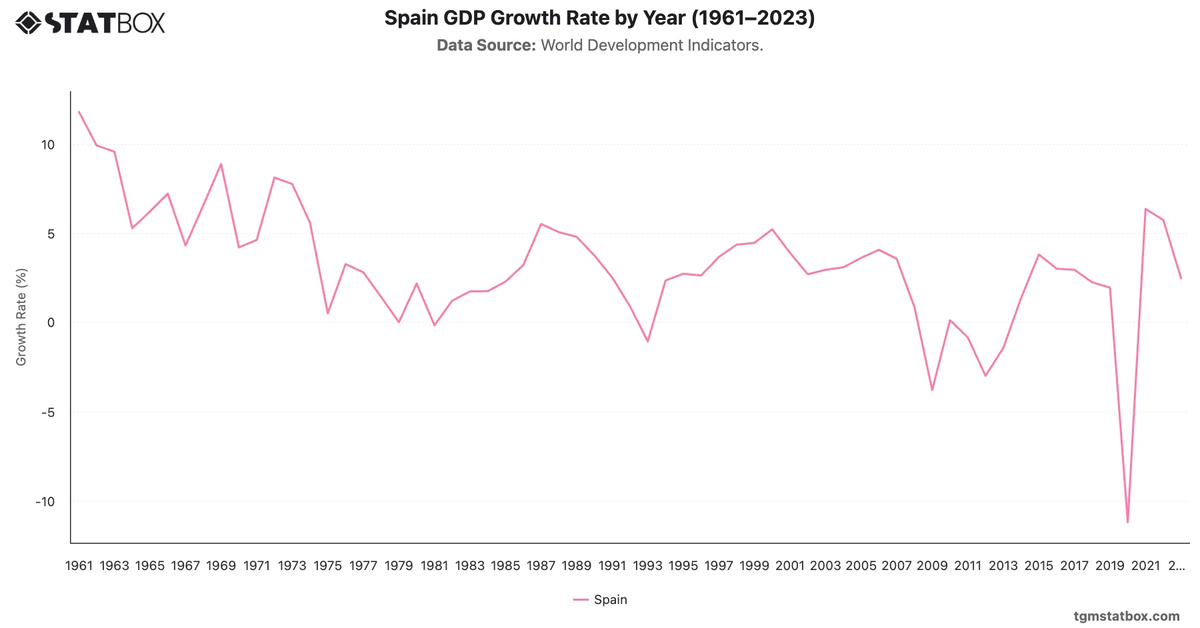
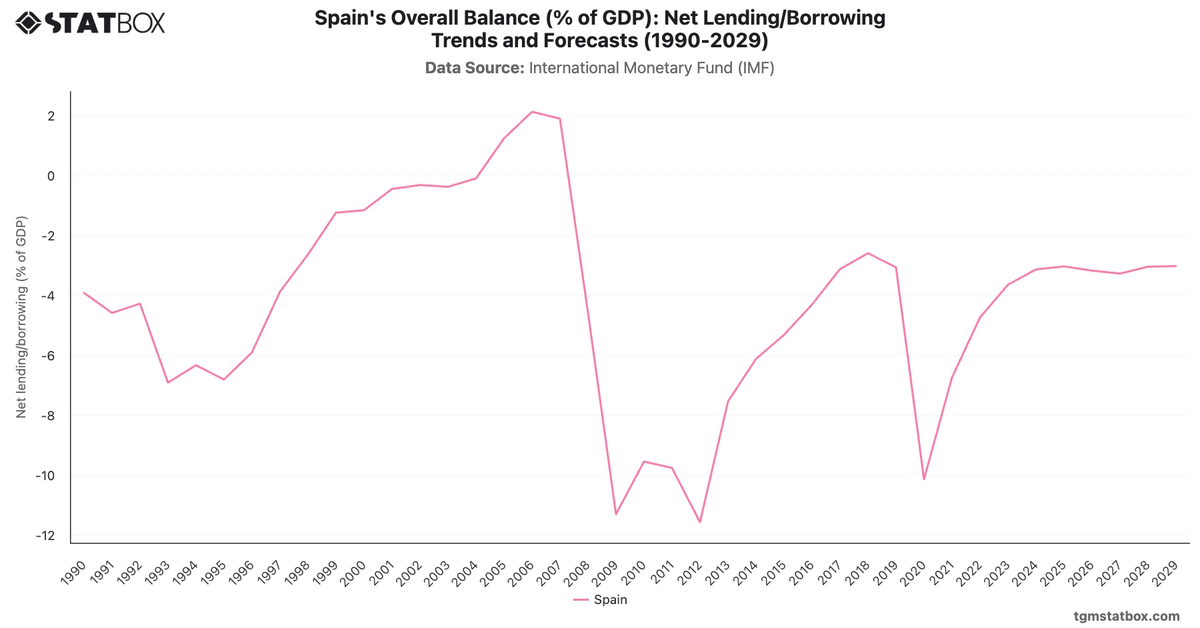
Discover additional trends and data on Spain’s net lending/borrowing balance as a percentage of GDP, Spain’s yearly GDP growth rate, Spain’s mortality trend.