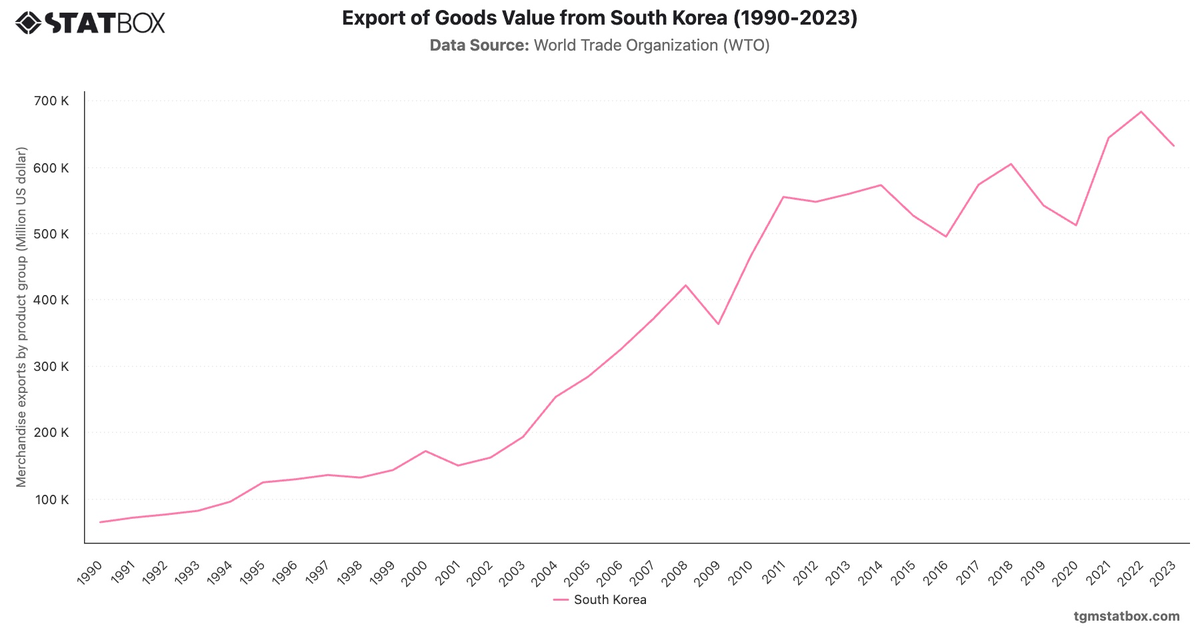
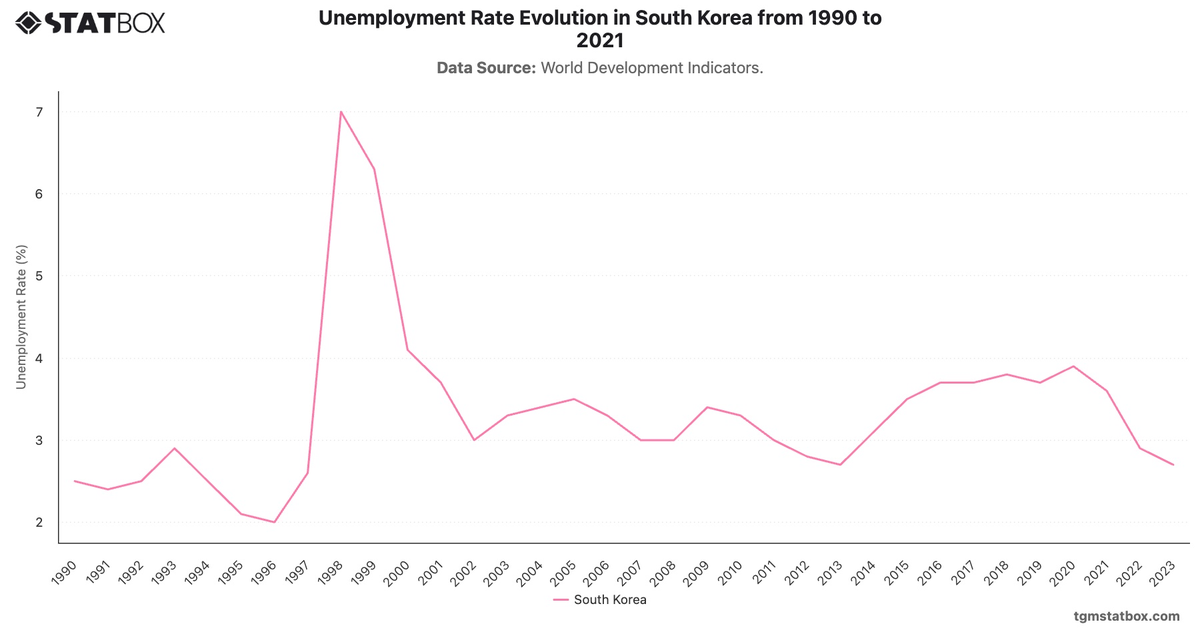
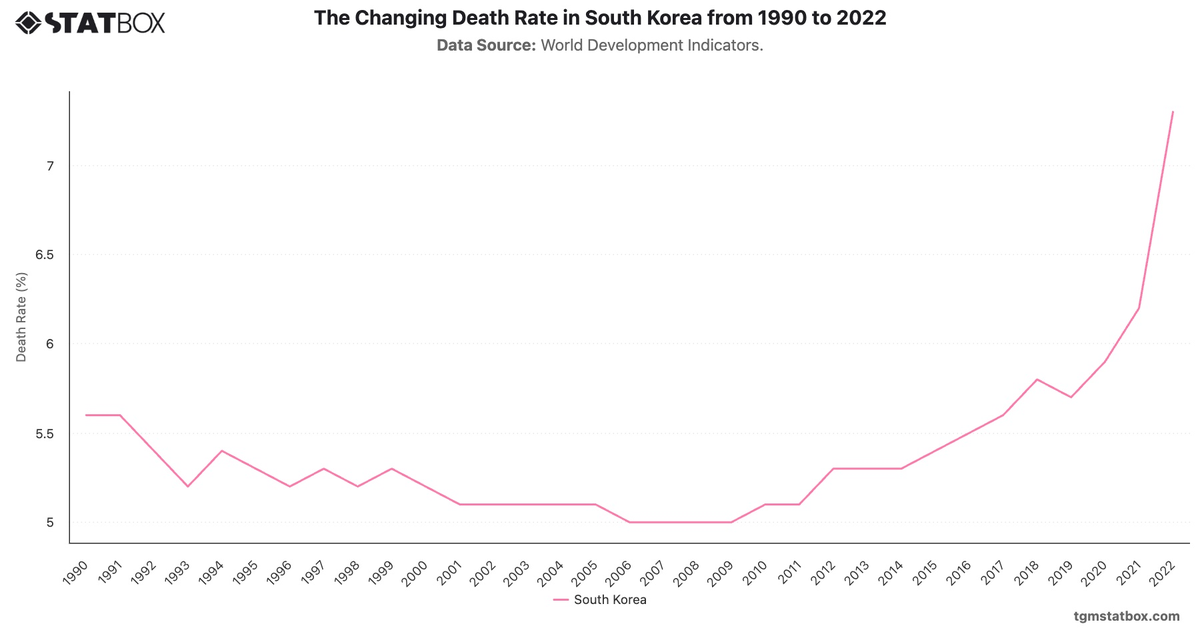
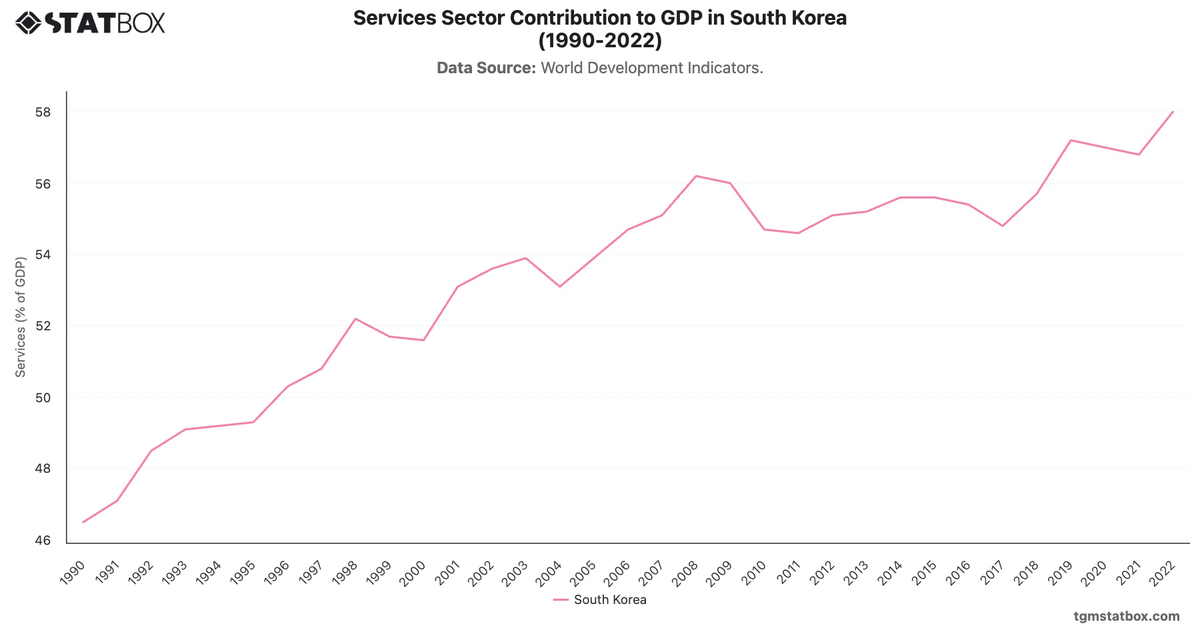
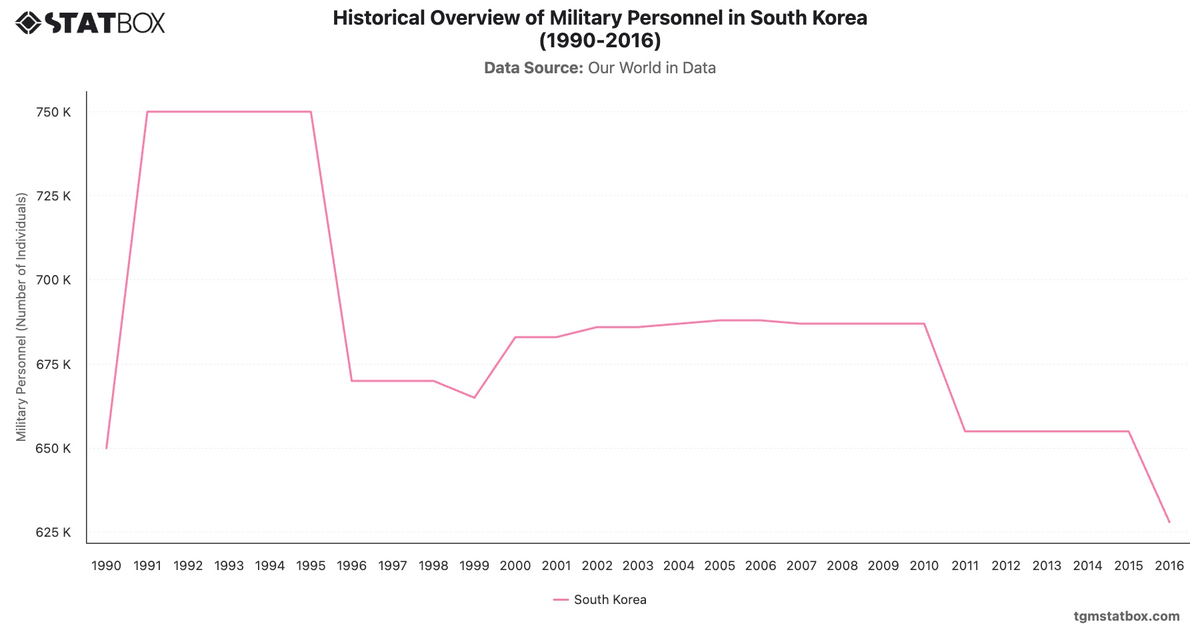
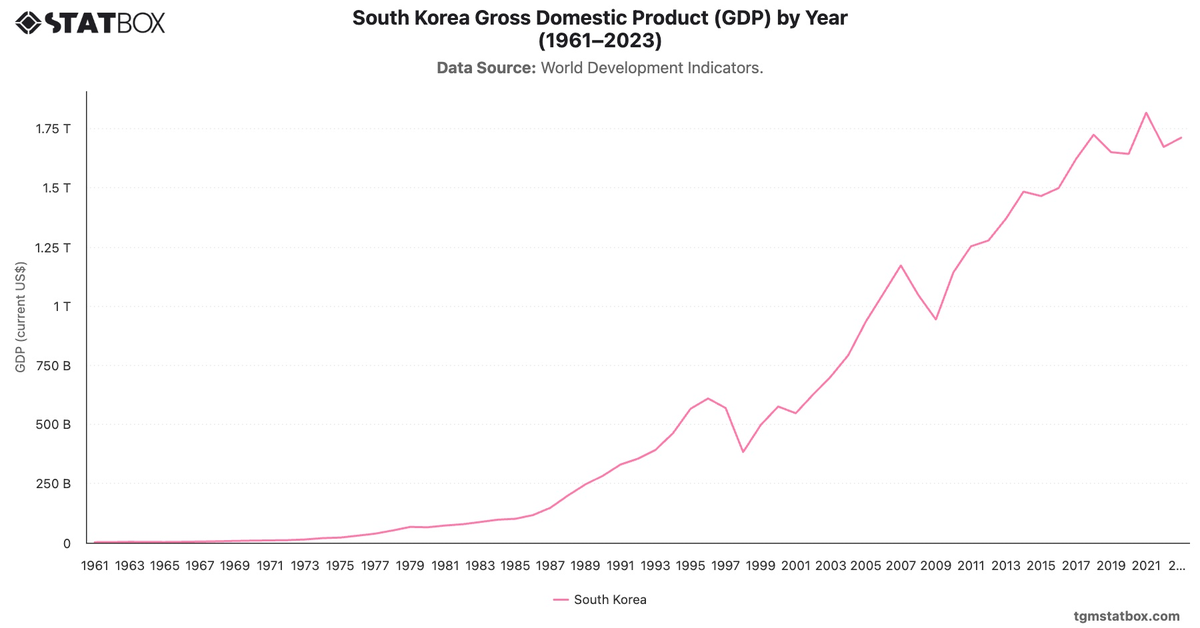
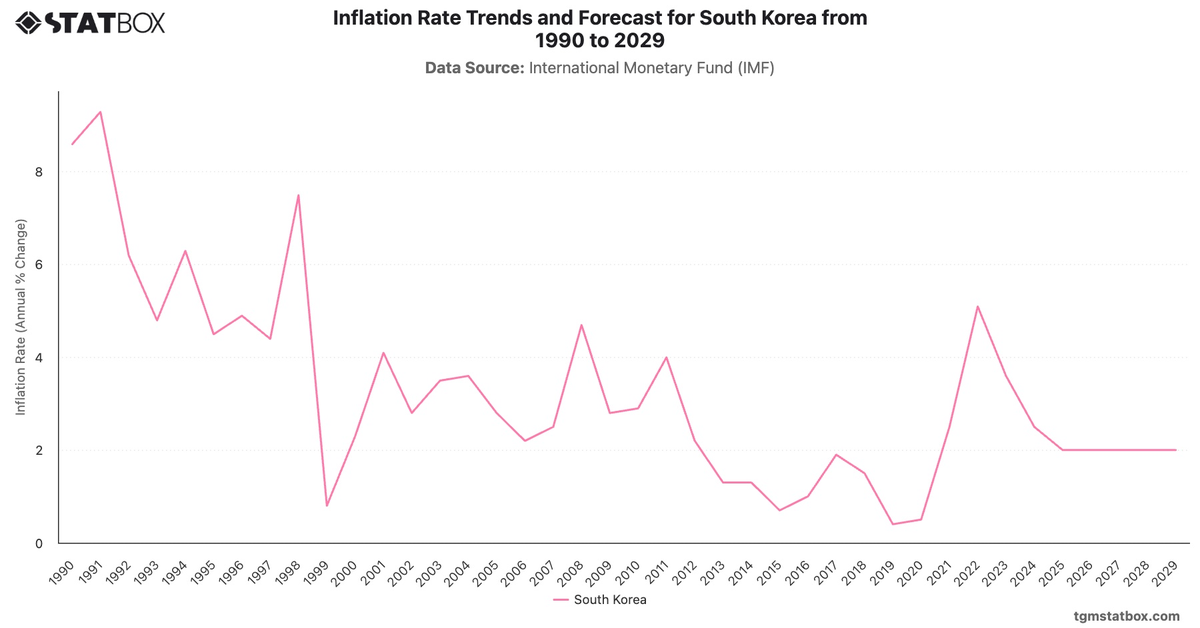
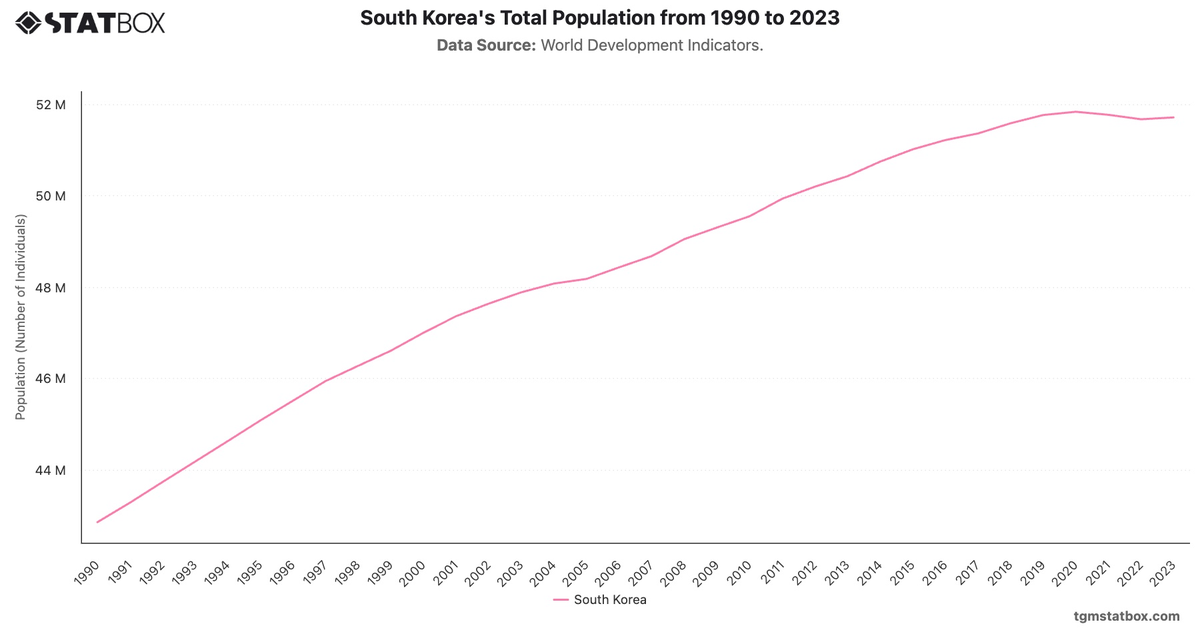
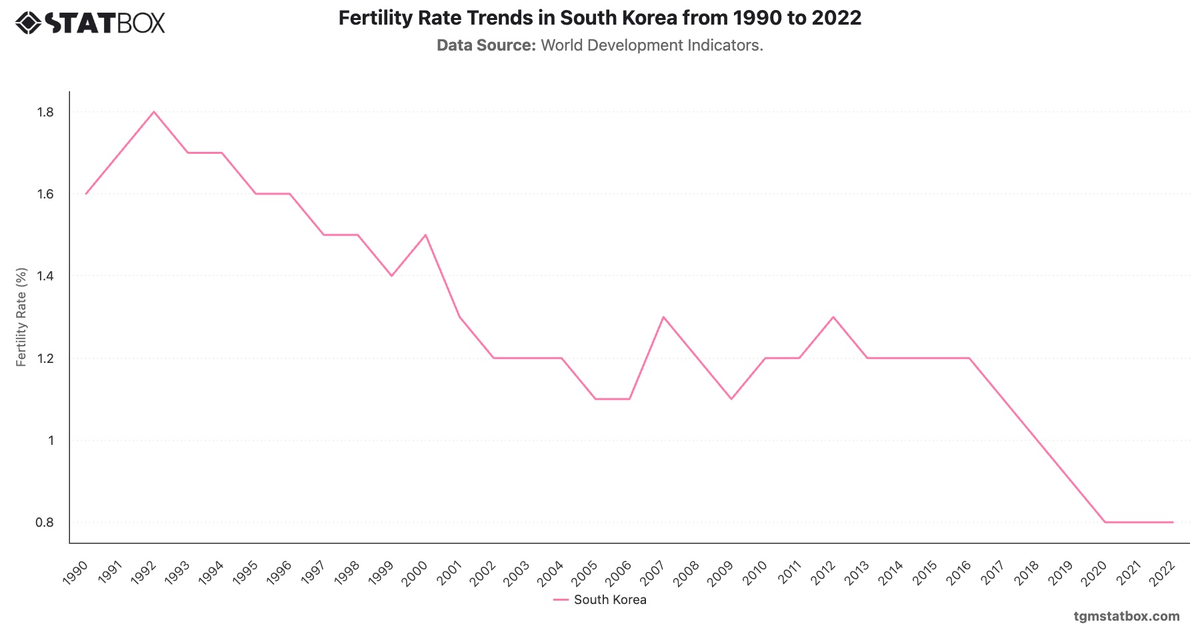
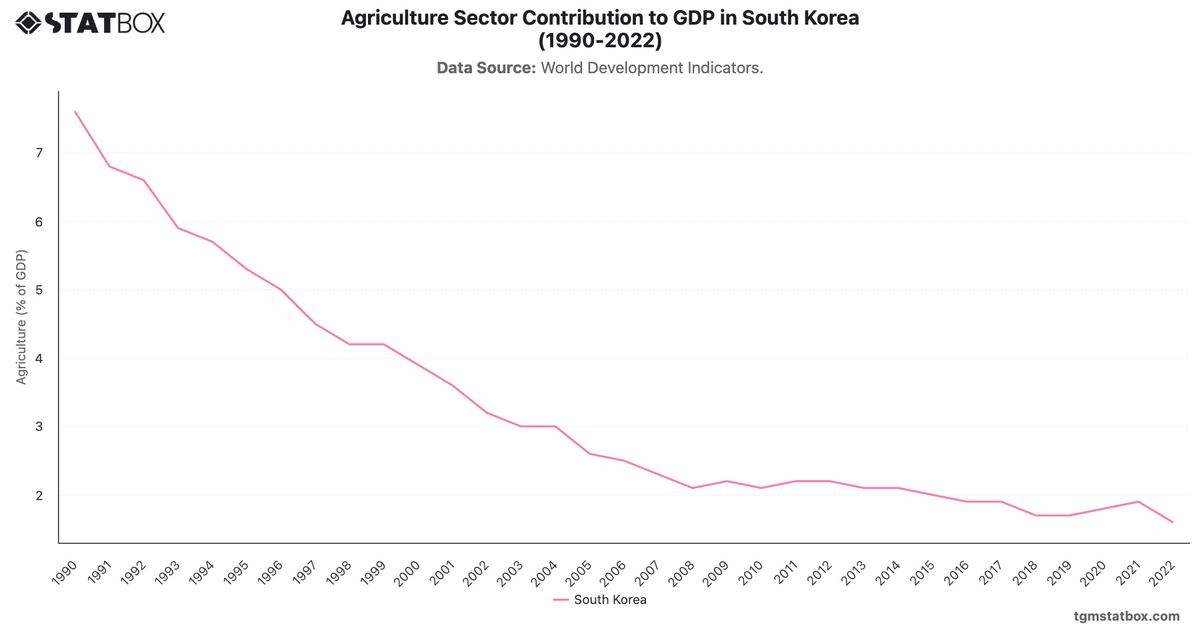
South Korea experienced a steady rise in its working-age population from 1990, starting at 69.2% and peaking at 73.3% in 2015. This increase correlates with South Korea’s industrial and economic growth periods, driven by technological advancements and a shift from agriculture to industry and services. However, after 2015, the percentage began a gradual decline, reaching 70.9% in 2022, as the country faces challenges with an aging population and low birth rates. The slight decline reflects ongoing demographic shifts and an increasing need for policies supporting a balanced workforce.
For a deeper dive into the topic, explore South Korea’s population changes, industry sector share in South Korea’s GDP, South Korea’s population density.