South Korea experienced substantial urbanization growth from 1990 to 2023, reflecting its rapid industrialization and urban development policies. Urbanization was 73.8% in 1990, climbing sharply through the early 1990s due to economic expansion and industrial growth. By 2000, urbanization reached 79.6%, as major cities like Seoul and Busan developed as industrial and economic hubs. Despite economic challenges in the late 1990s, South Korea’s urbanization continued, surpassing 81% by 2005. The urbanization rate stabilized in the 2010s, with minor fluctuations around 81.5% as South Korea's urban areas reached maturity. By 2023, urbanization was at 81.5%, highlighting a highly urbanized society driven by continued investment in urban infrastructure and economic concentration in urban areas, which solidified South Korea’s status as an urbanized, developed nation.
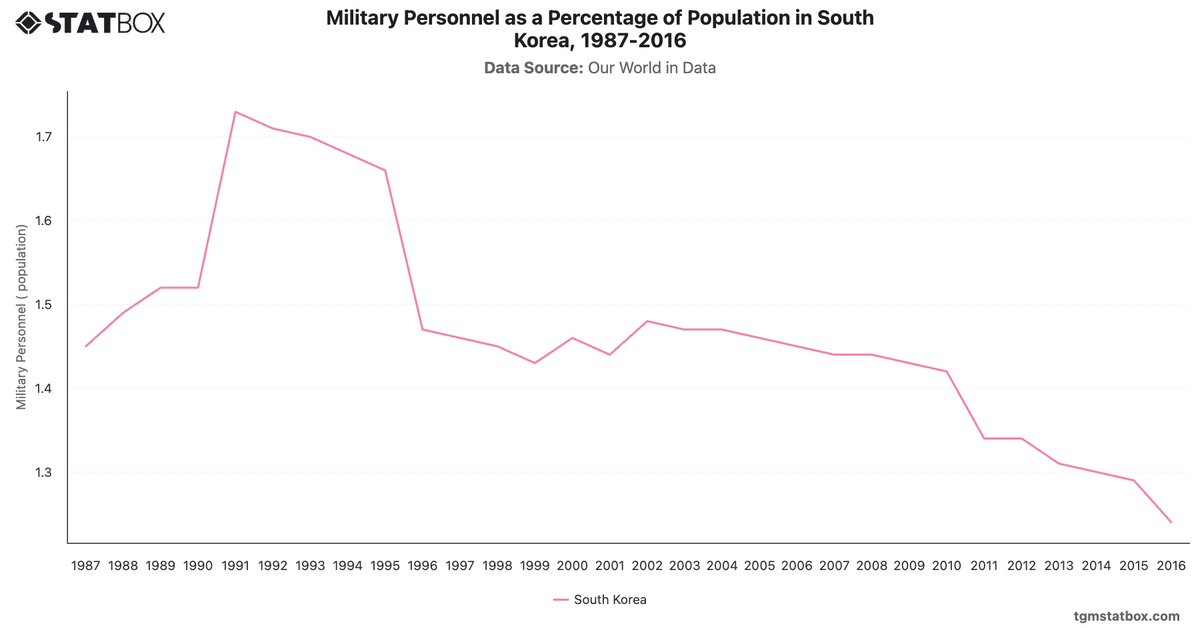
Gain a broader perspective by reviewing South Korea’s population density, working-age population share in South Korea, South Korea’s military-to-population ratio.