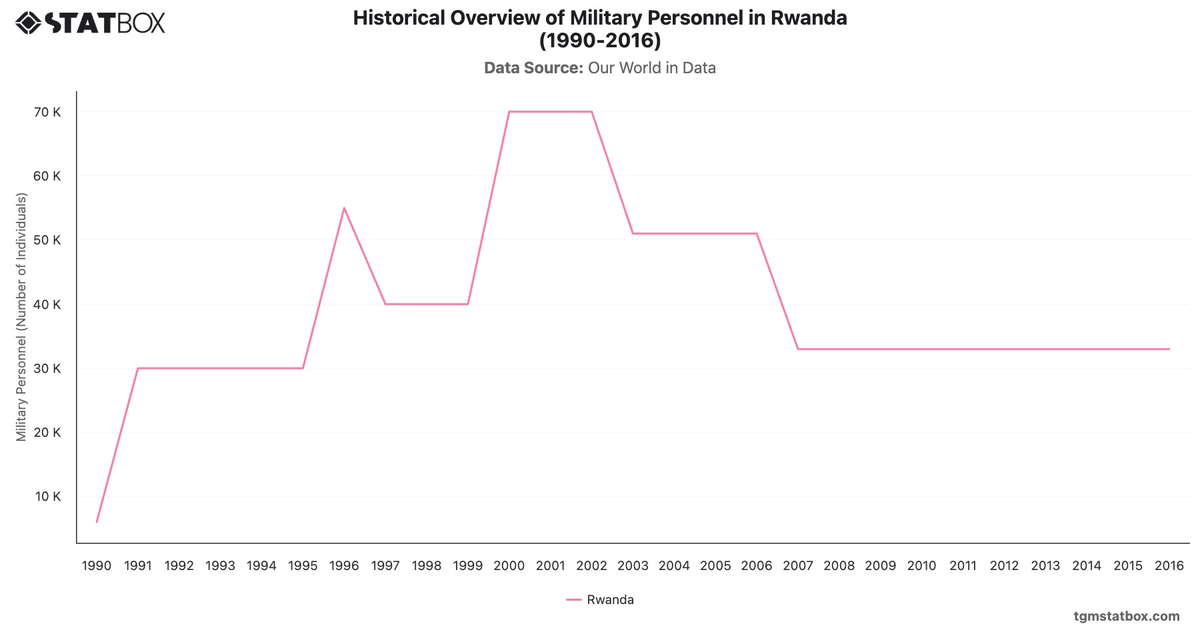
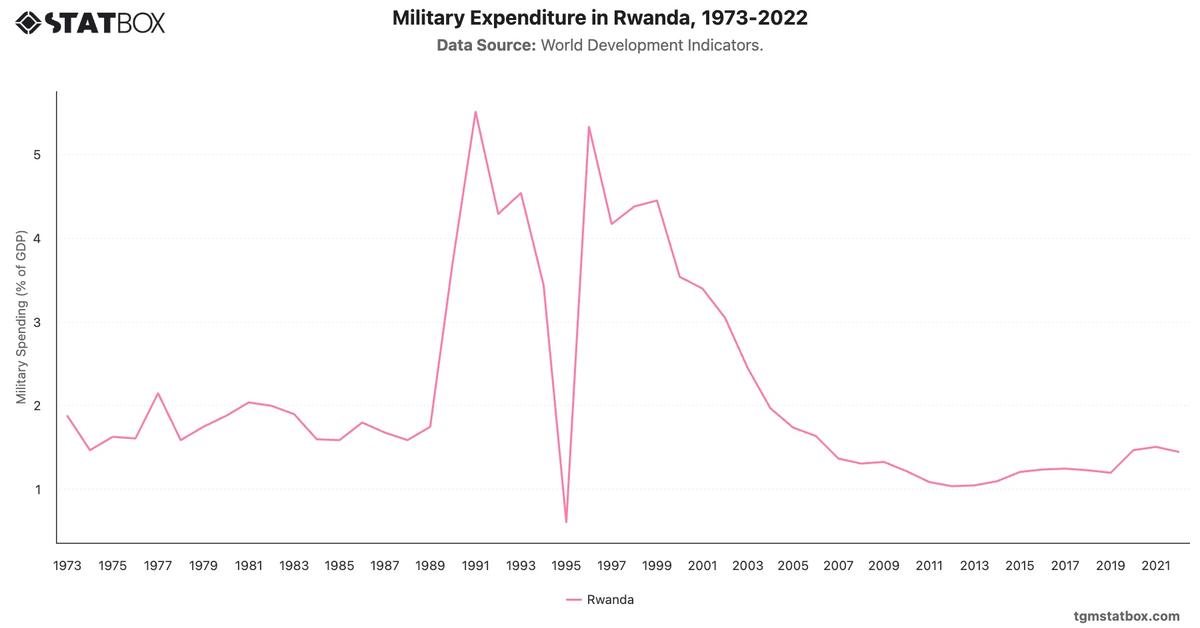
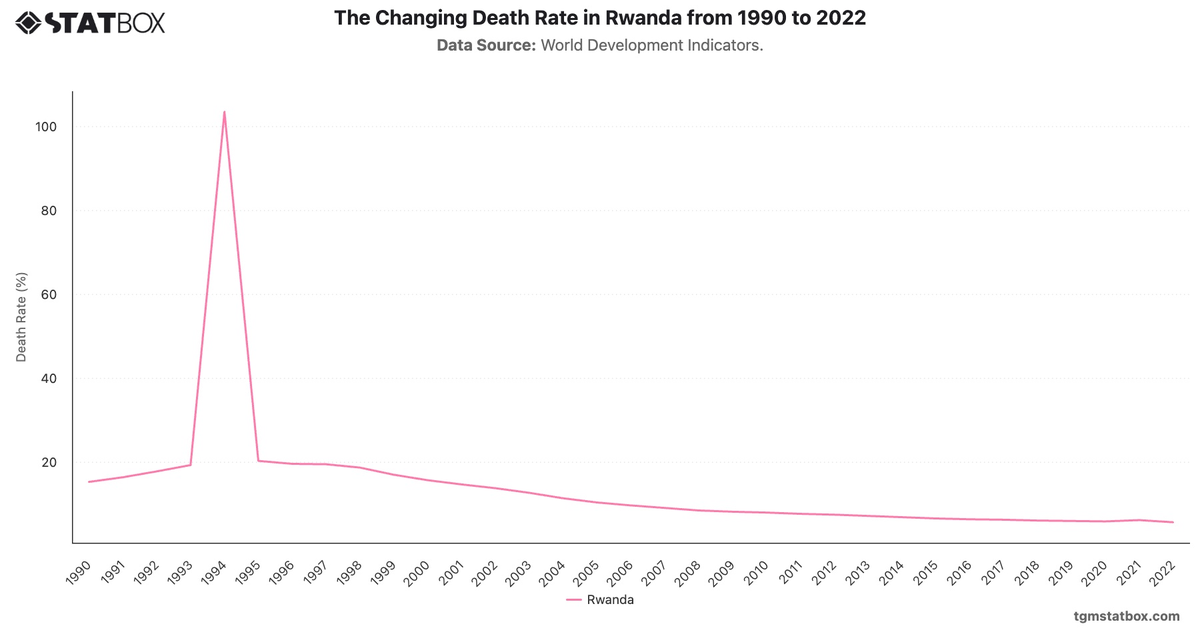
The late 1980s show relatively low military personnel levels, with only 0.08-0.09% of the population serving in the military. However, a dramatic increase began in 1991, when the percentage jumped to 0.45%, coinciding with the outbreak of the Rwandan Civil War. This upward trend continued through the early 1990s, reaching 0.57% in 1994 during the genocide. The most significant spike occurred in 1996, when military personnel reached 1.02% of the population, likely due to the First Congo War and Rwanda's involvement in regional conflicts.
The period from 2000-2016 shows a gradual but consistent demilitarization trend. After maintaining relatively high levels around 0.9% in the early 2000s, military personnel decreased significantly to 0.28% by 2016. The modernization of the Rwandan Defence Forces (RDF) under President Kagame's leadership emphasized quality over quantity, focusing on professional training and peacekeeping capabilities rather than maintaining a large standing army. This transformation aligns with Rwanda's broader strategy of positioning itself as a stable, development-focused nation in the Great Lakes region.
For a broader context, visit other statistics on Rwanda’s annual GDP growth rate, Rwanda’s population growth rate, Rwanda’s population figures.