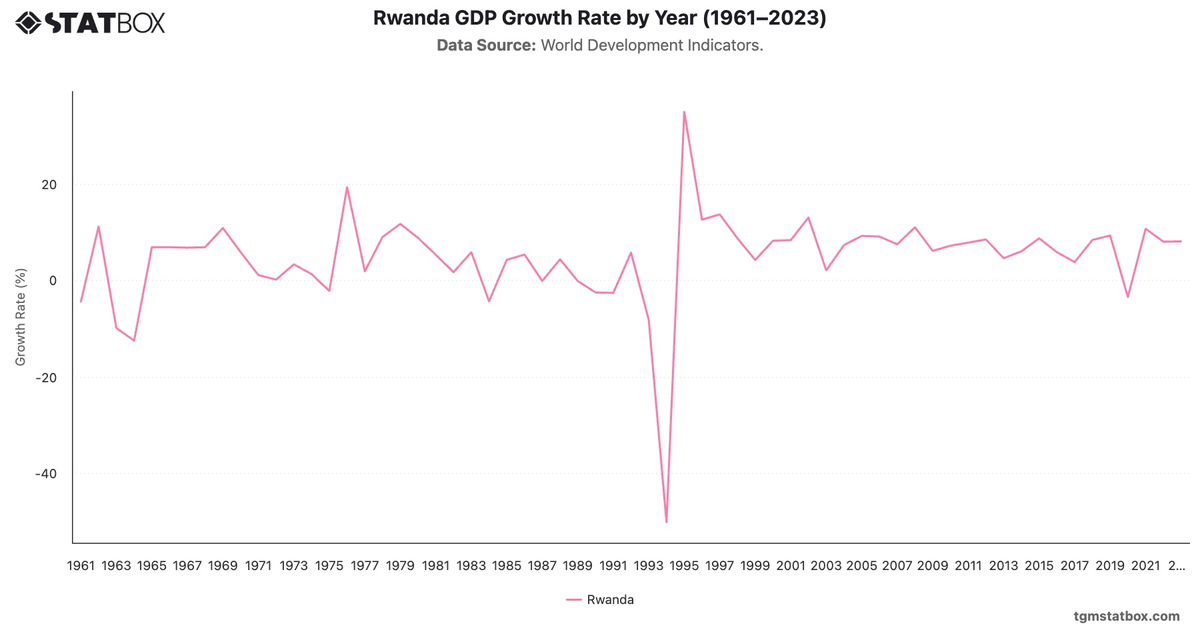
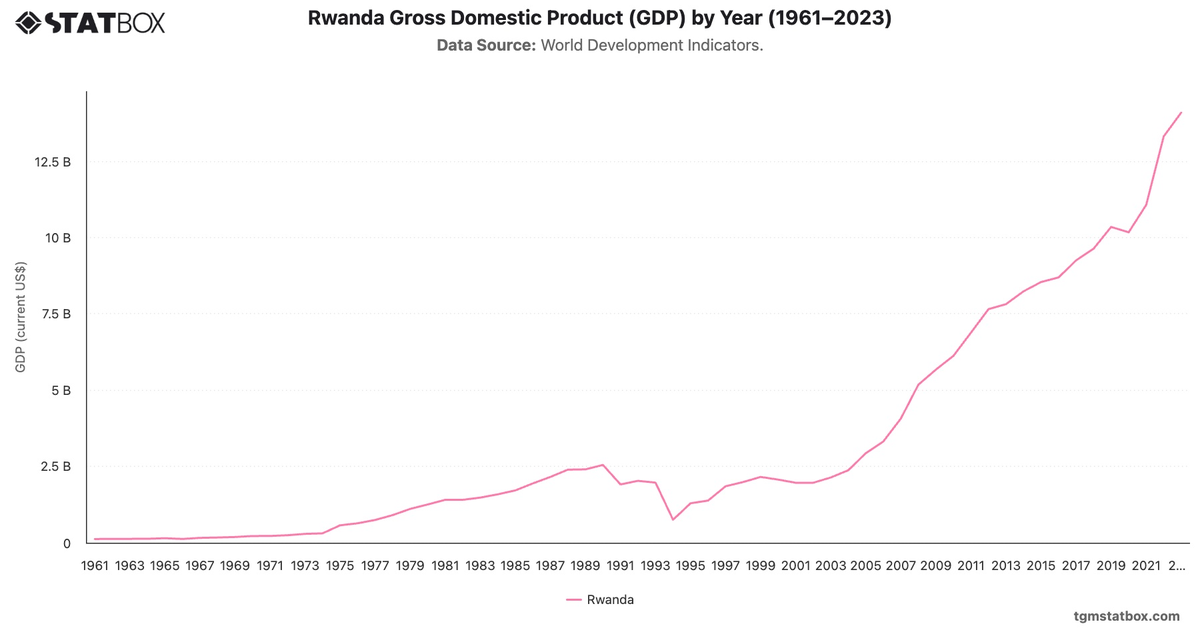
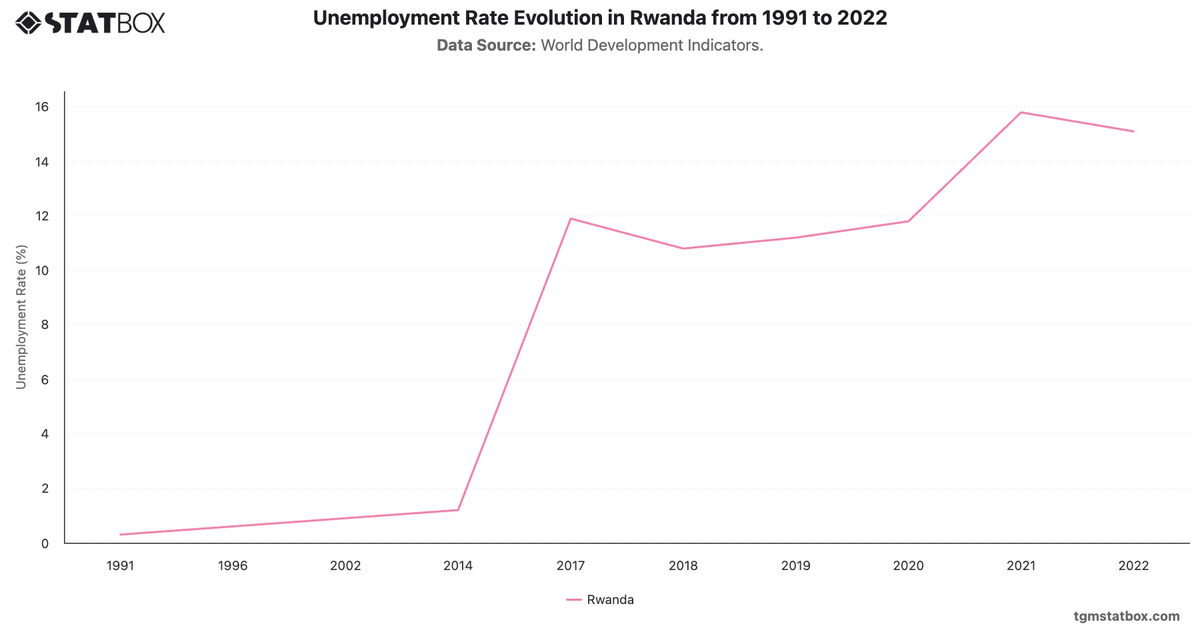
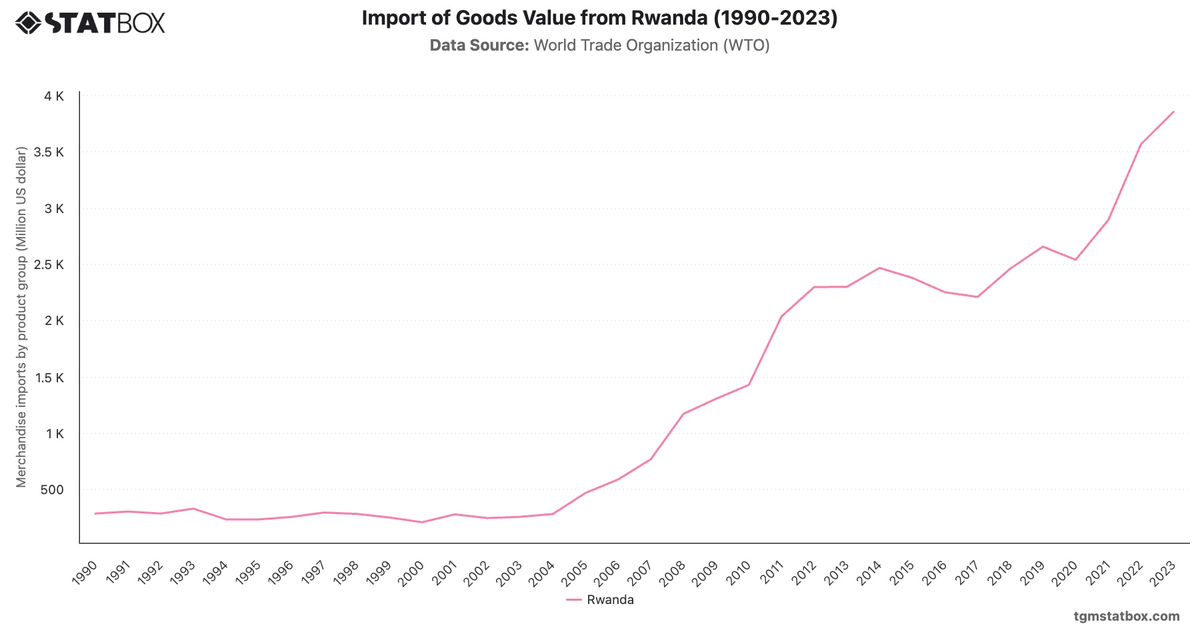
Rwanda's industry sector has shown modest but steady growth from 1990 to 2022, reflecting the country's economic transformation. In the early 1990s, contributions declined from 24.6% in 1990 to 18.3% in 1993, impacted by political instability and the Rwandan Civil War. The sector rebounded to 21.2% in 1994 but dropped sharply to 16% in 1995, highlighting the economic challenges post-genocide. From the late 1990s, gradual recovery began, with contributions stabilizing around 18% by 1997, driven by reconstruction efforts and small-scale manufacturing.
The 2000s saw slower growth, with contributions to GDP averaging 16.5% until 2010, as agriculture remained dominant. However, a shift occurred in the 2010s, with industrial output increasing to 18.2% by 2011, supported by investments in construction and energy. By 2022, the sector's share reached 21.2%, reflecting the impact of infrastructure development and mining expansion. This steady growth underscores Rwanda's progress in industrialization, with a focus on diversifying its economy while addressing historical challenges.
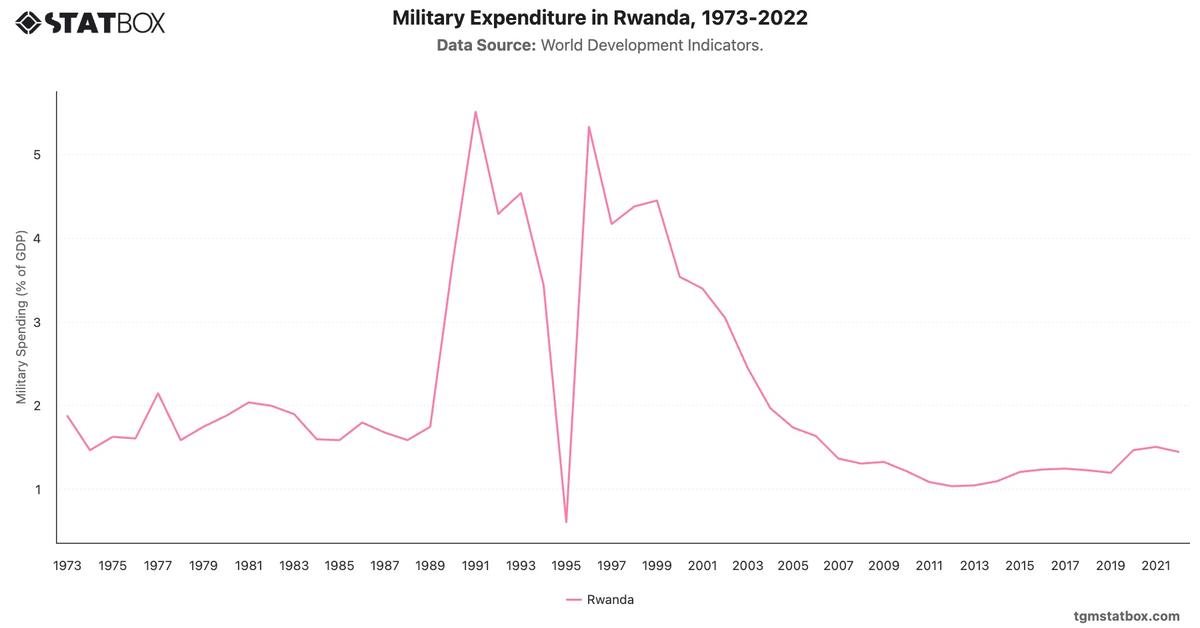
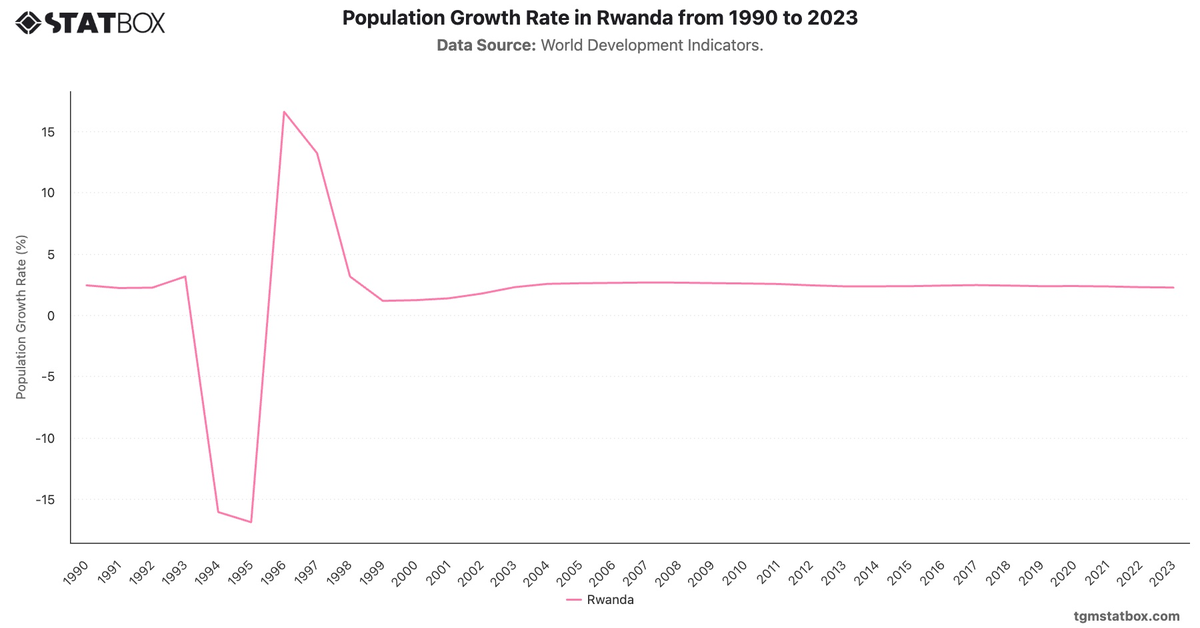
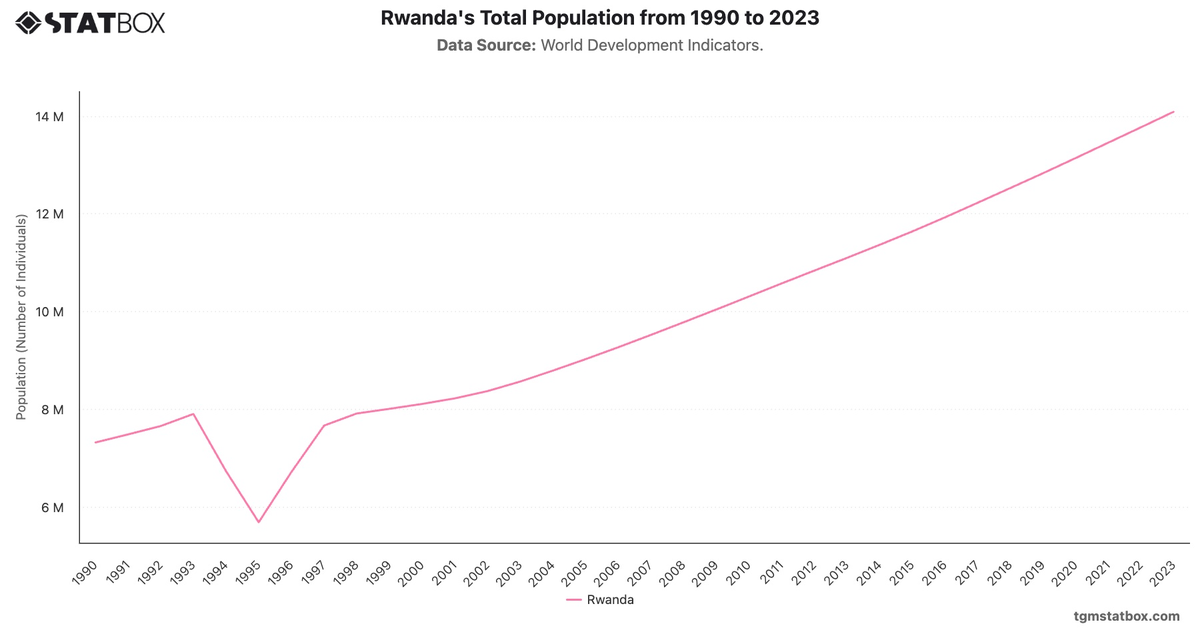
Explore related charts to gain a better understanding of Rwanda’s annual GDP growth rate, Rwanda’s population figures, Rwanda’s military spending.