Côte d'Ivoire saw inflation spike to 26.0% in 1994 following the devaluation of the CFA franc, which significantly increased the cost of imports. By 1996, inflation had dropped to 2.7% as the economy adjusted to the currency changes. Inflation remained low through the 2000s, averaging around 2%, supported by improved political stability and economic reforms.
In recent years, inflation rose to 5.2% in 2022, reflecting global economic challenges and rising food prices. The forecast predicts a gradual return to a stable inflation rate of 2.0% by 2028, as fiscal and monetary policies ensure long-term stability and growth.
In recent years, inflation rose to 5.2% in 2022, reflecting global economic challenges and rising food prices. The forecast predicts a gradual return to a stable inflation rate of 2.0% by 2028, as fiscal and monetary policies ensure long-term stability and growth.
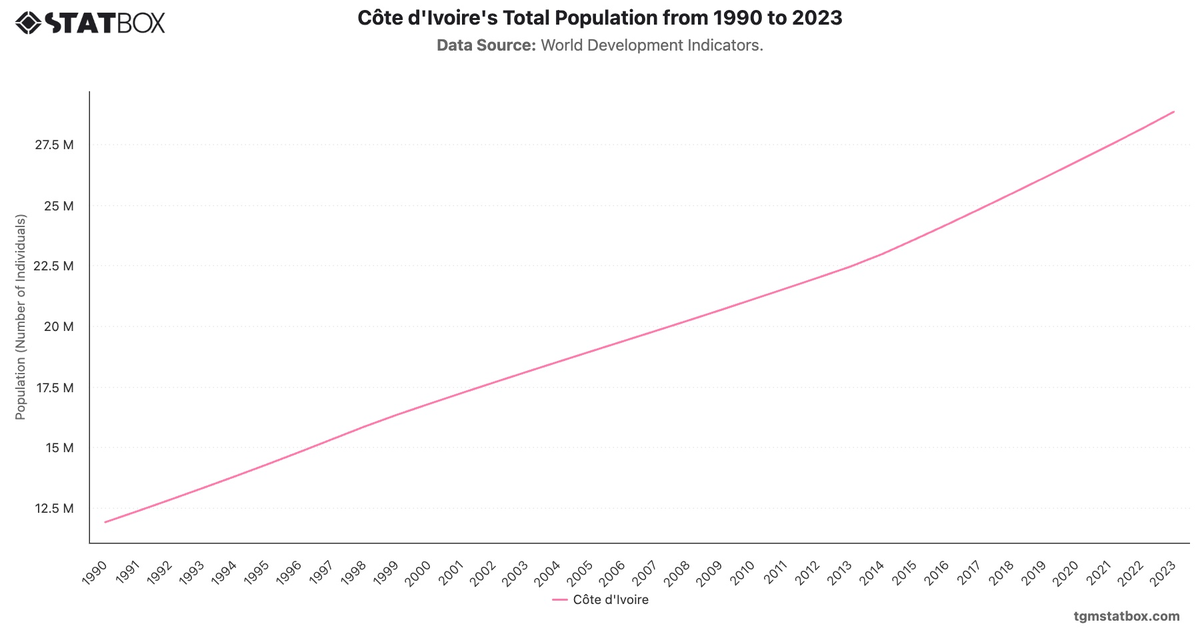
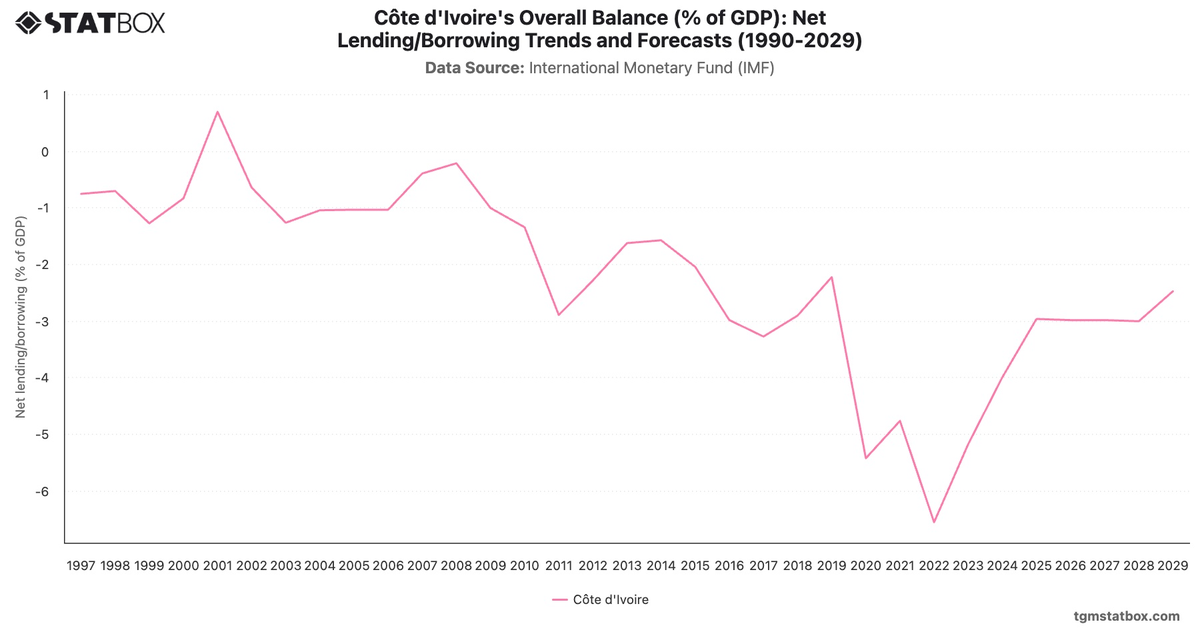
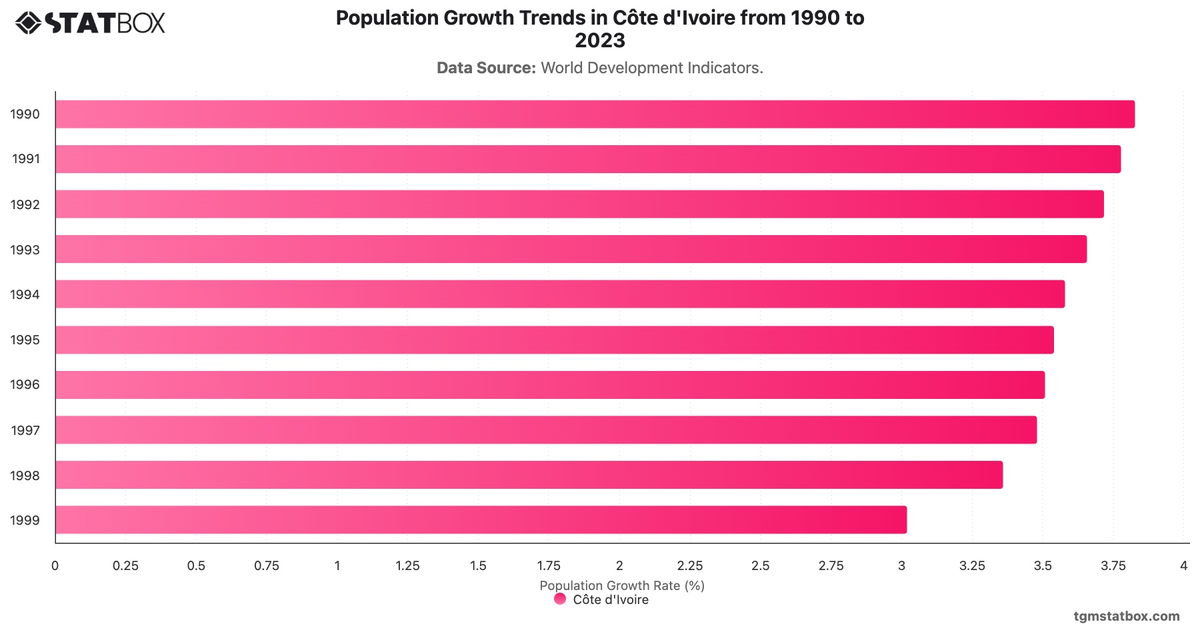
Find out more through related statistics on Côte d'Ivoire’s net lending/borrowing, Côte d'Ivoire’s population growth, share of agriculture in Côte d'Ivoire’s GDP.