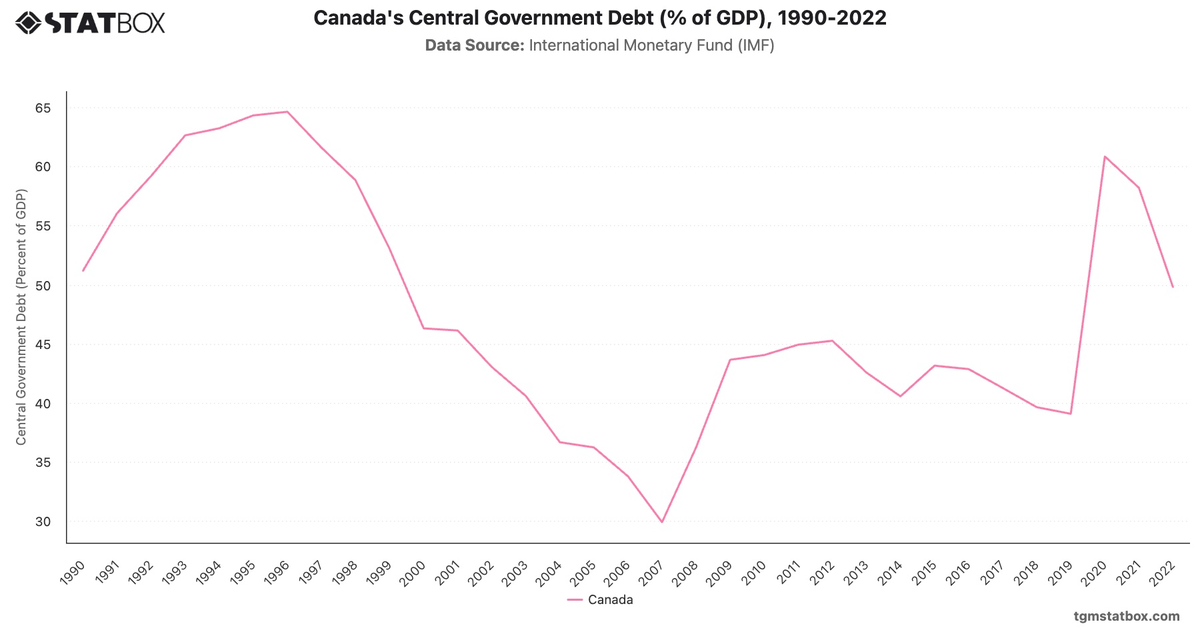
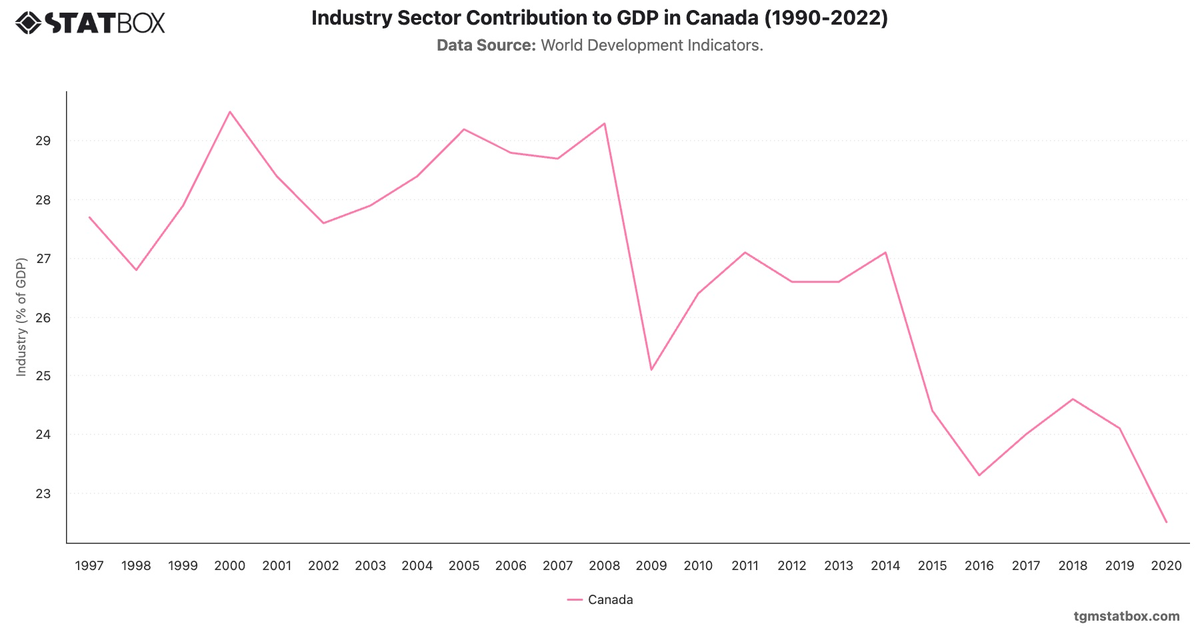
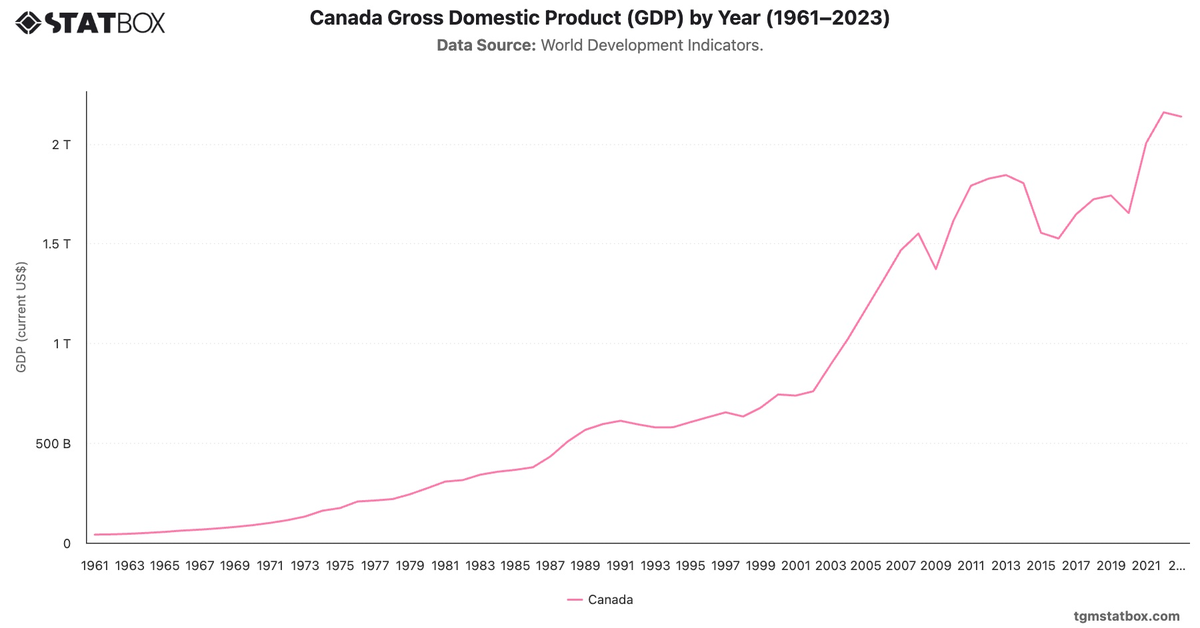
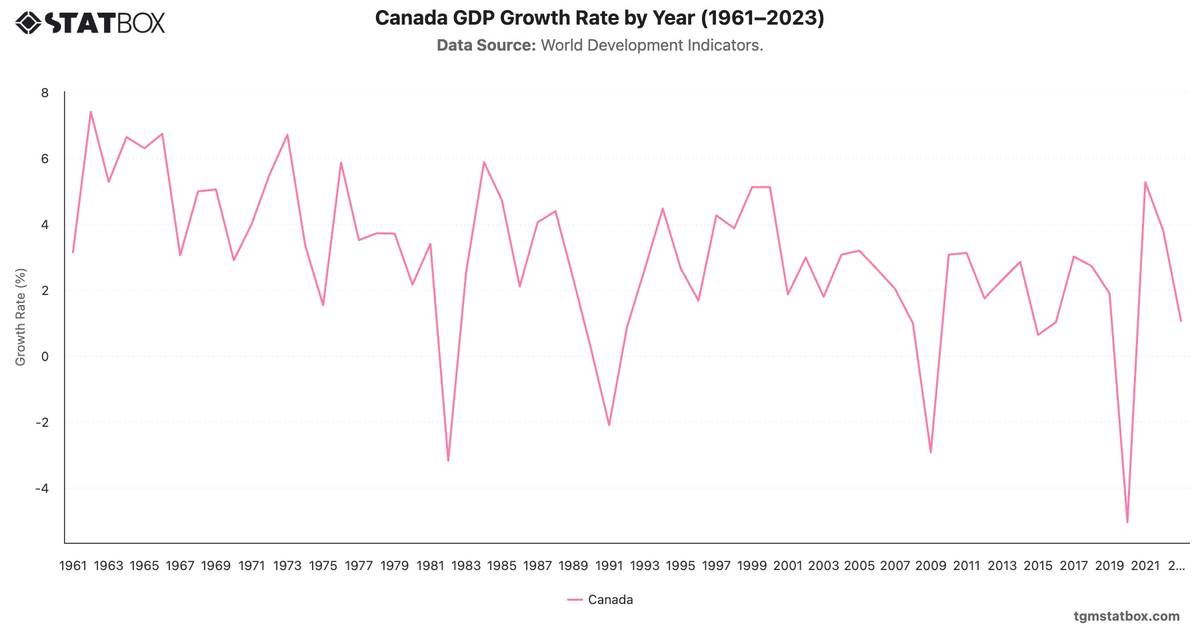
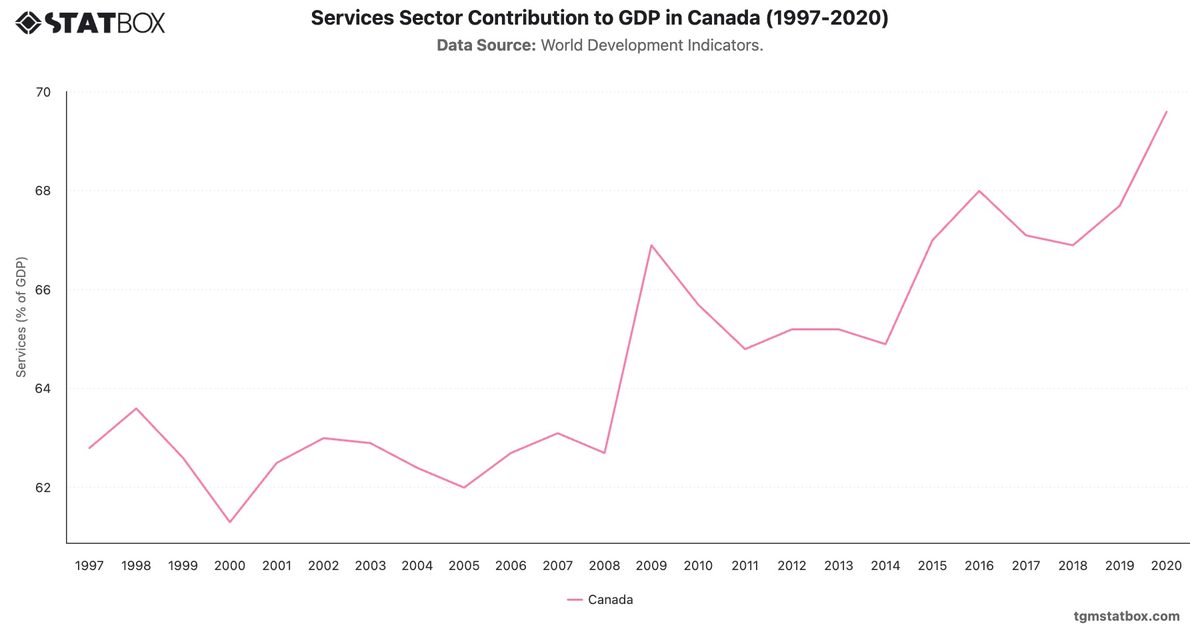
Canada’s general government debt rose sharply in the early 1990s, peaking at over 100% of GDP in 1995, driven by high fiscal deficits and rising interest costs. Following extensive fiscal reforms, Canada’s debt began to decline, reaching 67.2% by 2007. The 2008 global financial crisis reversed this trend, as Canada’s debt increased to 84% in 2010 due to stimulus measures.
Debt levels remained elevated through the 2010s, with modest increases. The COVID-19 pandemic led to a significant rise, with debt peaking at 118.9% of GDP in 2020. As economic recovery efforts took hold, debt reduced to 106.6% by 2022, although it remained above pre-pandemic levels due to sustained public spending.
Debt levels remained elevated through the 2010s, with modest increases. The COVID-19 pandemic led to a significant rise, with debt peaking at 118.9% of GDP in 2020. As economic recovery efforts took hold, debt reduced to 106.6% by 2022, although it remained above pre-pandemic levels due to sustained public spending.
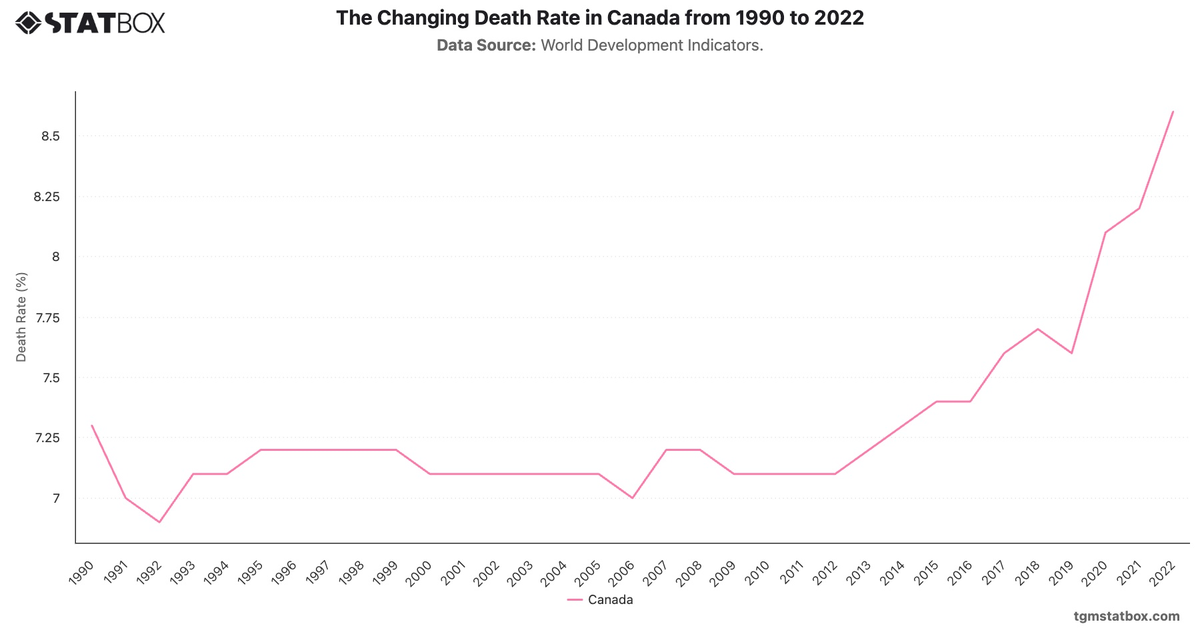
Find out more through related statistics on Canada’s death rate trend, Canada’s net lending/borrowing as a percentage of GDP, Canada’s central government debt-to-GDP ratio.