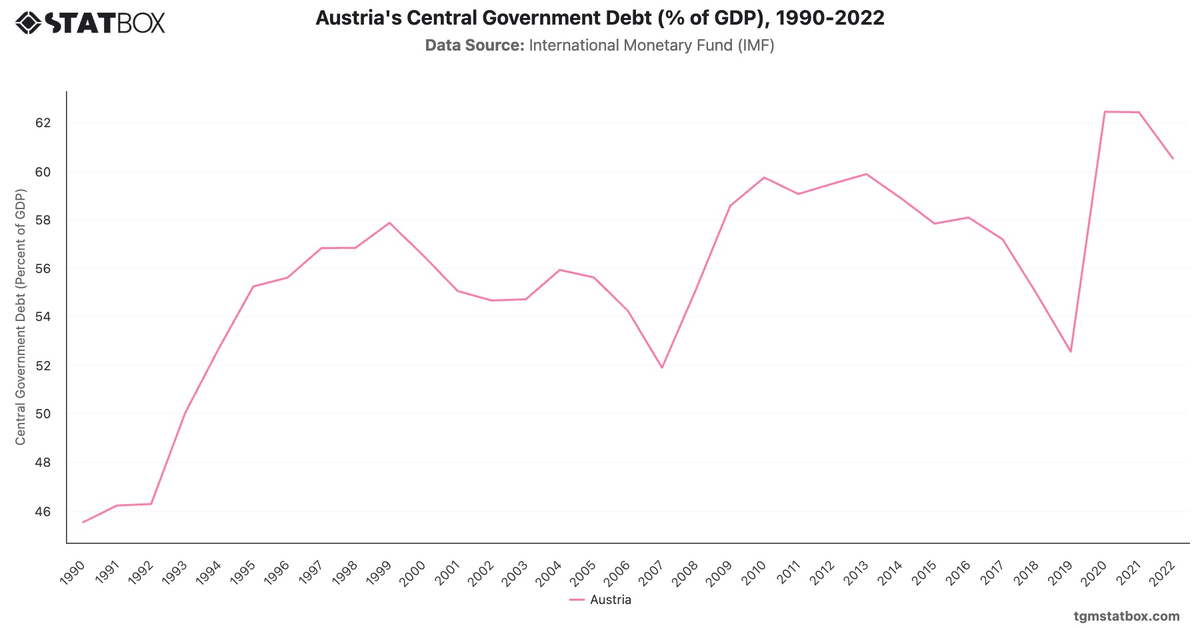
Austria's general government debt experienced notable shifts in the early 1990s, rising from 55.9% in 1990 to 67.9% in 1995, partly due to the costs associated with Austria’s integration into the European Union. Debt levels remained high through the late 1990s and early 2000s, stabilizing around 65% before spiking again in 2009 to 79.6% as Austria responded to the global financial crisis with fiscal stimulus measures.
Throughout the 2010s, Austria maintained relatively high debt levels, with a peak of 84.4% in 2015, influenced by continued economic support and public spending. The COVID-19 pandemic led to a substantial increase, with debt reaching 82.9% in 2020. Austria’s debt saw a gradual decline in the following years, dropping to 77.8% by 2022 as the country prioritized economic recovery efforts and debt reduction strategies.
Throughout the 2010s, Austria maintained relatively high debt levels, with a peak of 84.4% in 2015, influenced by continued economic support and public spending. The COVID-19 pandemic led to a substantial increase, with debt reaching 82.9% in 2020. Austria’s debt saw a gradual decline in the following years, dropping to 77.8% by 2022 as the country prioritized economic recovery efforts and debt reduction strategies.
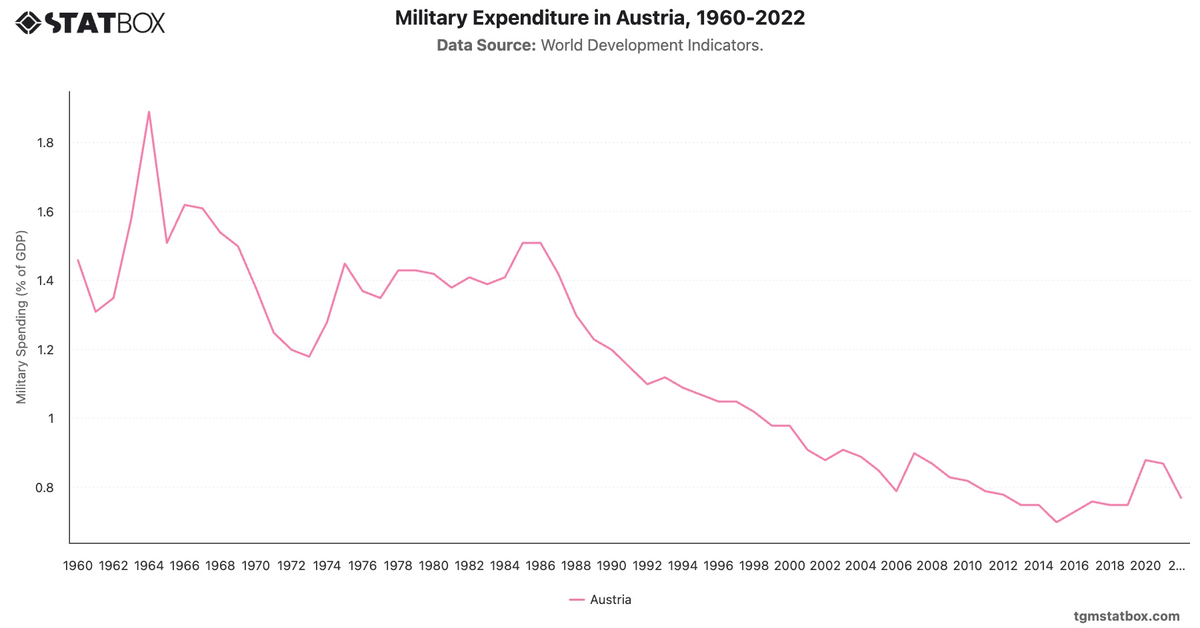
Explore related charts to gain a better understanding of Austria’s annual GDP growth rate, Austria’s military spending, Austria’s military personnel share.