Albania's central government debt experienced significant fluctuations between 1990 and 2022, reflecting economic transitions and external shocks. Starting at 24.63% of GDP in 1994, debt levels rose steadily, peaking at 51.41% in 1997 following the collapse of pyramid schemes that destabilized the economy. The aftermath saw continued growth, reaching 63.38% in 2000, as the government relied on borrowing to stabilize public finances.
By the mid-2000s, debt started to decline, falling to 53.55% in 2007, buoyed by economic growth and fiscal consolidation. However, the global financial crisis of 2008 reversed this trend, pushing debt to 59.67% in 2009. The situation worsened in the 2010s, with debt peaking at 72.67% in 2015 due to rising fiscal deficits and slow reforms. The COVID-19 pandemic further exacerbated the debt burden, driving it to 74.45% in 2020, before easing to 66.46% by 2022 as economic recovery efforts gained traction.
By the mid-2000s, debt started to decline, falling to 53.55% in 2007, buoyed by economic growth and fiscal consolidation. However, the global financial crisis of 2008 reversed this trend, pushing debt to 59.67% in 2009. The situation worsened in the 2010s, with debt peaking at 72.67% in 2015 due to rising fiscal deficits and slow reforms. The COVID-19 pandemic further exacerbated the debt burden, driving it to 74.45% in 2020, before easing to 66.46% by 2022 as economic recovery efforts gained traction.
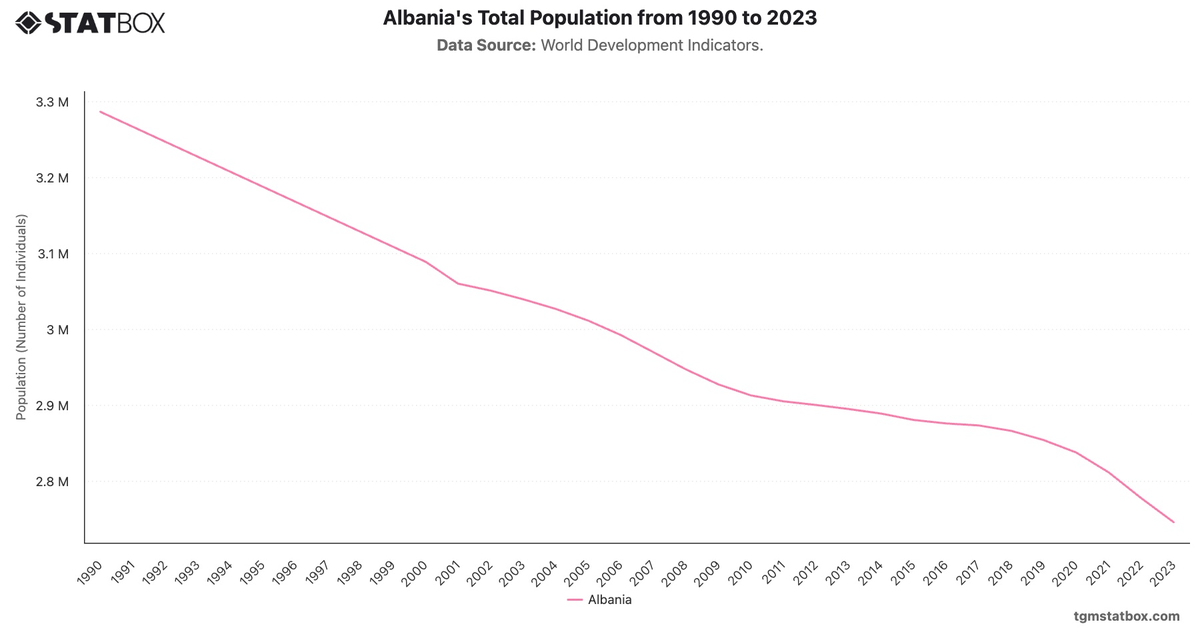
For additional information, visit statistics on Albania’s industry sector share in GDP, Albania’s annual GDP data, Albania’s population growth trends.