Albania's working-age population percentage has demonstrated notable trends from 1990 to 2022. Starting at 61.7% in 1990, the percentage steadily increased, peaking at 67.4% in 2010. This rise can be attributed to several factors, including demographic changes, urban migration, and economic reforms that encouraged workforce participation.
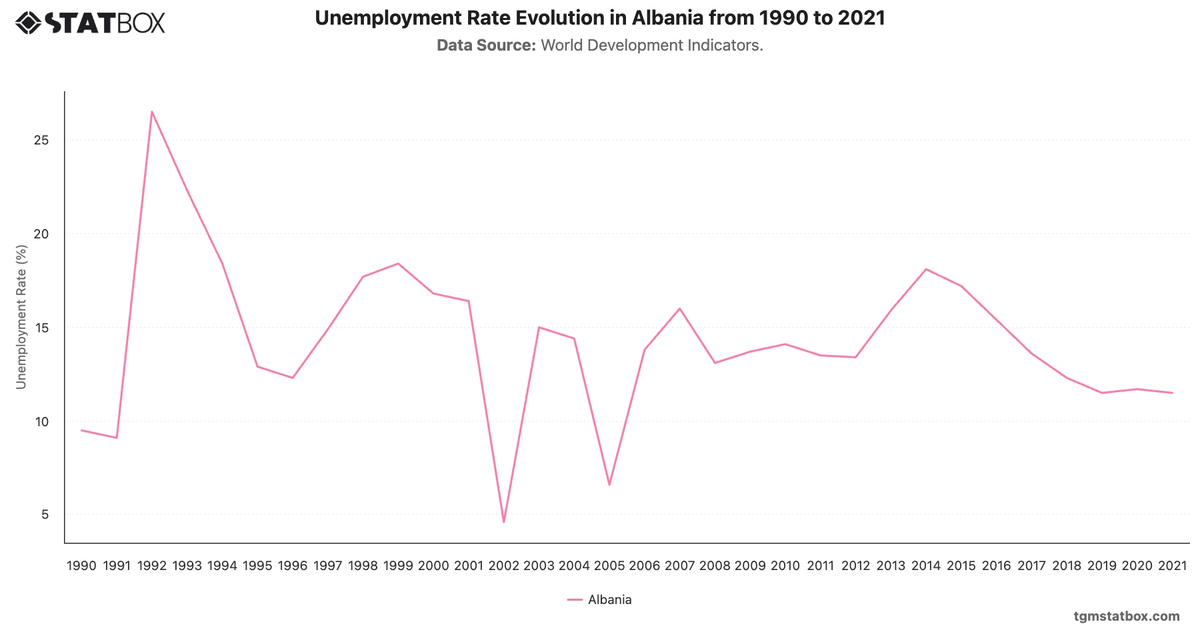
However, after reaching its peak, the working-age population percentage began to decline, falling to approximately 67.2% by 2022. This decrease highlights emerging challenges, such as aging demographics, youth emigration, and shifts in labor market dynamics. The decline may also reflect increased unemployment rates and the impact of external economic conditions.
However, after reaching its peak, the working-age population percentage began to decline, falling to approximately 67.2% by 2022. This decrease highlights emerging challenges, such as aging demographics, youth emigration, and shifts in labor market dynamics. The decline may also reflect increased unemployment rates and the impact of external economic conditions.
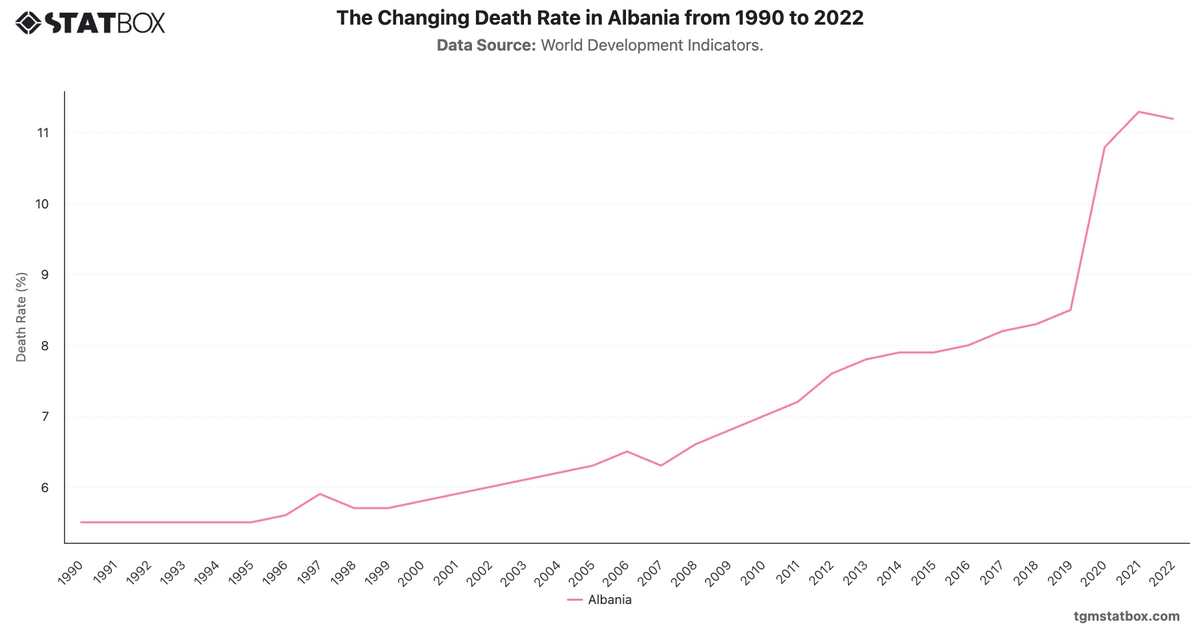
For a broader context, visit other statistics on Albania’s evolving mortality rate, Albania’s shifting median age, Albania’s population density.