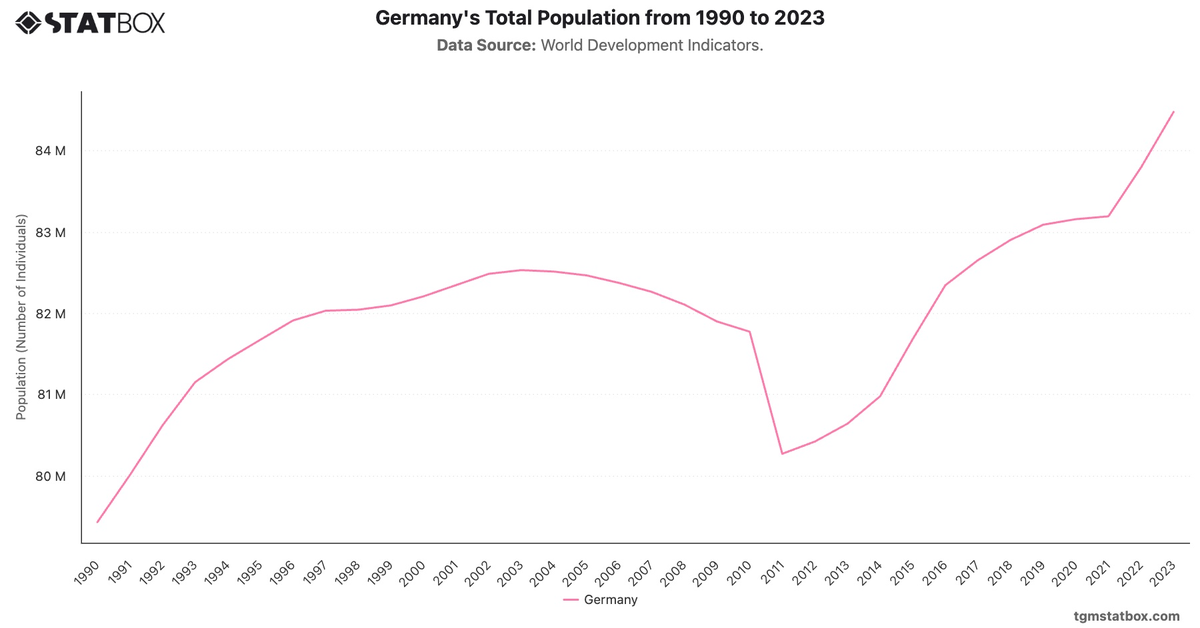
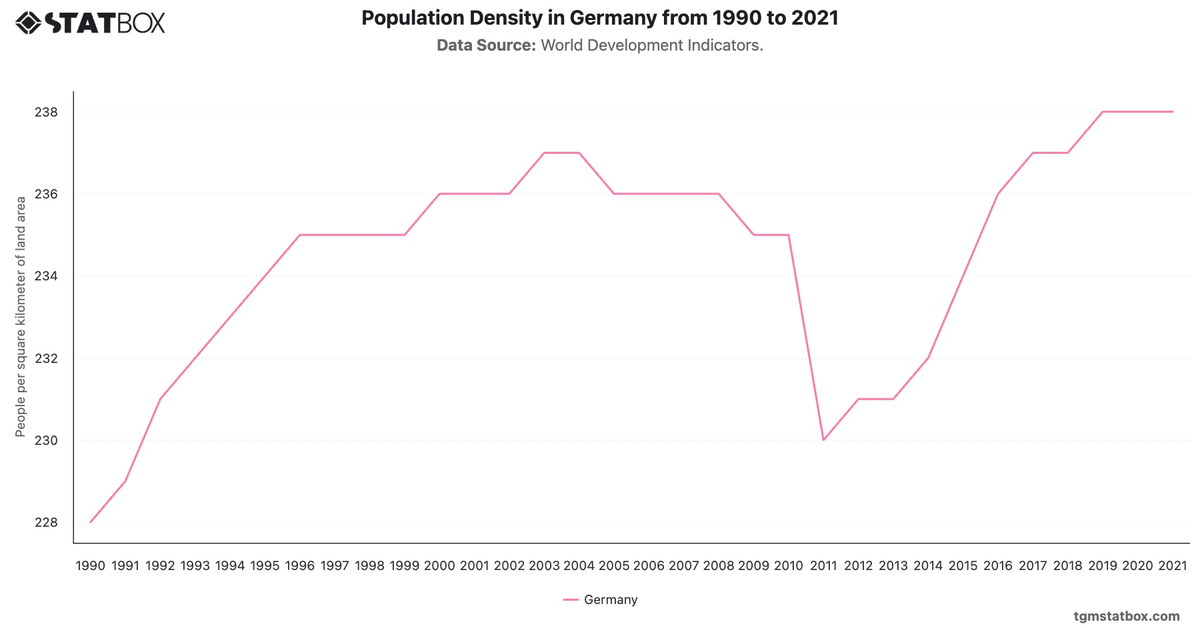
Germany's population growth rate saw notable fluctuations between 1990 and 2023. The early 1990s experienced modest growth, with rates around 0.7%-0.9%, influenced by reunification and increased immigration from Eastern Europe. However, the rate began to decline in the mid-1990s, stabilizing at around 0.1%-0.3% before dropping to zero growth in 1998 and briefly dipping into negative territory from 2005 to 2011. The sharp decline in 2011 to -1.9% reflects a significant adjustment in population data following the national census.
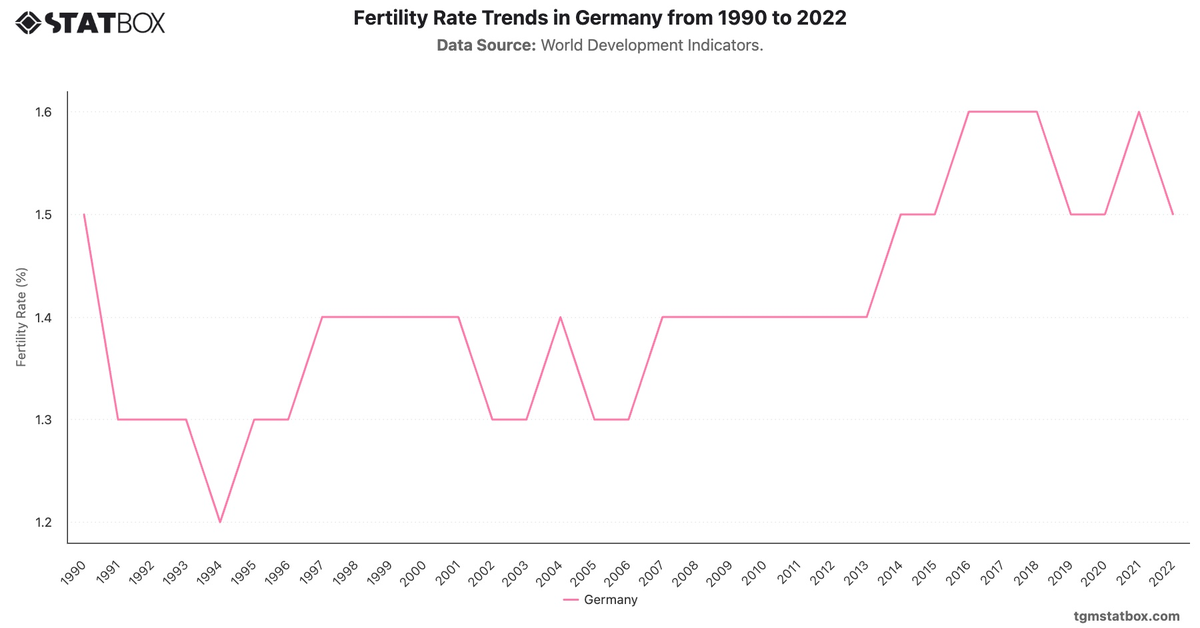
Post-2012, the growth rate rebounded, peaking at 0.9% in 2015, driven by the influx of refugees and a resurgence in net migration. In recent years, the growth rate stabilized at moderate levels, with 2022 and 2023 showing upticks to 0.7% and 0.8%, respectively. This recovery aligns with Germany’s ongoing appeal as an economic hub in Europe and improved birth rates compared to earlier decades.
Post-2012, the growth rate rebounded, peaking at 0.9% in 2015, driven by the influx of refugees and a resurgence in net migration. In recent years, the growth rate stabilized at moderate levels, with 2022 and 2023 showing upticks to 0.7% and 0.8%, respectively. This recovery aligns with Germany’s ongoing appeal as an economic hub in Europe and improved birth rates compared to earlier decades.
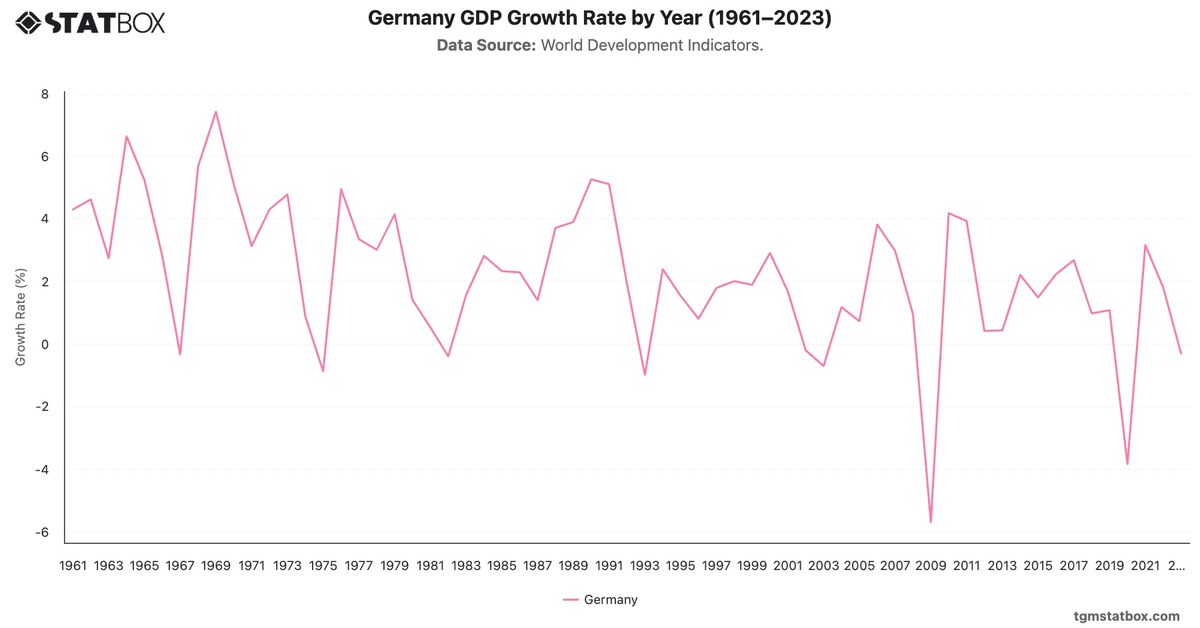
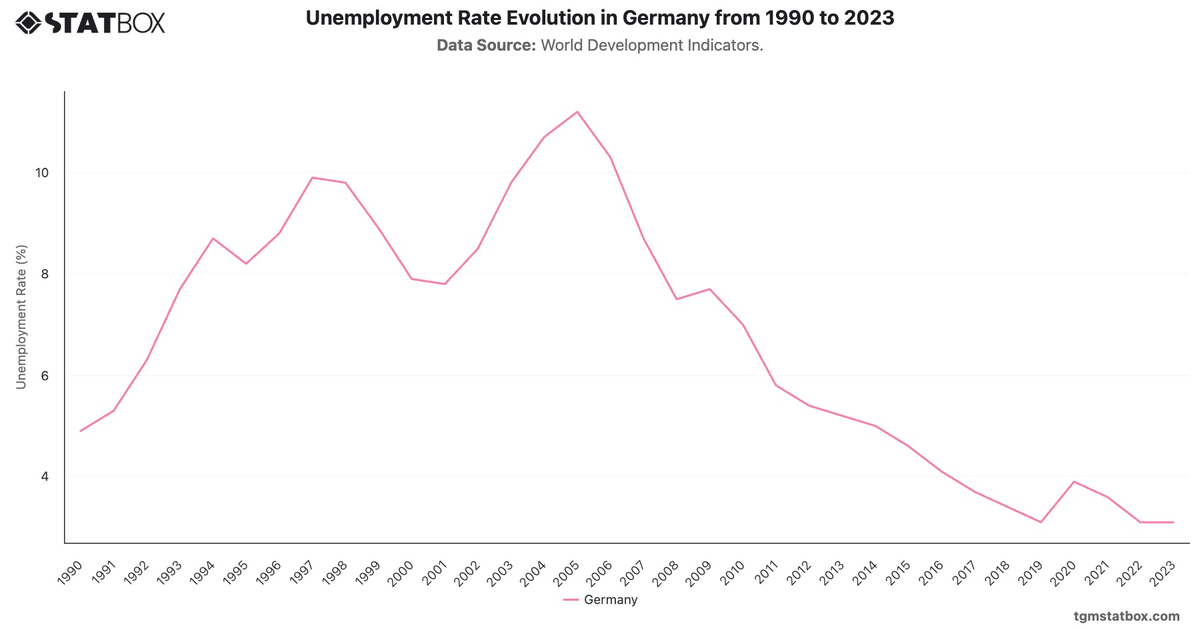
Gain a broader perspective by reviewing Germany’s shifting median age, Germany’s annual GDP growth rate, Germany’s unemployment rate changes.