Bangladesh's inflation rates have shown significant variability over the years. During the 1990s, inflation fluctuated, peaking at 9.7% in 1990 before dropping to a low of 1.8% in 2001 due to stable agricultural outputs and controlled monetary policies. The global financial crisis of 2008 caused a sharp rise in inflation to 9.9%, fueled by soaring global commodity prices.
Post-2010, inflation rates stabilized around 5-7% due to steady economic growth and improved policy measures. However, in 2023, inflation rose to 9.0% following supply chain disruptions and global price shocks. Projections suggest inflation will moderate to 5.5% by 2029 as economic policies stabilize, ensuring a sustainable growth path.
Post-2010, inflation rates stabilized around 5-7% due to steady economic growth and improved policy measures. However, in 2023, inflation rose to 9.0% following supply chain disruptions and global price shocks. Projections suggest inflation will moderate to 5.5% by 2029 as economic policies stabilize, ensuring a sustainable growth path.
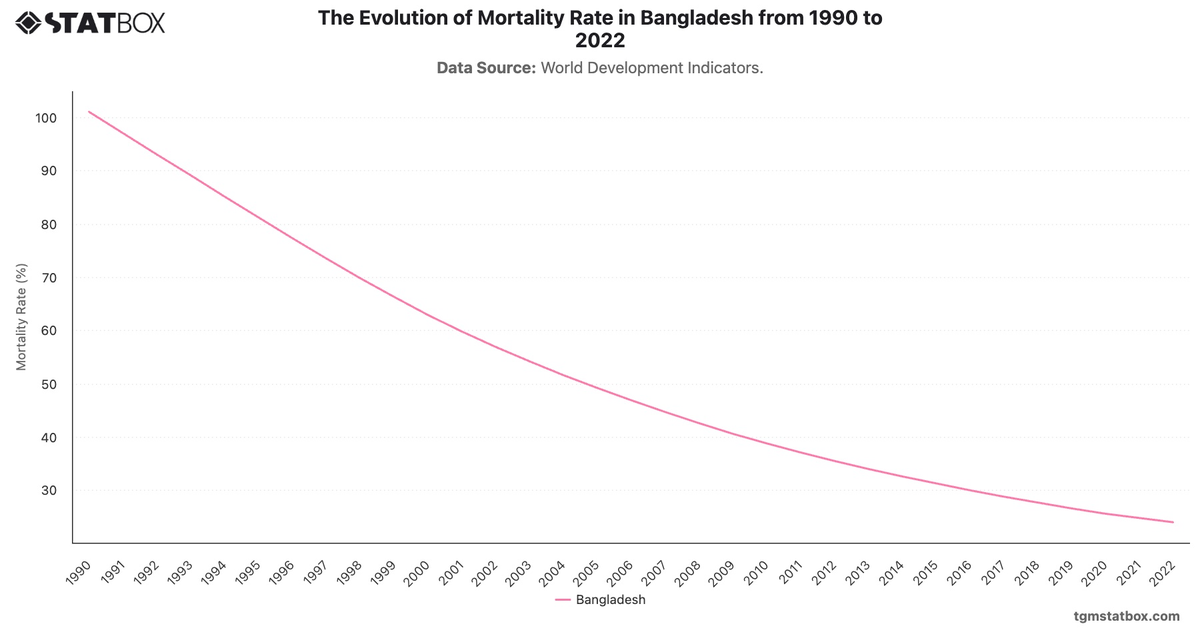
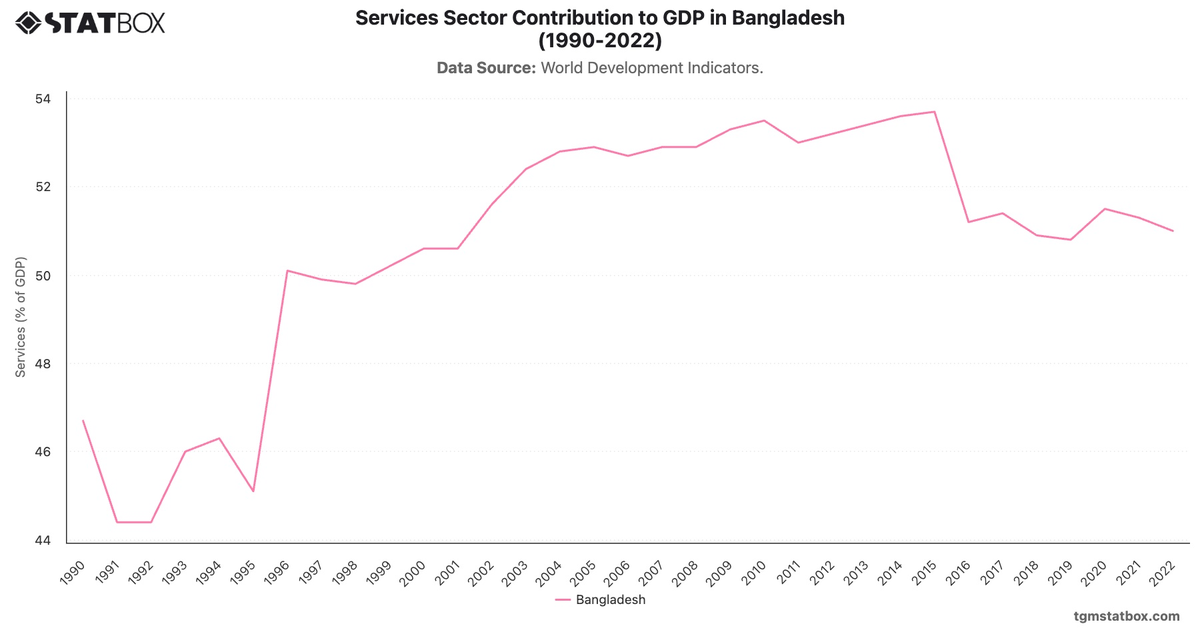
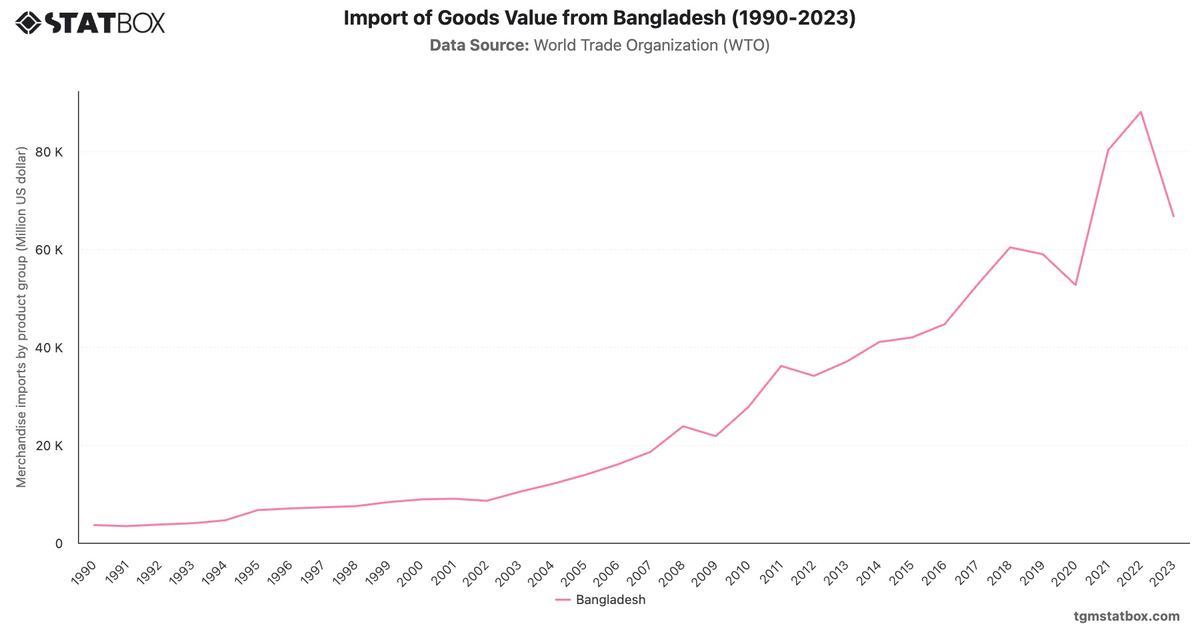
For a broader context, visit other statistics on Bangladesh’s changing mortality rate, Bangladesh’s services sector share in GDP, Bangladesh’s goods import value.