Argentina GDP Growth Rate by Year (1961-2023)
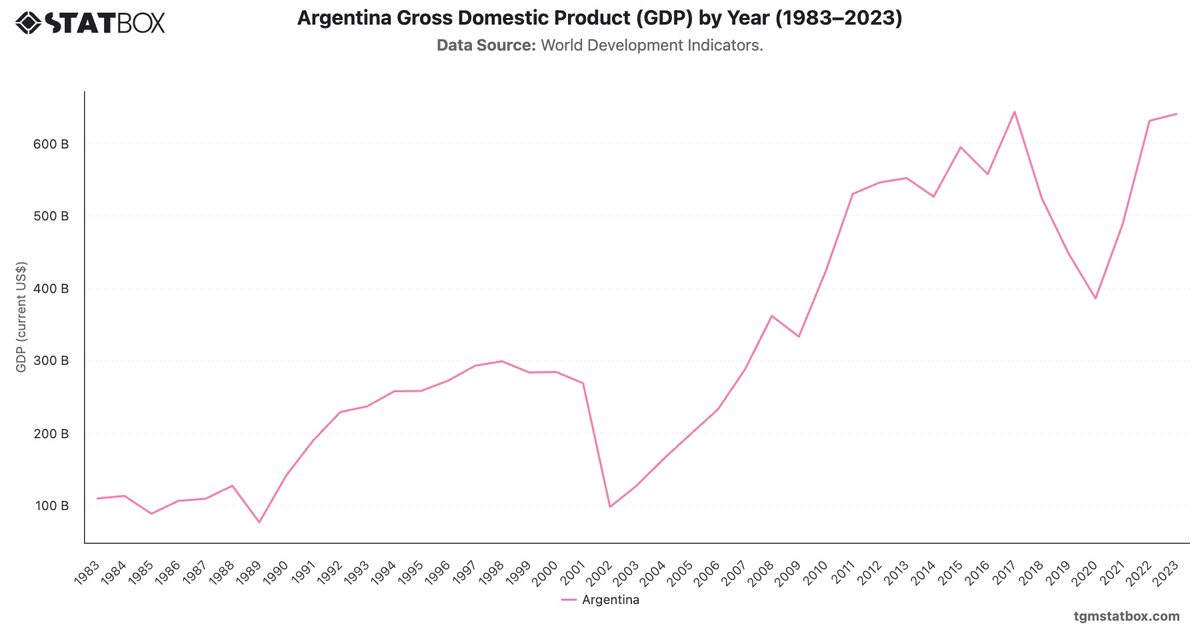
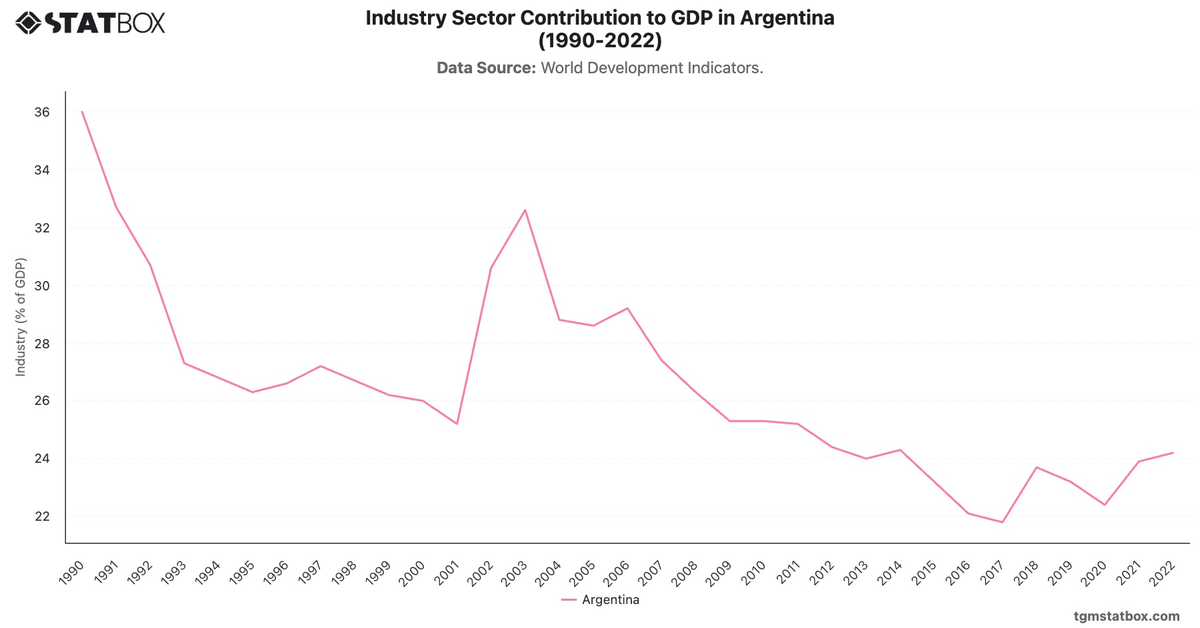
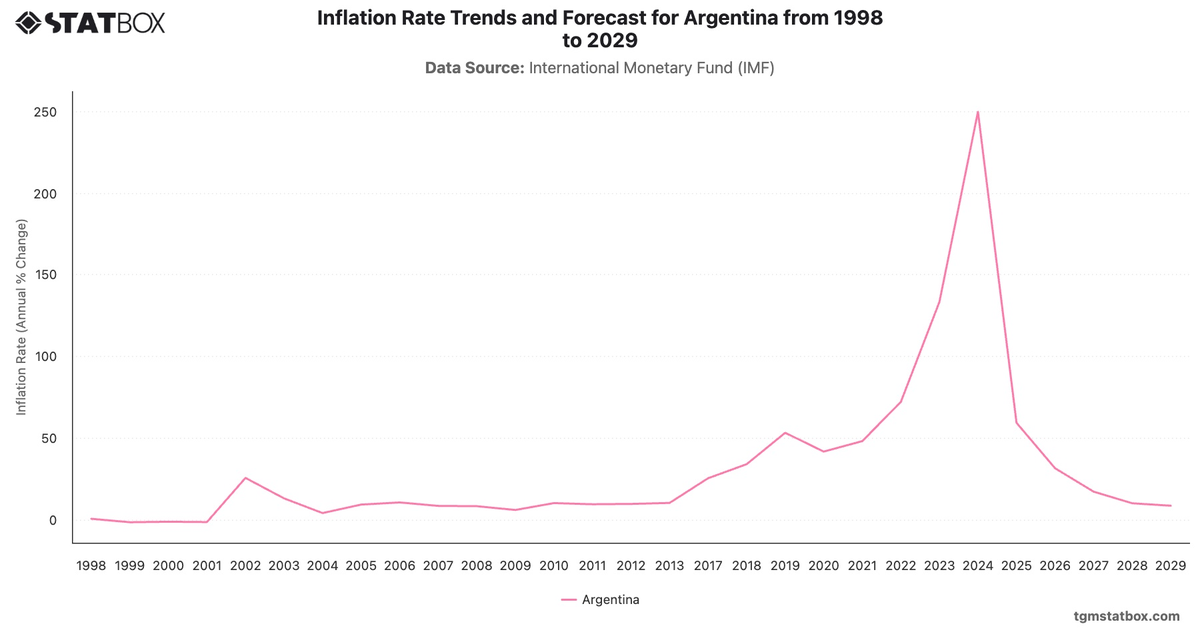
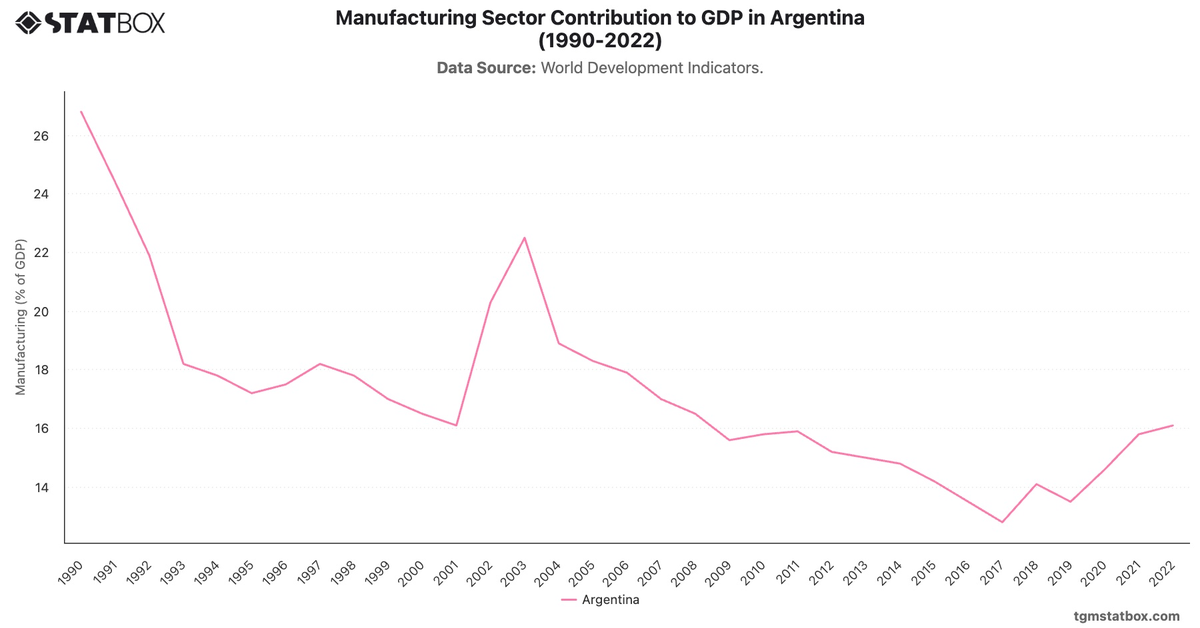
Argentina's economic history has been marked by recurrent cycles of growth and contraction, heavily affected by political instability, economic policies, and external shocks. Notable growth spurts occurred in 1964 (10.1%) and 1979 (10.2%) but were followed by periods of economic distress, such as the hyperinflation crisis leading to a -7.2% contraction in 1989. A series of economic reforms in the early 1990s yielded a strong recovery, with growth rates of 9.1% in 1991 and 8.2% in 1993. However, the 2001 financial crisis severely impacted GDP, resulting in a contraction of -10.9% in 2002. Following this, Argentina experienced a robust rebound in the mid-2000s, but recurrent fiscal and inflationary issues led to volatility. The pandemic in 2020 caused a sharp contraction of -9.9%, with recovery observed in 2021 at 10.7%, though economic challenges persisted, leading to a projected decline in 2023 at -1.6%.
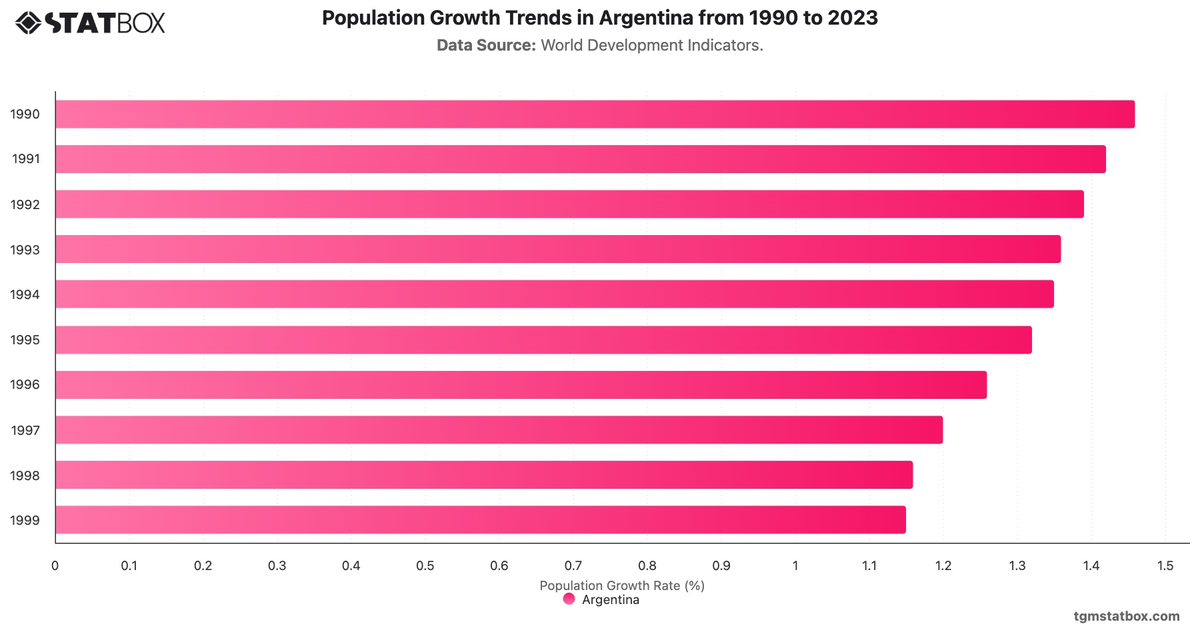
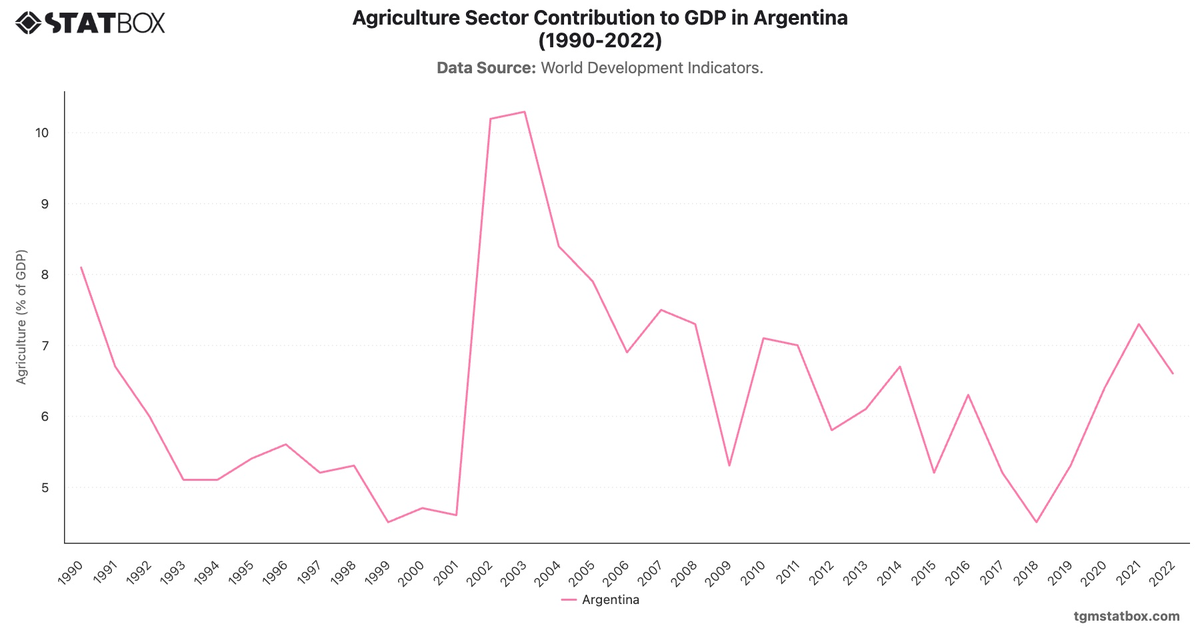
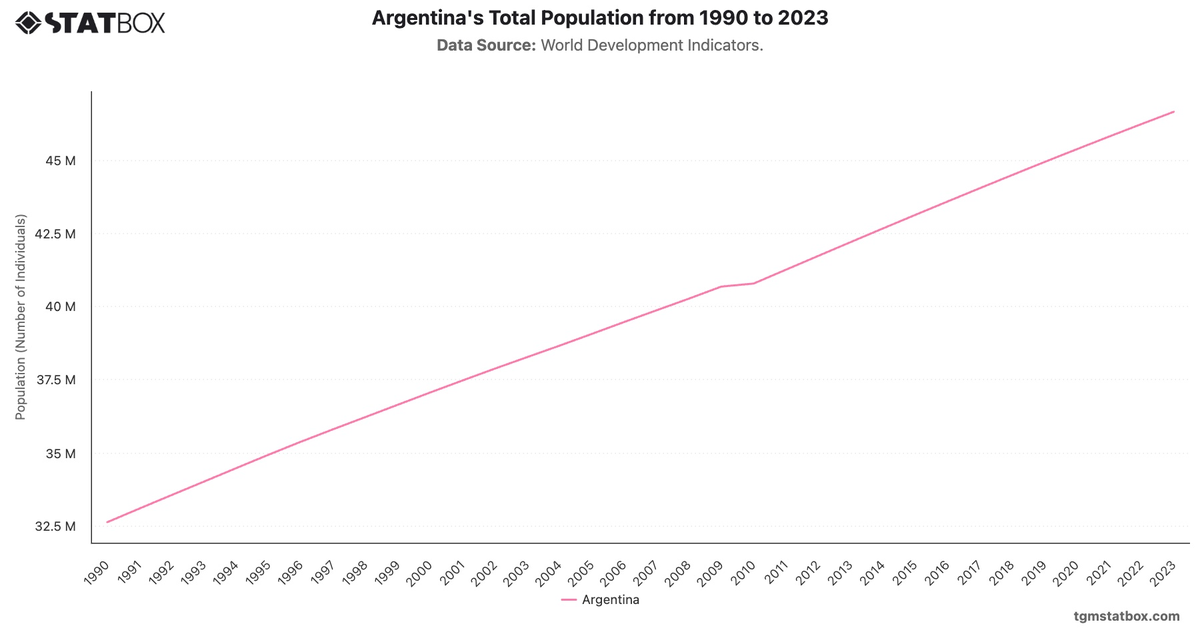
Gain a broader perspective by reviewing Argentina’s population figures, Argentina’s population growth trends, Argentina’s agriculture share in GDP.