Algeria's fiscal position has been heavily influenced by fluctuations in global oil prices, given its reliance on hydrocarbon exports. The early 2000s saw substantial surpluses, peaking at 12.9% of GDP in 2006, due to high oil revenues. However, the oil price collapse of 2014 marked a turning point, with deficits deepening to -13.9% by 2015. Subsequent years saw persistent deficits as the government grappled with reduced revenue and rising public expenditures.
The COVID-19 pandemic exacerbated fiscal pressures, with a deficit of -10.5% in 2020. While temporary improvements in 2022 (-2.5%) provided some relief, projections indicate a return to sustained deficits of around -6.7% by 2029. These trends underline the importance of diversifying the economy to reduce reliance on hydrocarbons and achieve fiscal sustainability.
The COVID-19 pandemic exacerbated fiscal pressures, with a deficit of -10.5% in 2020. While temporary improvements in 2022 (-2.5%) provided some relief, projections indicate a return to sustained deficits of around -6.7% by 2029. These trends underline the importance of diversifying the economy to reduce reliance on hydrocarbons and achieve fiscal sustainability.
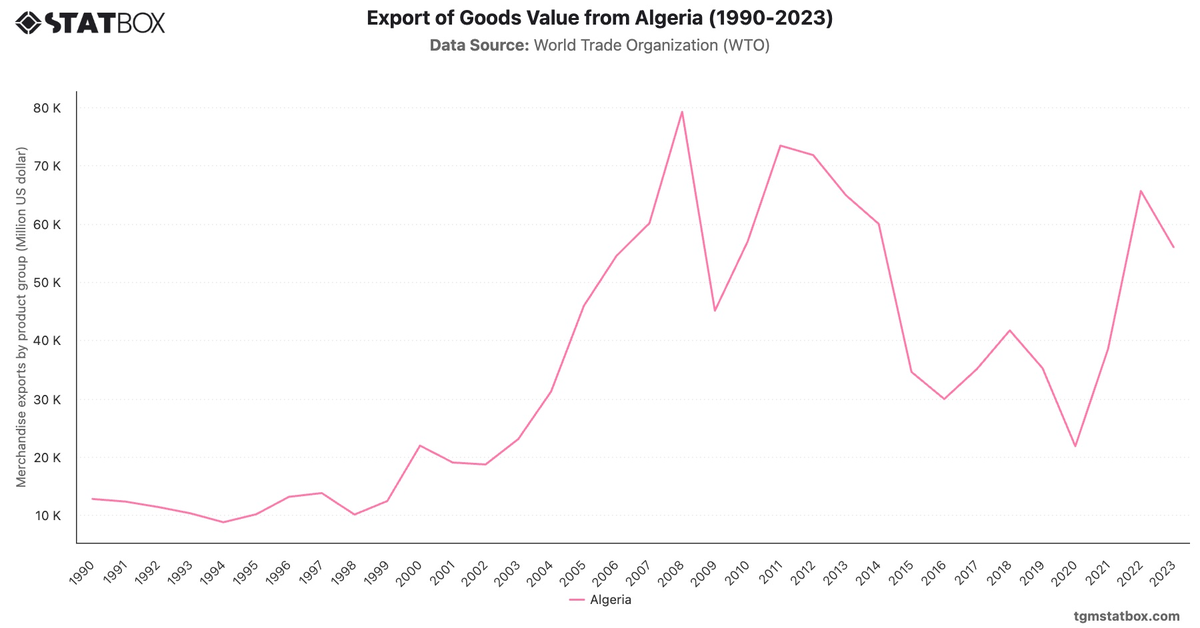
For a deeper dive into the topic, explore Algeria’s annual GDP estimates, Algeria’s agriculture share of GDP, Algeria’s goods export value.